
Digital Marketing Google Ads
Google Ads vs SEO for Singapore SMEs (August 2026)
Paid search or organic? We compare costs, timelines, and real results of Google Ads vs SEO for Singapore SMEs, with honest advice on which to pick.

"Should I do Google Ads or SEO?" It's the first question almost every Singapore SME owner asks us. And honestly, it's the wrong question, because they're not competitors. They're different tools for different jobs.
But that doesn't mean the distinction doesn't matter. When your monthly marketing budget is $1,000–$3,000 (a typical range for Singapore SMEs), you need to know where every dollar goes and what it delivers. We've managed both Google Ads and SEO campaigns for Singapore businesses across industries, and the results tell a clear story: neither channel is universally "better." The right choice depends on your timeline, budget, and where your customers are looking.
Google Ads puts you at the top of search results immediately. You set up a campaign in the morning, and by afternoon, your business is showing up for your target keywords. You only pay when someone clicks. And you control exactly how much you spend per day.
For Singapore SMEs, the appeal is obvious: instant visibility, measurable results, and precise targeting. You can target by location (only showing ads to people in specific areas of Singapore), by device, by time of day, and by the exact search terms they use.
The strengths of Google Ads:
- Immediate results: leads can start flowing within 24–48 hours of launching
- Precise budget control: set daily caps as low as $10/day and scale up when you see what works
- Measurable ROI: every click, conversion, and dollar spent is tracked. No guessing
- Great for testing: launching a new service? Run ads for 2 weeks to validate demand before investing in SEO
- Seasonal flexibility: increase spend during peak periods, pause during slow months
The downside? The moment you stop paying, the traffic stops. Google Ads is a tap, turn it on, leads flow; turn it off, they don't. There's no compounding value over time.
SEO is the long game. Instead of paying for each click, you invest in making your website rank organically: the "free" results below the ads. It takes time (typically 3–6 months for meaningful results), but once you rank, that traffic keeps coming without per-click costs.
The strengths of SEO:
- Compounding returns: content you create today can generate traffic for years. A blog post we wrote 8 months ago still brings in leads every week
- Higher trust: users skip ads. Studies consistently show 70–80% of searchers click organic results instead
- No per-click costs: once you rank, every click is essentially free. The marginal cost drops to near zero
- Brand authority: ranking on page 1 signals expertise. Customers trust businesses that Google trusts
- Full-funnel coverage: SEO captures informational, commercial, and transactional searches. Ads typically focus only on high-intent keywords
We saw this play out clearly with Arcade Rental. They were spending on ads to get visibility while their organic rankings were non-existent. After we implemented a focused SEO strategy, they climbed from page 3–4 to the #1 position for their primary keyword. Organic traffic grew 300%, monthly enquiries went from 15 to 50+, and they were able to reduce their ad spend significantly, because Google was now sending them traffic for free.
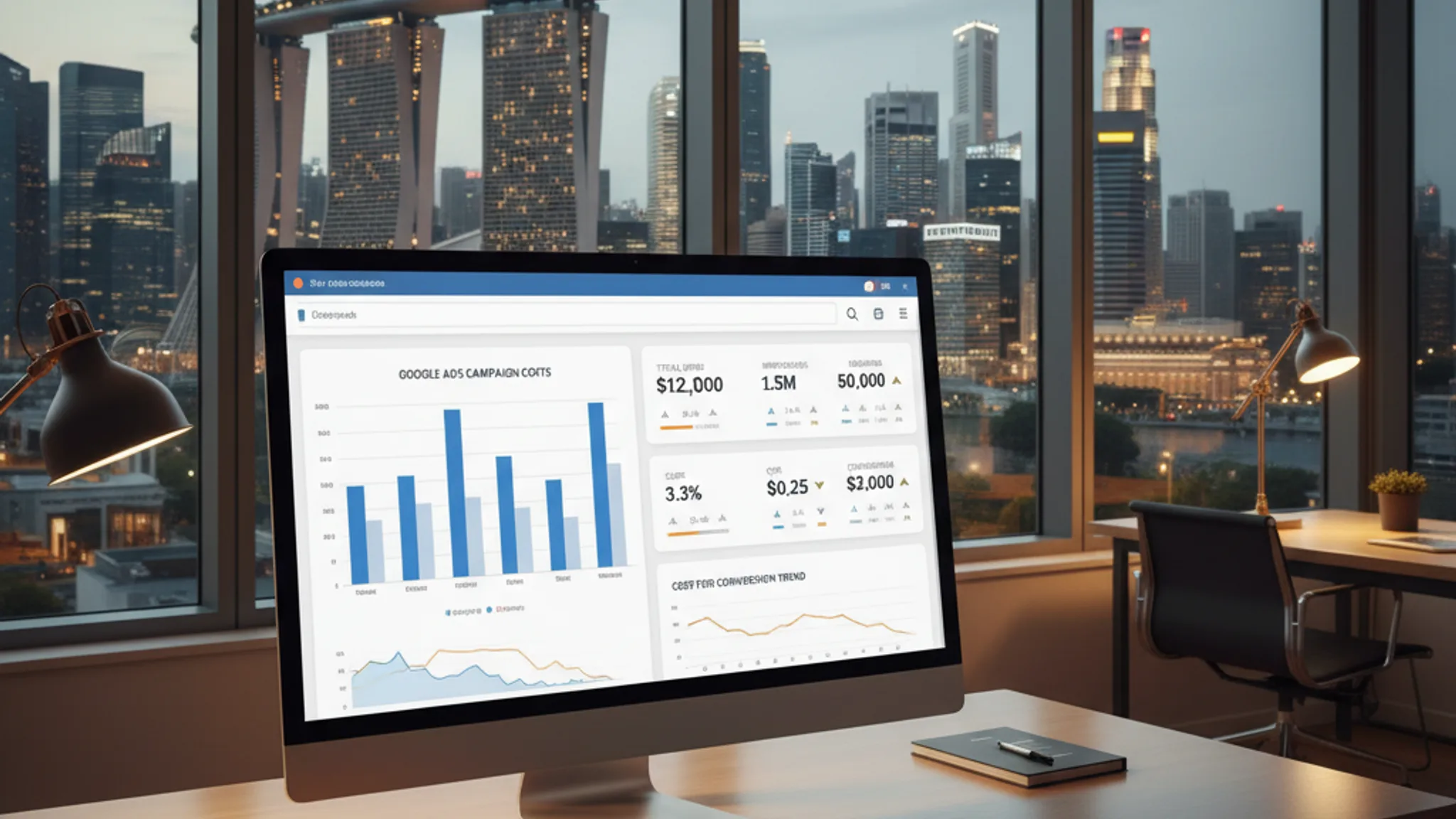
Let's talk real numbers. Here's what Google Ads actually costs in Singapore for common industries:
- Legal services: $8–$25 per click (keywords like "divorce lawyer Singapore")
- Dental/medical: $5–$15 per click
- Real estate: $3–$12 per click
- F&B/restaurants: $1–$4 per click
- Education/tuition: $2–$8 per click
- Web design/digital marketing: $5–$15 per click
A few sectors sit outside that list and behave differently again. Accounting firms see enquiries cluster hard around filing deadlines, corporate training providers sell to a committee rather than a person, and luxury retail lives or dies on how the ad looks rather than what it costs.
Quick maths: if you're a law firm paying $15 per click and your conversion rate is 5%, you need 20 clicks to get one enquiry. That's $300 per lead. Every month. Indefinitely.
SEO costs differently. A typical Singapore SME might invest $800–$2,000/month in ongoing SEO (content, optimisation, link building). That's a fixed cost regardless of traffic. As your rankings improve, the cost per lead drops dramatically: from potentially $300+ with ads to under $50 with organic traffic.
The break-even point: in most cases, SEO becomes more cost-effective than Google Ads after 6–12 months, because the traffic it generates is cumulative. The longer you invest, the more you get back. For a full cost breakdown, see our Google Ads pricing guide and SEO pricing guide. You can also model the numbers for your own business with our Google Ads ROI calculator and SEO ROI calculator.
Google Ads is the right call when:
- You need leads now: a new business without any organic presence can't wait 6 months for SEO to kick in
- You're testing a new service or offer: run ads for 2–4 weeks to validate demand before committing to long-term content
- You have a time-sensitive promotion: Chinese New Year sale, grand opening, event registration
- Your industry has high CPC but high customer value: a law firm that pays $300 per lead but earns $5,000+ per client has great unit economics with ads
- You want to dominate a specific keyword immediately: while your SEO builds, ads ensure you're visible from day one
The key is disciplined management. We've seen Singapore SMEs waste thousands on Google Ads by targeting broad keywords, not setting up proper conversion tracking, or letting campaigns run without optimisation. An unmanaged Google Ads account is a money furnace, which is why professional Google Ads management pays for itself.
SEO is the better investment when:
- You're building for the long term: you plan to be in business for years, not months
- Your CPC is prohibitively expensive: if you can't afford to compete on ads, outranking competitors organically is the alternative
- You want to build authority in your niche: ranking for dozens of related keywords positions you as the go-to expert
- You're in a content-friendly industry: businesses that can create helpful guides, how-to articles, and resource pages have a natural advantage
- You want to reduce ad dependency: relying 100% on ads means your lead flow disappears the day you stop paying
UCOATE is a good example. They came to us with minimal online visibility and needed a sustainable strategy, not a quick ad fix. We built their site with SEO at the core: optimised architecture, targeted content, proper schema markup; and they went from not ranking at all to page 1 for their key terms, with 3x more enquiries. No ongoing ad spend required.
For most Singapore SMEs, the smartest strategy isn't either/or. It's a phased approach that uses both channels strategically.
Here's the framework we recommend:
- Month 1–3: Launch with ads, start SEO: run Google Ads for immediate visibility and lead generation. Simultaneously, begin SEO work: site audit, keyword strategy, content creation, technical fixes
- Month 3–6: Optimise ads, build organic momentum: refine your ad campaigns based on data (kill underperforming keywords, double down on winners). Your SEO content starts to index and gain traction
- Month 6–12: Shift budget toward SEO: as organic rankings improve and organic leads grow, gradually reduce ad spend on keywords where you now rank well. Redirect that budget to SEO or to ads targeting new, untested keywords
- Month 12+: SEO-led with strategic ads: organic search becomes your primary lead source. Use ads only for high-value campaigns, promotions, and keywords where organic competition is too fierce
This approach gives you the best of both worlds: immediate results from ads while building the long-term asset of organic visibility. It's exactly what we did for Arcade Rental, ads covered the short term while SEO built a traffic engine that eventually made most of the ad spend unnecessary.
Whichever path you choose, start with these foundations:
- Set clear goals:"more traffic" isn't a goal. "20 qualified enquiries per month" is. Know what success looks like before you spend a dollar
- Fix your website first: ads and SEO both send traffic to your website. If your site is slow, ugly, or confusing, that traffic bounces. Read our complete SEO guide for the technical foundations
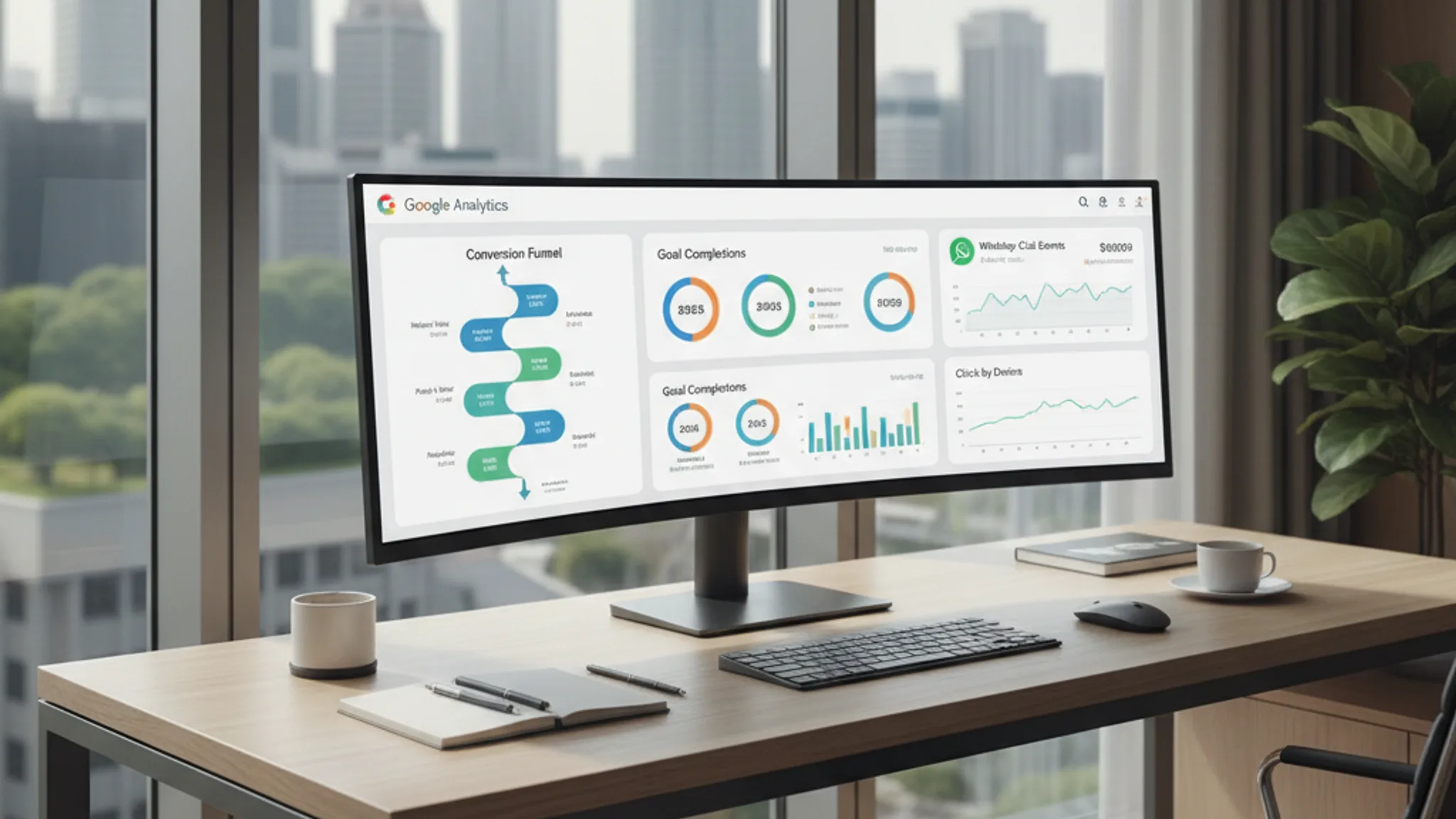
- Set up tracking: install Google Analytics and Google Search Console. Set up conversion tracking for forms, phone clicks, and WhatsApp. You can't improve what you don't measure
- Define your budget: be realistic. For Google Ads, $500–$1,500/month is a reasonable starting budget for most Singapore SMEs. For SEO, expect to invest $800–$2,000/month for at least 6 months
- Choose a partner who does both: working with separate agencies for ads and SEO creates silos. A partner who understands both channels can coordinate strategy and maximise your budget
The worst decision is doing nothing. Every day your competitors are visible on Google and you're not, they're capturing customers you should be winning.
There's no universal winner in the Google Ads vs SEO debate. Ads give you speed. SEO gives you sustainability. The best Singapore SMEs use both, starting with ads for immediate traction and investing in SEO for long-term growth that compounds month after month.
We've helped businesses like Arcade Rental transition from ad-dependent to organically dominant, and built SEO foundations for companies like UCOATE that deliver leads without ongoing ad spend. The right strategy depends on where you are today and where you want to be in 12 months.
Want to figure out the right mix for your business? Explore our SEO services, or book a free consultation and we'll give you an honest assessment, even if the answer is "just run ads for now."