





AI Web Apps Singapore

Web Apps Powered by AI

AI Web Application Development in Singapore

Singapore is one of the best markets in the world to launch an AI-powered web application. High internet penetration, a digitally savvy workforce, strong IP protection, and government grants like the Enterprise Development Grant make it an ideal launchpad for SaaS products and internal business tools. At TerrisDigital, we build AI web applications that generate content, analyse data, automate workflows, and make predictions. Whether you are a founder with a SaaS idea that uses AI at its core, a marketing team that needs a custom content generation tool, or a business that wants to replace spreadsheet chaos with an intelligent internal platform, we handle the full stack from product strategy to deployment, built for Singapore businesses and ready to scale across the region.

01

Product strategy, scoping, and technical architecture

02

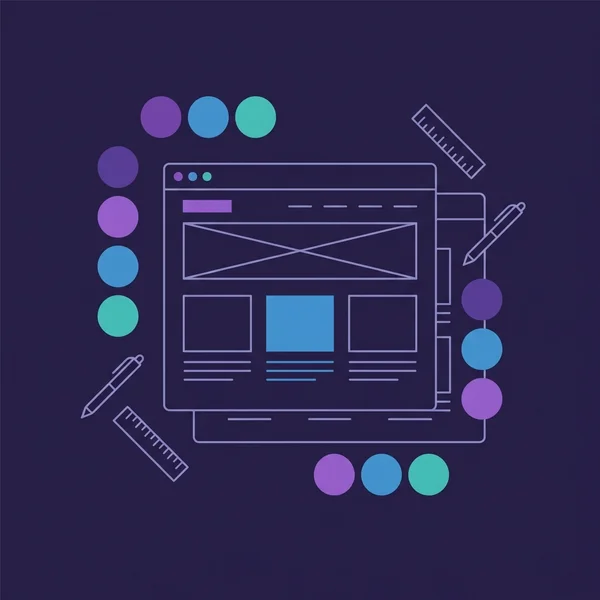
Custom UI/UX design and interactive Figma prototypes

03

Full-stack web development (React/Next.js, Node.js/Python)

04

AI model integration, prompt engineering, and output validation

Process

How It Works

A proven process to deliver results for your business.

01

Product Strategy & Scoping

We define the core AI value proposition and map out the full product scope. This means identifying which AI models and APIs fit your use case, planning user flows for every role in the application, defining the data architecture, and creating a technical roadmap that prioritises your MVP features so you can launch fast and validate with real users.

02

UX/UI Design & Prototyping

We design intuitive interfaces that make powerful AI features feel simple and approachable. Every screen is wireframed and prototyped in Figma, then validated with stakeholder feedback before development begins. We pay special attention to AI interaction patterns like loading states, streaming responses, confidence indicators, and error handling.

03

Full-Stack Development

We build the frontend with React or Next.js for fast, interactive interfaces, the backend with Node.js or Python depending on your requirements, and set up the database layer with PostgreSQL or MongoDB. Everything is built with production-grade code from day one: proper error handling, input validation, rate limiting, and a clean API architecture.

04

AI Feature Integration & Tuning

We connect and fine-tune every AI capability: prompt engineering for consistent, high-quality outputs, output validation to catch edge cases, response streaming for a smooth user experience, smart caching to reduce API costs, and fallback handling when AI providers experience downtime. We also implement usage tracking so you know exactly how much each AI feature costs.

05

Launch, Monitor & Scale

We deploy with full monitoring, error tracking, and usage analytics using tools like Vercel Analytics and Sentry. Post-launch, we optimise AI performance based on real user behaviour, add features based on feedback, and scale the infrastructure as your user base grows. We set up CI/CD pipelines so updates ship safely and frequently.

Deliverables

What's Included

Everything you get when you work with us.

Product strategy, scoping, and technical architecture
Custom UI/UX design and interactive Figma prototypes
Full-stack web development (React/Next.js, Node.js/Python)
AI model integration, prompt engineering, and output validation
User authentication, roles, and access control
Database design, API development, and third-party integrations
Subscription billing setup (Stripe with SGD support)
Performance optimisation, caching, and CDN configuration
CI/CD pipeline, monitoring, and error tracking
Post-launch support, iteration, and scaling
FAQ

AI Web Apps FAQs

How much does an AI web application cost
AI web application development typically ranges from SGD 8,000 for a focused MVP with one core AI feature to SGD 40,000+ for complex multi-feature platforms with user management, billing, and integrations. We recommend starting with an MVP to validate the concept with real users before investing in the full feature set, which keeps initial costs lower and reduces risk.
Should I build an MVP first or the full product
Almost always start with an MVP. An MVP with one core AI feature typically costs SGD 8,000 to SGD 15,000 and takes 6 to 10 weeks, compared to SGD 25,000 to SGD 40,000 and 16 to 20 weeks for a full product. The MVP lets you validate your idea with real users, gather feedback on what features actually matter, and avoid spending months building things nobody wants.
What tech stack do you use for AI web apps
Our standard stack is React or Next.js for the frontend, Node.js or Python for the backend, and PostgreSQL for the database. We choose Next.js when you need server-side rendering for SEO or fast initial page loads. Python backends are preferred for data-heavy applications with machine learning components. For hosting, we typically deploy on Vercel for frontend-heavy apps, AWS for complex backend requirements, or Google Cloud Platform for tight Google AI integration.
Can you integrate Stripe for subscription billing in SGD
Yes, Stripe Singapore is our default payment integration. It supports subscription billing in SGD with automatic recurring charges, usage-based pricing, free trials, plan upgrades and downgrades, invoice generation, and customer self-service portals. We also integrate Singapore-specific payment methods through Stripe including PayNow and GrabPay for one-time payments. Stripe handles GST calculation and provides the transaction data you need for IRAS reporting.
How do you handle user authentication and access control
We implement authentication using established providers like Clerk, Auth0, or NextAuth.js depending on your requirements. This includes email and password login, social logins, magic link authentication, and optional two-factor authentication. For multi-tenant SaaS applications, we build role-based access control so different user types see different features and data.
Can the web app handle real-time features like live updates
Yes, we build real-time features using WebSockets or Server-Sent Events. Common real-time features include AI response streaming (showing text as it generates, like ChatGPT), live collaboration between users, real-time notifications, and live dashboard updates. We implement proper connection handling for mobile users with intermittent connectivity.
How do you handle scaling as my user base grows
We design for scalability from the start by using stateless application architecture, managed databases with read replicas, CDN caching for static assets, and serverless functions that auto-scale with demand. For AI-heavy applications, we implement request queuing and background processing so spikes in usage do not overwhelm AI providers. Most applications we build can handle growth from 100 to 50,000 users without architectural changes.
Which database should I use for my AI web app
PostgreSQL is our default recommendation because it handles structured data, JSON documents, full-text search, and vector embeddings for AI semantic search in a single database. For applications with highly variable data structures, we use MongoDB. For AI applications that need fast vector similarity search across large datasets, we add a dedicated vector database like Pinecone or Weaviate alongside the primary database.
Do you set up CI/CD pipelines and monitoring
Yes, every AI web application includes a CI/CD pipeline using GitHub Actions that runs automated tests, linting, and type checking on every pull request, then deploys automatically to staging and production. For monitoring, we set up error tracking with Sentry, performance monitoring, uptime checks, and custom dashboards for AI-specific metrics like API costs and response times.
How do you ensure the web app is PDPA compliant
PDPA compliance is built in from the architecture phase. This includes obtaining explicit consent before collecting personal data, encrypting all data in transit and at rest, implementing role-based access controls, maintaining audit logs, supporting data export and deletion requests, and configuring proper data retention policies. We also ensure AI API providers process data in compliance with Singapore privacy requirements.
What performance benchmarks should I expect
We target page load times under 2 seconds on first visit and under 1 second on return visits, API response times under 200 milliseconds for non-AI endpoints, and AI feature response times of 1 to 5 seconds depending on the model and complexity. We achieve this through server-side rendering, edge caching, database optimisation, and AI response streaming.
How long does it take to build an AI web app
An MVP with one core AI feature typically takes 6 to 10 weeks. A full-featured web application with multiple AI capabilities, user management, subscription billing, and integrations takes 12 to 20 weeks. We use an agile approach with two-week sprints and regular demos so you can see progress and provide feedback throughout development.
Can you add AI to my existing web application
Yes, we frequently add AI features to existing applications built on React, Next.js, Vue, Angular, or other modern frameworks. This might involve building an AI-powered search, adding content generation capabilities, integrating a chatbot, or creating automated data analysis features. For older applications, we assess whether adding AI features or rebuilding is more cost-effective.
Talk to Terris Directly

Have an Idea for an AI Web App?

Tell us what you want to build and we will map out the fastest path from concept to a working product.

Terris
Chat with Terris
Typically replies instantly

Need a detailed quote? Get a Free Quote

Email Us
We reply within 1 business day