What is a good ctr for google display ads
The average click-through rate for Google Display Ads is 0.35–0.50%, which is lower than Search Ads because display is primarily an awareness channel. Well-targeted campaigns with strong creatives can achieve 0.60–1.0% CTR. Terris focuses on view-through conversions alongside CTR, which gives a more accurate picture of how display ads drive results.
Are google display ads effective for small business
Yes, Google Display Ads are highly effective for small businesses because the cost per thousand impressions (CPM) is very low, typically SGD 1–5 in Singapore. Even with budgets of SGD 800–1,500 per month, small businesses can reach thousands of potential customers. The key is precise audience targeting to avoid wasting impressions on irrelevant viewers.
Google display ads vs facebook ads which is better
Google Display Ads reach users across over 2 million websites and apps, while Facebook Ads stay within the Meta ecosystem (Facebook and Instagram). Display Ads are stronger for broad web-wide brand awareness and remarketing, while Facebook excels at social engagement and interest-based targeting. Terris often recommends running both as complementary channels for full-funnel coverage.
How much do google display ads cost singapore
Google Display Ads in Singapore typically cost SGD 1–5 per thousand impressions (CPM) or SGD 0.30–1.50 per click, making them one of the most affordable paid advertising formats. A minimum monthly budget of SGD 1,000–2,000 is recommended for meaningful reach and data collection. Your total investment includes the ad spend plus agency management fees.
How to stop google display ads showing on bad websites
You can prevent ads from appearing on low-quality or irrelevant sites by using placement exclusions, topic exclusions, and content category exclusions in Google Ads. Regularly reviewing your placement report and excluding poor-performing sites is essential. Terris runs weekly placement audits for clients and maintains exclusion lists of hundreds of low-quality sites to protect brand reputation.
Google display ads sizes and formats best practices
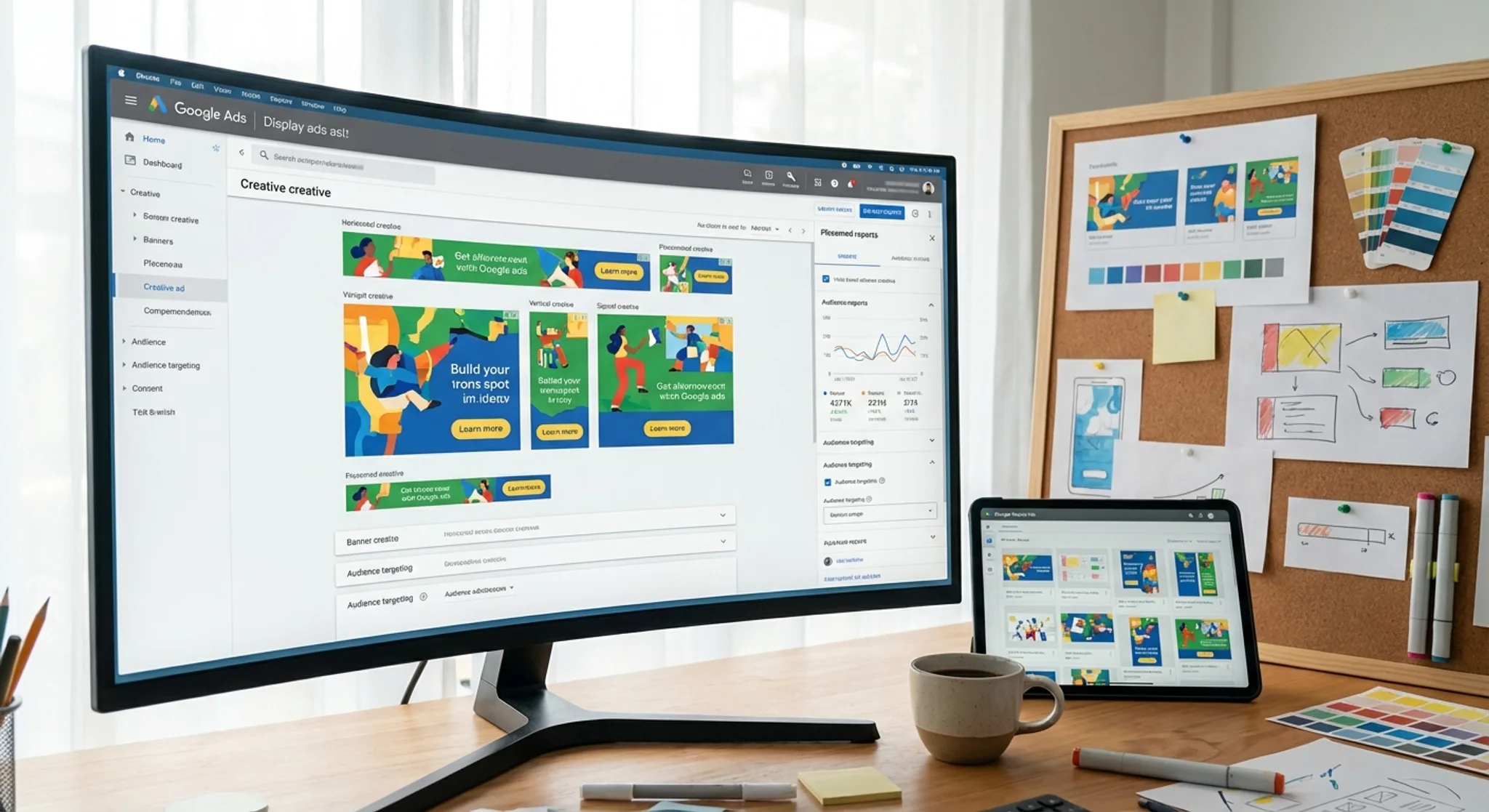
The most effective Google Display Ad sizes are 300x250 (medium rectangle), 728x90 (leaderboard), 336x280 (large rectangle), and 160x600 (wide skyscraper). However, responsive display ads now dominate. You provide images, headlines, and logos, and Google automatically creates ads that fit any placement. Terris designs both static banners and responsive ad assets as part of every display campaign.
Do google display ads actually convert
Google Display Ads have lower direct conversion rates than Search Ads (typically 0.5–1.0%) because they target users earlier in the buying journey. However, they play a critical role in assisted conversions, users who see a display ad and later convert through another channel. View-through conversion tracking reveals that display campaigns often influence 15–30% of total conversions when measured properly.
What is the difference between google display ads and search ads
Google Search Ads are text-based ads triggered by specific keyword searches, capturing users with active purchase intent. Display Ads are visual banners shown across websites, apps, and YouTube to build awareness among users who are not actively searching. Search Ads typically have higher conversion rates, while Display Ads offer lower costs and much broader reach for brand building.
How to target the right audience with google display ads
Google Display Ads offer multiple targeting layers including demographics, interests, in-market audiences (people actively researching a purchase), custom intent audiences based on keywords, similar audiences, and specific website placements. Terris combines these targeting methods to create precise audience segments, then continuously refines based on which combinations deliver the best performance for Singapore businesses.
How long should you run google display ads before seeing results
Display Ads begin delivering impressions from day one, but you should allow 4–6 weeks for meaningful optimisation as the algorithm learns which audiences, placements, and creatives perform best. Brand awareness impact builds gradually over time, while the effect on conversions typically shows through assisted conversion reports and remarketing audiences within the first month.
Responsive display ads vs static banner ads which performs better
Responsive display ads generally outperform static banners because Google's machine learning optimises the combination of headlines, images, and descriptions for each placement. They also reach more ad inventory since they adapt to any size. However, static banners give you full creative control over the visual design and messaging, which matters for brand-sensitive campaigns.
How often should you change google display ad creatives
Display ad creatives should be refreshed every 4–8 weeks to prevent ad fatigue, which occurs when your audience sees the same ad too frequently and starts ignoring it. Monitoring frequency metrics helps identify when fatigue is setting in, if frequency exceeds 5–7 impressions per user and CTR drops, it is time to rotate in fresh designs.