How to write meta descriptions that get clicks
Write meta descriptions between 140–160 characters that include your target keyword, a clear value proposition, and a call to action. Use active language and address the searcher's intent directly, tell them what they will get by clicking. Avoid generic descriptions like "we offer the best services" and instead be specific about benefits, pricing, or timelines. Pages with well-crafted meta descriptions can see 20–30% higher click-through rates.
What is keyword density and does it matter
Keyword density is the percentage of times a keyword appears relative to total word count. Google no longer relies on exact keyword density as a ranking factor, stuffing keywords actually hurts rankings. Instead, focus on using your target keyword naturally in the title tag, H1, first paragraph, and a few times throughout the content. Terris prioritises topical relevance and search intent over arbitrary keyword ratios.
How to optimise title tags for seo
Effective title tags are 50–60 characters, include the primary keyword near the beginning, and clearly communicate what the page is about. Add a brand name at the end separated by a pipe or dash. Each page should have a unique title tag, duplicate titles confuse Google about which page to rank. For Singapore businesses, including "Singapore" in key title tags can improve local relevance signals.
How much does on-page seo cost in singapore
On-page SEO services in Singapore typically range from SGD 800 to SGD 3,000 per month depending on the number of pages and depth of optimisation. A one-off optimisation of 10–20 key pages usually costs SGD 2,000–SGD 5,000. Terris offers both monthly retainers and project-based pricing, tailored to the specific scope your website needs.
What is search intent and why is it important for seo
Search intent is the reason behind a Google search, whether the user wants information, to navigate to a specific site, to compare options, or to buy something. Google ranks pages that best match the intent behind a query, so a blog post will not rank for a commercial keyword like "buy running shoes singapore". Aligning your page content with the correct search intent is one of the most important on-page ranking factors.
How to use header tags h1 h2 h3 for seo
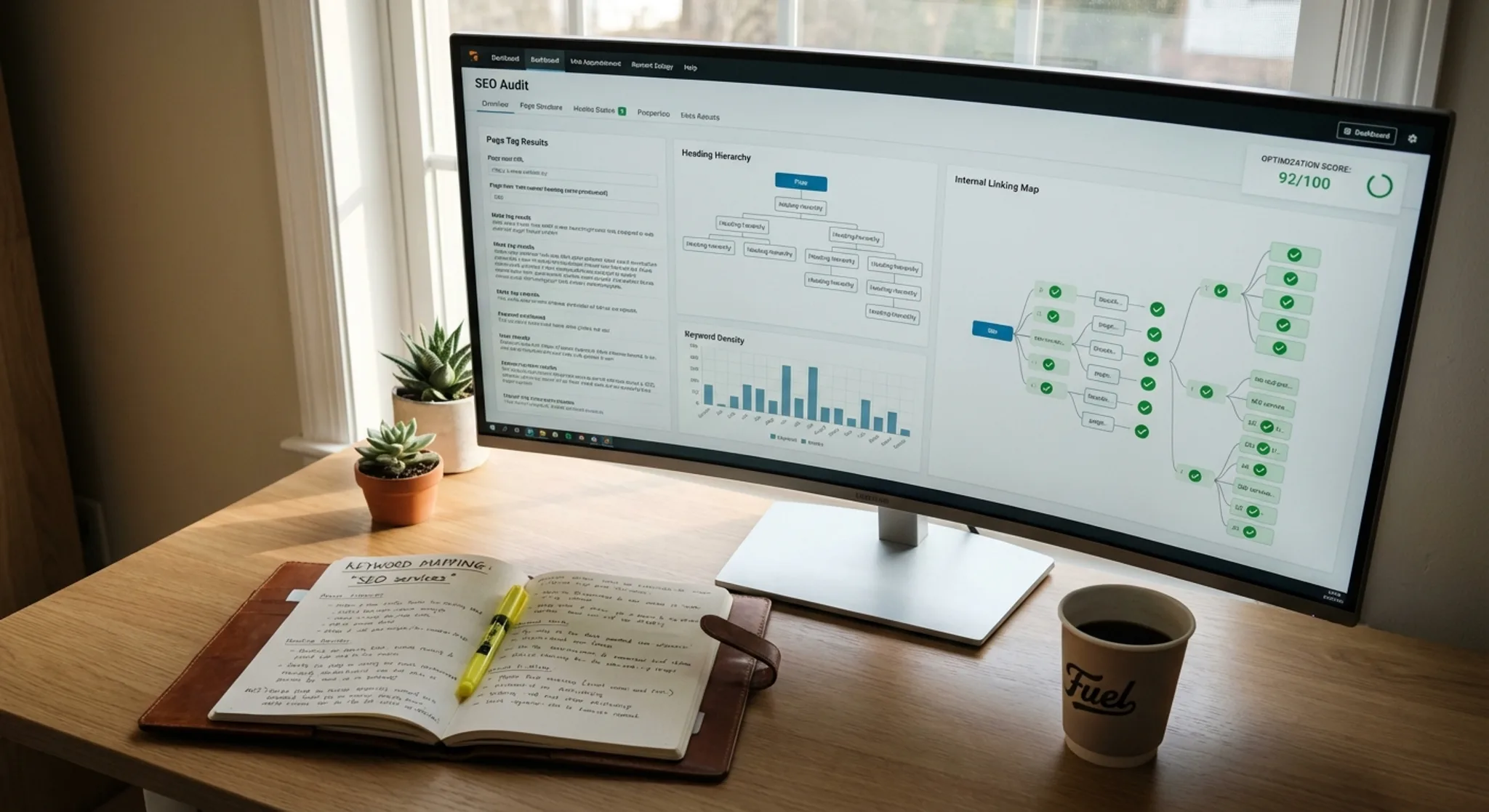
Use a single H1 tag per page containing your primary keyword. Use H2 tags for main sections and H3 tags for sub-sections. This creates a clear content hierarchy that helps Google understand your page structure. Incorporate related keywords and questions naturally into your H2s and H3s. A well-structured heading hierarchy also improves readability and can help you win featured snippet positions in Google.
How to optimise images for seo
Compress images to under 100KB where possible using WebP or next-gen formats, add descriptive alt text with relevant keywords, use meaningful file names (e.g., "singapore-office-renovation.webp" instead of "IMG_1234.jpg"), and specify width and height attributes to prevent layout shift. Image optimisation improves both page speed and image search visibility, Terris includes this in every on-page SEO engagement.
What is internal linking and how does it help seo
Internal linking connects pages on your website to each other using hyperlinks. It helps Google discover and crawl your pages, distributes page authority across your site, and signals which pages are most important. Aim to link from high-authority pages to pages you want to rank higher, using descriptive anchor text that includes relevant keywords. Most websites underutilise internal linking, which is one of the easiest on-page wins.
How to do keyword research for my website
Start by listing topics your customers search for, then use tools like Google Keyword Planner, Ahrefs, or Ubersuggest to find specific keywords with search volume and competition data. Focus on keywords with commercial intent for service pages and informational keywords for blog content. Prioritise keywords where you can realistically compete, targeting high-volume keywords with very strong competition rarely works for newer sites.
How often should i update my website content for seo
Update your key pages at least every 6–12 months to keep information current and signal freshness to Google. Blog content targeting competitive topics should be refreshed annually with updated statistics and new insights. Pages that are losing rankings or traffic should be updated sooner. Terris monitors content performance monthly and flags pages that need refreshing before they start declining.
Does word count matter for seo rankings
Word count itself is not a ranking factor, but comprehensive content that thoroughly covers a topic tends to rank higher. For service pages, 800–1,500 words is typically sufficient. Blog posts targeting competitive keywords often need 1,500–3,000 words to cover the topic depth that Google expects. The key is matching the content depth to what already ranks for your target keyword, sometimes 500 words is enough, sometimes you need 2,000.
How to fix keyword cannibalisation on my website
Keyword cannibalisation occurs when multiple pages on your site target the same keyword, causing them to compete against each other in search results. Fix it by choosing one primary page per keyword, merging similar pages with 301 redirects, or differentiating pages to target distinct but related keywords. Terris audits for cannibalisation as part of every on-page SEO engagement and resolves it through strategic keyword mapping.