Terris Recommends 16,400+ monthly visitors Dance Studios
9 Best Kids Dance Classes in Singapore (August 2026)
My honest pick of the best kids dance classes Singapore has in 2026, across ballet, jazz, hip-hop, K-pop and Chinese dance, with prices.
This guide is part of Terris Recommends, my researched, hands-on picks of the best local businesses and services in Singapore. Every recommendation is researched and ranked by me.
See all recommendationsIf you are hunting for the best kids dance classes Singapore has in 2026, the honest starting point is that the right school depends almost entirely on your child. A bubbly four-year-old who just wants to bounce around to music needs something completely different from a nine-year-old who is ready to sit a graded ballet exam, or a tween who is obsessed with K-pop choreography. So I spent a few weeks researching this properly, looking at age ranges, teaching syllabuses, instructor credentials, how each school handles genuine beginners, and how their reputation holds up across parent reviews.
What came out of it is this list of nine schools, deliberately spread across the genres families actually search for: ballet, jazz, hip-hop, K-pop, Chinese dance and multi-style academies that do a bit of everything. Some are large established institutions with outlets near most neighbourhoods. Others are boutique specialists who do one thing better than anyone. I have ordered them by overall strength as all-round kids schools, but pay closer attention to the age and genre notes than the ranking, because fit matters far more than position here.
This guide sits under my wider hub on the best dance studios in Singapore, which covers adult classes too. Below are the nine kids dance classes in Singapore I would happily send a friend's child to.
Before the list, the single most useful idea: match the class to your child's age and stage, not to whichever studio is nearest. For toddlers and preschoolers, the goal is not technique at all. It is coordination, musicality, listening and the simple joy of moving, so look for play-based classes from age 2 to 4 with short run times, props, stories and lots of encouragement. Pushing formal technique too early is the fastest way to make a small child dislike dance.
The biggest decision once they are a little older is graded exams versus recital-focused fun. Exam-based schools follow a recognised syllabus, the Royal Academy of Dance for ballet being the most common in Singapore, and move your child through measurable levels with assessments along the way. That structure builds genuine technique and gives a clear sense of progress, which suits children who thrive on goals. Recital-focused studios put the emphasis on performance, expression and group routines, with a year-end showcase rather than a formal exam. Neither is better. One rewards discipline, the other rewards play, and plenty of children are happiest with a mix.
Two things I always check whatever the age. First, safety and qualified teachers: ask whether instructors are trained and certified in that genre, and whether class sizes are small enough for the teacher to actually watch each child. Second, the trial class. Almost every good school offers one, and it tells you more about the teacher's patience and the room's atmosphere than any glossy website. As for which genre to start with, let the child lead. A kid who loves the style will practise it; a kid forced into ballet because it looks elegant often quietly gives up.
What makes it a strong default is the graded backbone. Dancepointe prepares students for recognised certifications including the Royal Academy of Dance and the Commonwealth Society of Teachers of Dancing, alongside competitions, theatre performances and overseas immersion trips for the keen ones. If you want a school your child can grow with for years, near home, with a clear path of measurable progress, this is the most complete option on the list.
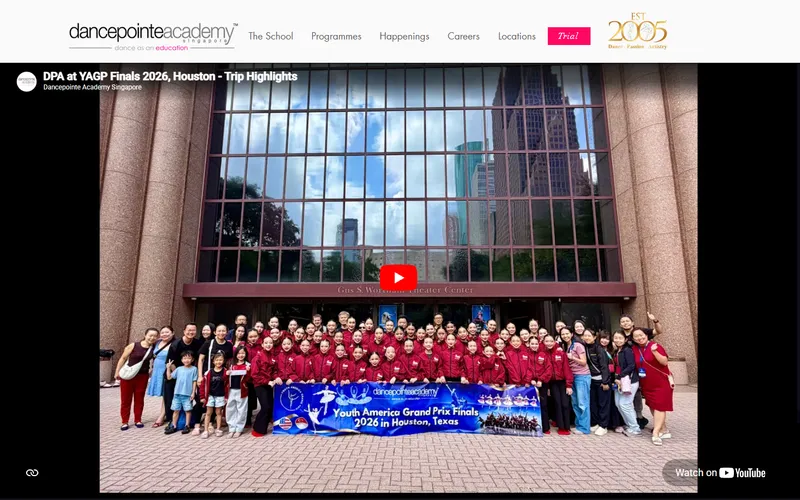
- Best known for
- The widest reach and a full graded path from preschool ballet to teen performance
- Location
- Around 18 outlets island-wide
- Ages
- From about 3 years through teens
- Google Rating
- Well reviewed, 5,000+ students since 2005
- Website
- dancepointe.com.sg
The detail I really rate is that they arrange a complimentary trial class first to place each child at the correct level, which is exactly the care that stops a beginner ending up frustrated in the wrong room. For households juggling several ages and styles, or a child who is still figuring out what they love, the flexibility here is hard to beat.
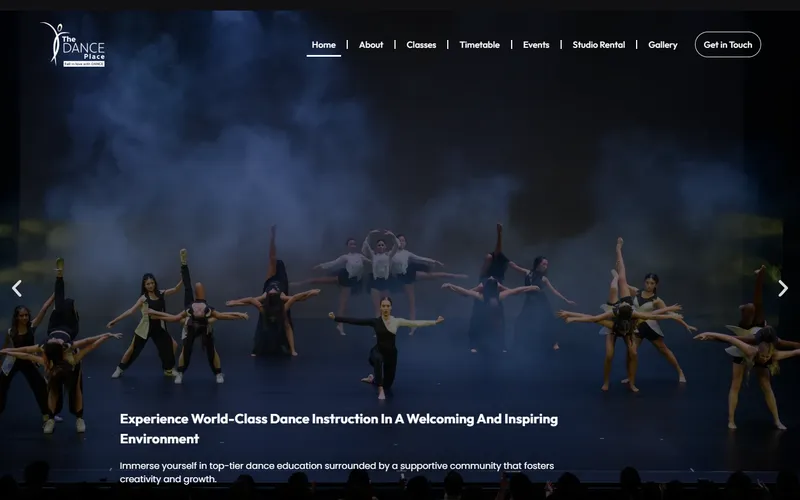
- Best known for
- The widest genre range for kids, with a complimentary trial to place each child correctly
- Location
- 583 Orchard Road, #08-02/03 Forum
- Ages
- Children through adults
- Google Rating
- Well reviewed, strong with families
- Website
- thedanceplace.net
The pedigree runs deep here. Instructors are internationally trained, classes follow recognised syllabuses including the ISTD and Rambert Grades, and the school has a partnership offering pathways toward tertiary dance study for those who go all the way. For a family that wants a proper foundation, with the option to move into exams, competitions or performance as the child grows, All That Jazz is a dependable, technique-first choice.
- Best known for
- All-round technique across many genres with strong exam and performance pathways
- Location
- Forum (Orchard), Dunearn, i12 Katong and Prinsep Street
- Ages
- 2 to 18 years
- Google Rating
- Well reviewed, internationally trained faculty
- Website
- allthatjazz.com.sg
The appeal is reach and structure. Classes are capped to keep the teacher's attention high, the genre focus stays tight on hip-hop, K-pop, girls style and street jazz, and the heartland locations make a consistent weekly class realistic rather than aspirational. If your child wants energetic, current choreography near home and the recital-style fun of group performances over formal exams, DF Academy is the practical pick.
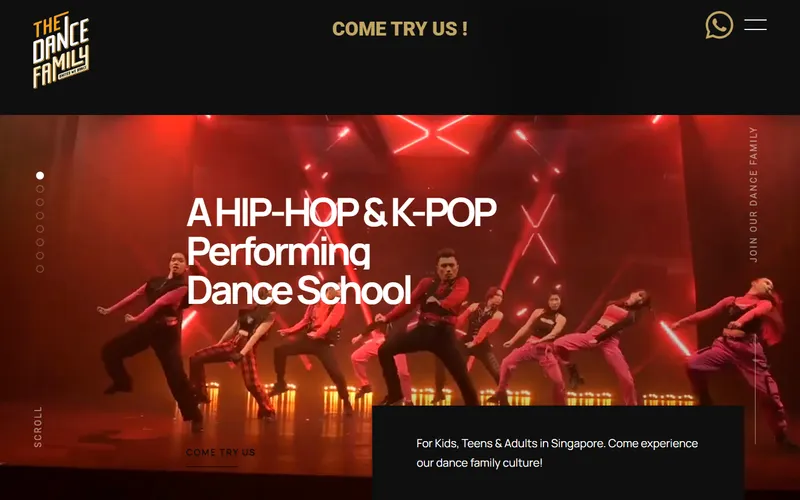
- Best known for
- Accessible heartland K-pop and hip-hop classes for kids of all ages
- Location
- Heartland outlets at Jurong, Ang Mo Kio, Tampines and Thomson
- Ages
- Young children through adults
- Google Rating
- Well reviewed, 1,000+ students across 100+ weekly classes
- Website
- dfacademy.com.sg
What sets it apart is how unapologetically it leans into the K-pop and street side, with the kind of polished, camera-ready routines kids actually want to learn from watching their favourite groups. It is less about graded exams and more about confidence, stage presence and the thrill of nailing a sharp eight-count with a crew. For a child who wants to feel like a performer rather than sit an assessment, MADDspace delivers exactly that.
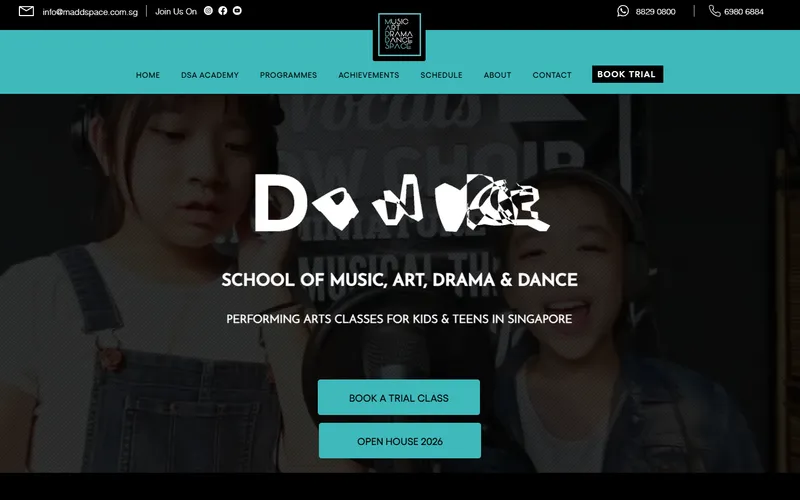
- Best known for
- Stage-ready K-pop and hip-hop with an idol artiste training track
- Location
- GR.iD (Dhoby Ghaut) and The Chevrons (Jurong East)
- Ages
- Preschool, junior kids, preteens and teens
- Google Rating
- Well reviewed, performance-focused programmes
- Website
- maddspace.com.sg
The teaching quality is the headline. Elevate is an approved RAD and ISTD examination centre, so children follow internationally recognised graded and vocational syllabuses, and the recurring note in parent testimonials is small class sizes, experienced teachers and children who stay for seven, eight, even eleven years. If you want a warm, personal studio where your child is known by name and still gets a rigorous graded path, Elevate is my pick.
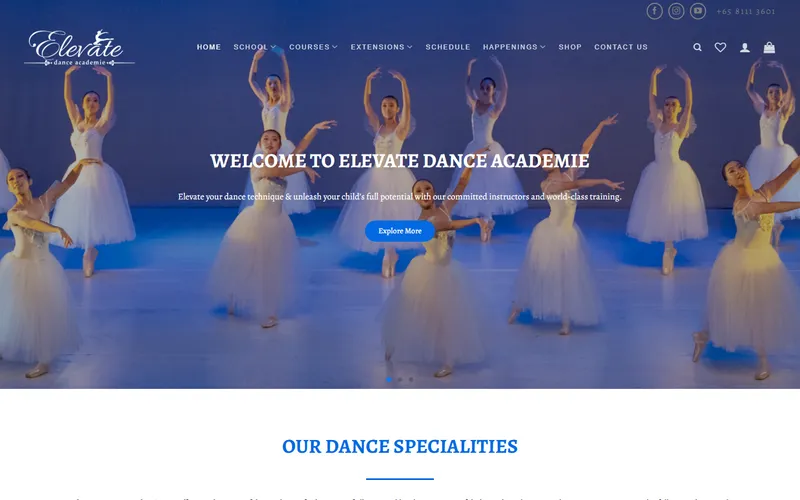
- Best known for
- Nurturing, small-class ballet with full RAD and ISTD exam pathways
- Location
- West Coast Highway and Bukit Timah Road (Newton)
- Ages
- From about 3 years
- Google Rating
- Well reviewed, award-winning boutique school
- Website
- elevatedance.com.sg
The advantage of a dedicated ballet school over a multi-genre one is focus. The teachers live and breathe the RAD syllabus, the progression is clear, and a child who is genuinely serious about ballet gets the depth that a studio juggling ten styles cannot always match. It regularly appears on Singapore best-ballet-school lists, and for a parent who knows their child wants ballet and only ballet, this is the kind of place that does it right.
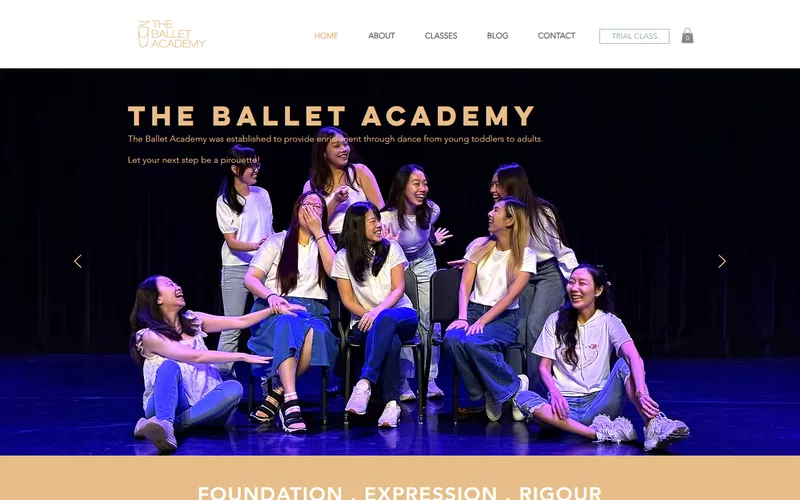
- Best known for
- A dedicated RAD ballet specialist with carefully built technique
- Location
- Upper Thomson Road and SAFRA Toa Payoh
- Ages
- Young toddlers through teens
- Google Rating
- Well reviewed, accredited RAD school
- Website
- theballetacademy.com.sg
For young dancers, the menu runs from the familiar hip-hop and K-pop into the specialist disciplines that are hard to find for kids elsewhere: popping, locking, breaking, waacking and dancehall, through dedicated youth programmes. If your child has outgrown generic hip-hop classes and wants to take a specific street style seriously as a craft, the depth and credibility here is hard to match.
- Best known for
- The deepest range of urban and street styles for kids, from breaking to waacking
- Location
- 6A Shenton Way, Downtown Gallery
- Ages
- Dedicated kids and teens academy
- Google Rating
- Well reviewed, established 2010
- Website
- recognizestudios.com
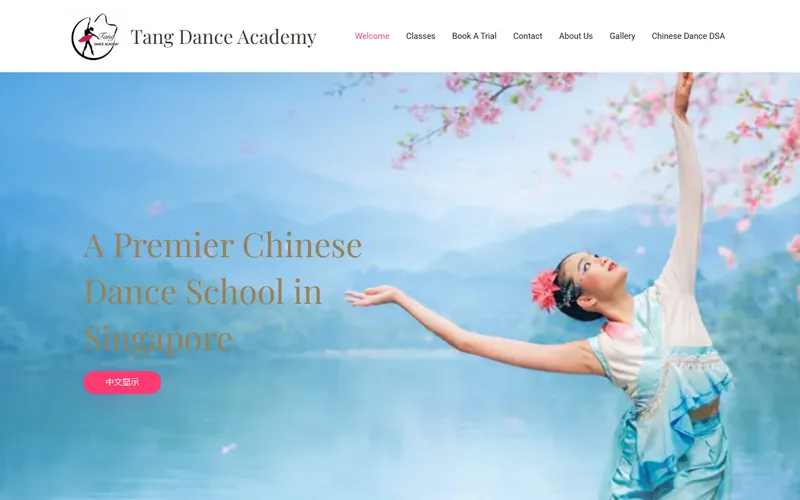
I include it because Chinese dance is too often overlooked in these lists, and it offers something the street and ballet schools do not: graceful classical technique paired with real cultural grounding. The graded structure gives the same clear sense of progress a ballet syllabus does, and the performance opportunities at cultural events give children a genuine stage. For a family that values heritage alongside discipline and poise, Tang is the clear pick.
- Best known for
- Accredited Chinese dance with a clear graded path and cultural grounding
- Location
- Hougang and Ang Mo Kio
- Ages
- From about 5 years
- Google Rating
- Well reviewed, Beijing Dance Academy graded syllabus
- Website
- tangdanceacademy.com
| School | Best for | Location |
|---|---|---|
| Dancepointe Academy | Widest reach and full graded path | ~18 outlets island-wide |
| The Dance Place | Widest genre range for families | Forum, Orchard Road |
| All That Jazz | All-round technique, ages 2 to 18 | Orchard, Dunearn, Katong |
| DF Academy | Heartland K-pop and hip-hop | Jurong, AMK, Tampines, Thomson |
| MADDspace | Stage-ready K-pop and performance | Dhoby Ghaut and Jurong East |
| Elevate Dance Academie | Nurturing boutique ballet (RAD/ISTD) | West Coast and Newton |
| The Ballet Academy | Dedicated RAD ballet specialist | Thomson and Toa Payoh |
| Recognize! Studios | Urban and street styles for kids | Downtown Gallery, Shenton Way |
| Tang Dance Academy | Graded Chinese dance | Hougang and Ang Mo Kio |
| Class type | Typical price (S$) |
|---|---|
| Toddler / preschool class (per term) | S$280 to S$420 |
| Kids ballet, graded (per term) | S$350 to S$600 |
| Kids hip-hop / K-pop (per month) | S$90 to S$160 |
| Multi-genre programme (per term) | S$400 to S$650 |
| Chinese dance, graded (per term) | S$300 to S$500 |
| Trial class (one-off) | Free to S$40 |
| Exam and recital fees (per year, extra) | S$80 to S$250 |
Treat these as 2026 ballpark figures, not quotes. Most kids dance schools bill by term, usually around ten weeks, so a weekly class lands roughly between S$280 and S$600 a term depending on genre, class length and how established the school is. Drop-in style hip-hop and K-pop studios sometimes charge monthly instead, which can be friendlier if your schedule is unpredictable. Budget separately for the extras: exam entry fees, costumes and year-end recital or concert charges add up, especially in graded ballet. Many schools offer a free or discounted trial, so always ask about a first-timer rate before committing to a full term.
- Age-appropriate progression. Toddler classes should be play-based and short; technique comes later. A school that throws a four-year-old into formal barre work is getting it wrong, and one that keeps a ten-year-old in a baby class is wasting their potential.
- Qualified, certified teachers. Ask who actually teaches the class and what they are trained in. Genre-specific credentials and real performance or syllabus experience matter far more than the name on the door.
- A clear path, exam or recital. Decide whether your child thrives on graded assessments or year-end performances, then pick a school that genuinely offers it rather than dabbling.
- Small classes and a safe space. The teacher should be able to watch every child, correct gently and keep the room encouraging. Crowded classes mean less attention and more chance of a child being left at the back.
- A trial class. The best schools let your child try before you commit and will place them at the right level first. If a school will not let you sample a class, that tells you something.
One thing worth knowing as a parent: graded ballet in Singapore is usually built on the syllabus set by the Royal Academy of Dance, so asking whether a school is an accredited RAD centre is a quick way to gauge how seriously it takes technique. More broadly, dance here sits within a real arts ecosystem, and bodies like the National Arts Council support dance education and companies across Singapore, which is part of why the standard of children's teaching, especially in ballet and Chinese dance, is genuinely high.
Let me be straight about what this is. I am not a dance teacher, and I am not ranking these schools on technique I do not have. What I do is build and study websites for businesses across Singapore, including those in the arts, education and lifestyle space, so I spend a lot of time looking at how these places present themselves, how clearly they explain their classes, ages and syllabuses, and how their reputation holds up across parent reviews.
So this ranking weighs age range, genre fit, teaching credentials and syllabus, how well each school serves real beginners and young children, review consistency and pricing transparency, rather than my personal dance ability. It is a 2026 snapshot, and details like schedules, prices, locations and age groups can change, so confirm directly with any school before you enrol. I revisit and update this guide as the scene shifts and new schools earn a place.
Earlier than most parents expect. Plenty of Singapore schools take children from age two to three into play-based toddler classes, and a few welcome little ones from around eighteen months with a parent in the room. At that age it is not really dance in the technical sense; it is movement, music, listening and coordination dressed up as fun. Formal technique and graded work, particularly in ballet, usually begins from around age five to seven once a child can follow instructions and hold focus for a full class. The honest answer is that there is no rush. A child who starts at six and loves it will overtake one who started at three and felt pressured.
For the very young, the best style is whichever keeps them moving and smiling, which is why creative movement and pre-ballet classes work so well for twos and threes. They build coordination, rhythm and confidence without demanding precision. From around age five, ballet is a popular foundation because it teaches posture, discipline and body awareness that transfer to every other style, but it is not compulsory. A child who lights up watching K-pop or hip-hop will practise it far more than one nudged into ballet for the look of it. Let your child's genuine enthusiasm lead the choice, because the style they love is the one they will stick with.
Yes, almost all of the schools on this list do, and you should always take one before committing to a term. A trial, whether free or a small one-off fee, lets you see how patient the teacher is, how the child responds, whether the class is the right level, and how the room feels. Some schools, like The Dance Place, use the trial specifically to place each child at the correct level first. Watching your child in a single trial class tells you more than any brochure or website ever will, so book one before you pay for a full course.
For some children, very much, and for others not at all. Graded exams, like the RAD ballet grades or Beijing Dance Academy Chinese dance levels, give a clear structure, measurable progress and a sense of achievement that motivates goal-driven kids beautifully. They also build genuine technique through consistent assessment. But they add cost and pressure, and a child who dances purely for joy can find them stressful and off-putting. If your child thrives on goals and milestones, exams are worth it. If they dance to have fun and perform, a recital-focused school without formal exams may keep that love alive far longer.
That is my run-down of the best kids dance classes Singapore has on offer in 2026. If you want a single safe starting point, Dancepointe Academy and The Dance Place give you the broadest choice across ages and genres, while the specialists, Elevate and The Ballet Academy for ballet, MADDspace and DF Academy for K-pop and hip-hop, Recognize! for street, and Tang for Chinese dance, are where I would go once you know exactly what your child wants to learn.
Remember the right school depends entirely on your child's age, the genre they love, and whether you want exams or recitals, so use the trial class to make the final call. For more family picks, this guide sits under my wider hub on the best dance studios in Singapore, which covers adult classes too if you fancy joining in.
One last note from my side of the fence. I build websites for schools, studios and family businesses across Singapore that turn searches exactly like this one into booked trial classes. If you run a dance school and your site is not pulling its weight, take a look at my web design services or just get a quote and we can talk.