Terris Recommends 16,400+ monthly visitors Dance Studios
7 Best Swing Dance Classes in Singapore (August 2026)
My honest pick of the best swing dance classes Singapore has in 2026, from Lindy Hop and Charleston to West Coast Swing, with prices, venues and who to book.
This guide is part of Terris Recommends, my researched, hands-on picks of the best local businesses and services in Singapore. Every recommendation is researched and ranked by me.
See all recommendationsIf you are hunting for the best swing dance classes Singapore has in 2026, you have picked one of the most welcoming corners of the whole dance scene. Swing dancing is social, it is set to live or recorded jazz, and the community here is famously happy to scoop up beginners who turn up alone with two left feet. I spent a couple of weeks researching this properly, cross-referencing each school against reviews, instructor pedigree, how active their social scene is, and how easy they make it for a complete newcomer to start.
The first thing to understand is that swing is an umbrella, not a single dance. Under it sit Lindy Hop, Charleston, Balboa and blues, all born in the jazz age, plus the more modern West Coast Swing, which is danced to current pop and R&B. Most of the schools below specialise in one branch, so I have noted clearly which is which. I have ordered them by overall strength as a place to start, but read the notes, because the right school depends entirely on which kind of swing you want to learn.
This guide is one of the genre-specific picks under my hub on the best dance studios in Singapore. If you are still deciding between swing, hip-hop, K-pop or ballet, start there. If swing is already what you are after, here are the seven swing dance classes in Singapore I would actually recommend to a friend.
Before the list, the single thing that saves people from booking the wrong class: swing is a family of dances, and it splits into two camps that feel quite different on the floor. The classic, vintage side is built around 1930s and 40s jazz. That is where Lindy Hop lives, the original swing dance, full of bounce and the famous swingout, alongside its cousins: the fast and playful Charleston, the close and quick Balboa for crowded floors, and the slow, bluesy connection of blues dancing. Learn one and the others come more easily, because they share the same musical roots.
The other camp is West Coast Swing, and it is a different animal. It evolved later, it is danced in a slotted line rather than a circle, and crucially it is set to modern music: Top 40, R&B, hip-hop, lyrical and pop, not big-band jazz. It is smoother and more improvised, which is why people who love contemporary music often gravitate to it over Lindy Hop. Neither is harder or better, they just scratch different itches.
Two reassurances for anyone nervous about starting. First, you do not need a partner. Swing classes rotate partners by design, which is half the fun and the fastest way to improve, so turning up solo is completely normal. Second, this is a social dance at heart. The real magic happens at the weekly socials and the live-jazz nights, not just in the lesson, and that scene in Singapore is genuinely friendly. Pick a branch, book a taster, and the community tends to do the rest.
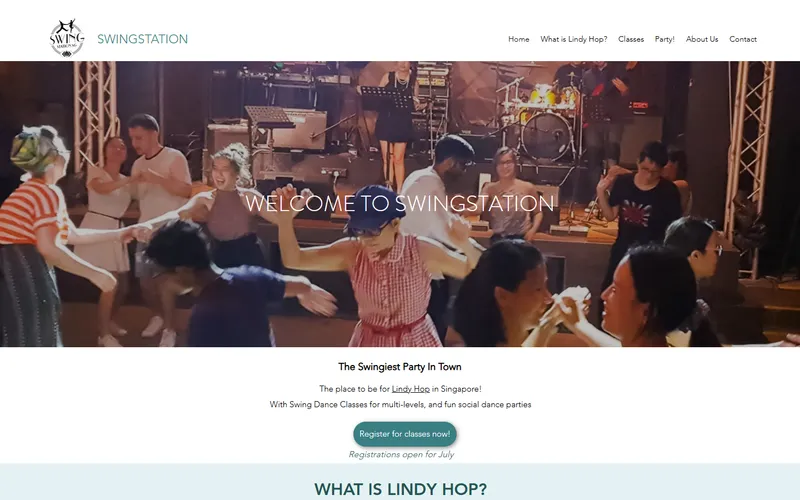
The beginner course is built for true newcomers, with no partner and no experience required, and reviews repeatedly land on the same word: welcoming. Beginner lessons run around S$80 for a block of four classes, which is a low-risk way to find out whether the happiest dance, as Lindy Hop is often called, is for you. For most people asking where to start with swing in Singapore, this is my default answer.
- Best known for
- Beginner Lindy Hop courses plus a weekly Monday social
- Swing styles
- Lindy Hop and vintage swing
- Location
- Aliwal Arts Centre, 28 Aliwal Street (Kampong Glam, central)
- Google Rating
- Well reviewed, known as a warm, beginner-friendly community
- Website
- swingstation.sg
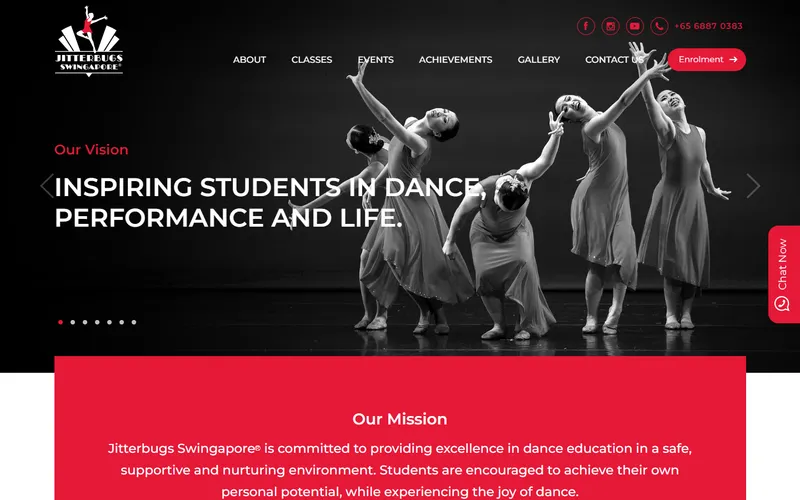
Best known for Lindy Hop, it has broadened over the years into a wide adult and youth menu that also covers jazz, tap, ballet and social Latin styles, so it suits a household that wants more than one dance under one roof. The legacy cuts both ways: you are learning from a lineage with deep roots, though the offering is broader and more performance and syllabus oriented than the purely social schools. If pedigree matters to you, Jitterbugs is the name with the most of it.
- Best known for
- Pioneering the Singapore Lindy Hop scene with the longest heritage
- Swing styles
- Lindy Hop, plus jazz, tap and social Latin
- Location
- Central Singapore, City Hall area
- Google Rating
- Well reviewed, established 1996
- Website
- jitterbugs.com
What makes it especially easy to try is the on-ramp. They run free 30-minute taster sessions, usually at 2pm with no registration needed, and hold their socials at The Centrepoint on Orchard Road, so the barrier to a first dance is about as low as it gets. They also organise bigger events like the annual Singapore Lindy Revolution and World Lindy Hop Day, which tells you the community here is active rather than dormant. For curious beginners who want zero financial commitment to start, this is my top shout.

- Best known for
- Free taster classes and the widest spread of vintage swing styles
- Swing styles
- Lindy Hop, Charleston, Solo Jazz, Shag and Balboa
- Location
- The Centrepoint, 176 Orchard Road (socials)
- Google Rating
- Well reviewed, run by a passionate dancer-led team
- Website
- lindyhop.sg
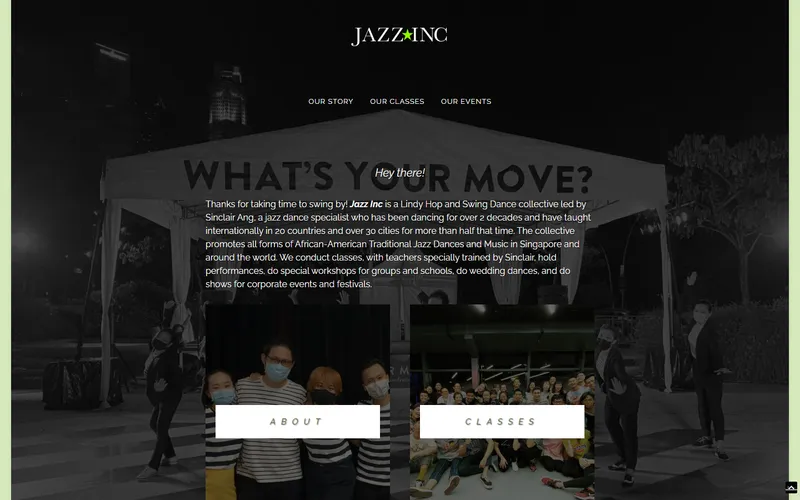
The differentiator is the live music. Jazz Inc runs its own house band, The Rhythmakers, playing authentic swing-era tunes specifically for dancers, and pairs the classes with talks on the history and musicality of the form. That makes it less of a quick-fix choreography school and more of a place to understand swing as a craft. If you care about doing the dance properly and dancing to live jazz, this is where the depth is.
- Best known for
- Authentic jazz-dance training with a live swing house band
- Swing styles
- Vernacular jazz, Lindy Hop, Charleston and Balboa
- Location
- Various central venues across Singapore
- Google Rating
- Well reviewed, led by an internationally respected instructor
- Website
- jazzincsg.com
Based at the Rhythm Room on River Valley Road, it runs trial classes from S$9.90 and group sessions across the week, with reviews consistently praising the friendly, patient instructors and a warm community. West Coast Swing is built on improvisation and connection rather than fixed routines, which makes it endlessly re-danceable but rewards regular practice, so the weekly social structure here matters. For West Coast Swing specifically, ZiggyFeet is the clear and only pick.
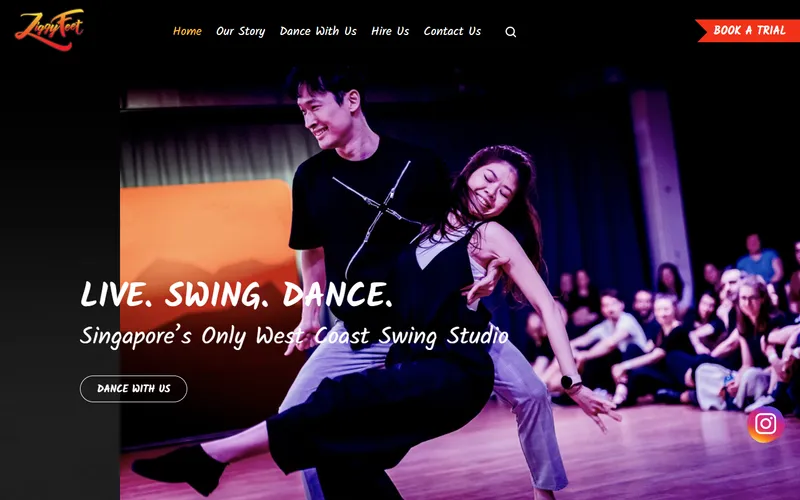
- Best known for
- Being Singapore's only dedicated West Coast Swing studio
- Swing styles
- West Coast Swing
- Location
- Rhythm Room, 3B River Valley Road, #02-03 The Warehouses
- Google Rating
- Well reviewed, praised for patient teaching and community
- Website
- ziggyfeet.com
The team teaches, performs and organises events like Lindy Hop workshops and tap jams, plus amateur showcases, so there is a clear pathway from beginner classes toward performing if that appeals. It runs a little more under the radar than the bigger social schools, with enquiries handled directly, but for the tap and solo-jazz side of the swing world it is the most committed option I found. If you want to make sounds with your feet as well as swing out, start here.
- Best known for
- Rhythm tap and solo jazz alongside partnered Lindy Hop
- Swing styles
- Lindy Hop, Charleston, Solo Jazz and Rhythm Tap
- Location
- Central Singapore, enquire for class venue
- Google Rating
- Well reviewed, performance and tap-focused
- Website
- bswinglindy-sg.com
It doubles as a multipurpose studio, with the space also used for private classes and events, so the swing programme is one part of a broader operation rather than a pure swing institution. For a beginner who cares more about the social side and a low-pressure first step than about syllabus depth or performance, it is a friendly entry point. I would still pair it with the socials at SwingStation or Lindy Hop SG once you have the basics, to plug into the wider scene.
- Best known for
- Casual, social-first Lindy Hop classes and parties
- Swing styles
- Lindy Hop and social swing
- Location
- Central Singapore, enquire for venue
- Google Rating
- Reviewed as friendly and social
- Website
- dancingwithfriends.sg
| School | Best for | Swing branch |
|---|---|---|
| SwingStation | Beginners who want classes plus a weekly social | Lindy Hop |
| Jitterbugs Swingapore | Heritage and the longest scene pedigree | Lindy Hop |
| Lindy Hop SG | Free tasters and the widest vintage styles | Lindy Hop, Balboa, Shag |
| Jazz Inc | Authentic jazz dance with live music | Vernacular jazz, Lindy Hop |
| ZiggyFeet | West Coast Swing to modern music | West Coast Swing |
| B Swing Lindy | Rhythm tap and solo jazz crossover | Lindy Hop, tap, solo jazz |
| Dancing With Friends | Casual, social-first beginners | Lindy Hop |
| Class type | Typical price (S$) |
|---|---|
| Trial / taster class | Free to S$25 |
| Beginner course (4 classes) | S$80 to S$160 |
| Single drop-in class | S$25 to S$40 |
| Weekly social entry | S$10 to S$25 |
| Monthly course or membership | S$120 to S$240 |
| Private 1-to-1 lesson (per hour) | S$90 to S$160 |
Treat these as 2026 ballpark figures, not quotes. The cheapest way in is a taster: Lindy Hop SG runs free 30-minute sessions and ZiggyFeet trials start at S$9.90, so you can test a style for almost nothing before committing. From there, a beginner block of four classes around S$80 is the standard next step, and weekly socials are cheap and where most of the real learning happens. Private one-to-one lessons sit at the top end and are worth it only once you know swing is for you. Always ask about a first-timer rate before buying a full course.
- An easy on-ramp for beginners. A free or cheap taster and a clearly labelled beginner course matter more than anything else. The schools that make the first step painless are the ones where people actually stick around.
- An active social scene. Swing is a social dance, so a school with a regular weekly social or party is worth far more than one that only runs classes. The socials are where you cement what you learn.
- No partner required. The best swing classes rotate partners and welcome solo dancers as standard. If a school expects you to bring your own partner to start, that is a red flag for a beginner.
- Instructor and music credibility. Teachers with real performance or international experience, and classes danced to proper swing music or live jazz, separate a genuine swing school from a generic dance studio adding a class.
- The right branch for your taste. Vintage Lindy Hop and modern West Coast Swing are different dances to different music. Matching the school to the branch you actually like is the difference between loving it and quietly stopping.
It is also worth knowing that social dance in Singapore sits inside a real and supported arts ecosystem. Bodies like the National Arts Council back dance and live music here, which is part of why the swing scene has been able to sustain instructors, live bands and recurring events rather than fading out. A healthy scene around a school is a good sign that it will still be running, and still fun, a year after you start.
Let me be straight about what this is. I am not a professional swing dancer, and I am not ranking these schools on my own footwork. What I do is build and study websites for businesses across Singapore, including those in the arts and lifestyle space, so I spend a lot of time looking at how these places present themselves, how clearly they explain their classes and socials, and how their reputation holds up across reviews and the wider community.
So this ranking weighs how welcoming each school is to beginners, how active its social scene is, instructor and music credibility, and which swing branch each one does best, rather than my personal dance ability. It is a 2026 snapshot, and details like schedules, prices and venues change often in a community-run scene, so confirm directly with any school before you book. I revisit and update this guide as the scene shifts and new classes earn a place.
No, and this is the most common worry that stops people from trying. Swing classes are built around rotating partners, so you change partners every few minutes during a lesson, which is both the social fun of it and the fastest way to improve. Turning up alone is completely normal at every school on this list, and the community actively makes a point of welcoming solo dancers. If anything, coming without a partner is the easier way to start, because you meet more people and are not tied to one person's pace.
Lindy Hop is friendlier to start than it looks. The basic step and the rhythm are picked up in a single beginner class, and most people are dancing simple moves by the end of their first course. It has real depth, the swingout, musicality and styling take years to refine, so it stays interesting, but you do not need any of that to enjoy a social dance early on. The bigger hurdle is usually confidence rather than coordination, which is exactly why the welcoming, partner-rotating class format helps so much. Consistency beats talent here: a beginner who shows up weekly progresses faster than a natural who comes once a month.
They are both swing, but they feel and sound different. Lindy Hop is the original 1930s and 40s dance, bouncy and circular, danced to upbeat big-band jazz, and it is the heart of the vintage swing family along with Charleston and Balboa. West Coast Swing came later, is danced in a straight slot rather than a circle, is smoother and more improvised, and crucially is set to modern music like Top 40, R&B and pop rather than jazz. If you love vintage culture and live jazz, go Lindy Hop, with SwingStation or Lindy Hop SG. If you would rather dance to the music in today's charts, go West Coast Swing at ZiggyFeet.
Keep it simple for your first class: comfortable clothes you can move and sweat in, and flat shoes with a smooth sole that lets you pivot, so sneakers with heavy grippy soles are the main thing to avoid. You do not need special dance shoes to start, and nobody expects vintage outfits in a beginner class despite the swing-era aesthetic. Bring water and maybe a small towel, because Lindy Hop in particular is more of a workout than people expect. Once you are hooked, many dancers invest in proper suede-soled swing shoes, but that is a want, not a need, for your first few months.
That is my run-down of the best swing dance classes Singapore has on offer in 2026. If you want a single safe starting point, SwingStation and Lindy Hop SG give you welcoming beginner Lindy Hop with an active social scene, while the specialists, Jazz Inc for authentic live-music jazz dance and ZiggyFeet for West Coast Swing, are where I would go once you know which branch of swing you love.
Remember the most important step is just turning up to a taster. Swing is a social dance, so almost everything that makes it fun happens once you are on the floor with the community, not while you are reading about it. Pick a school, book a free or cheap first class, and let the scene pull you in. For more lifestyle picks while you are at it, this guide sits under my hub on the best dance studios in Singapore, which covers every other genre too.
One last note from my side of the fence. I build websites for studios, schools and community-run businesses across Singapore that turn searches exactly like this one into booked classes. If you run a dance school or a swing collective and your site is not pulling its weight, take a look at my web design services or just get a quote and we can talk.