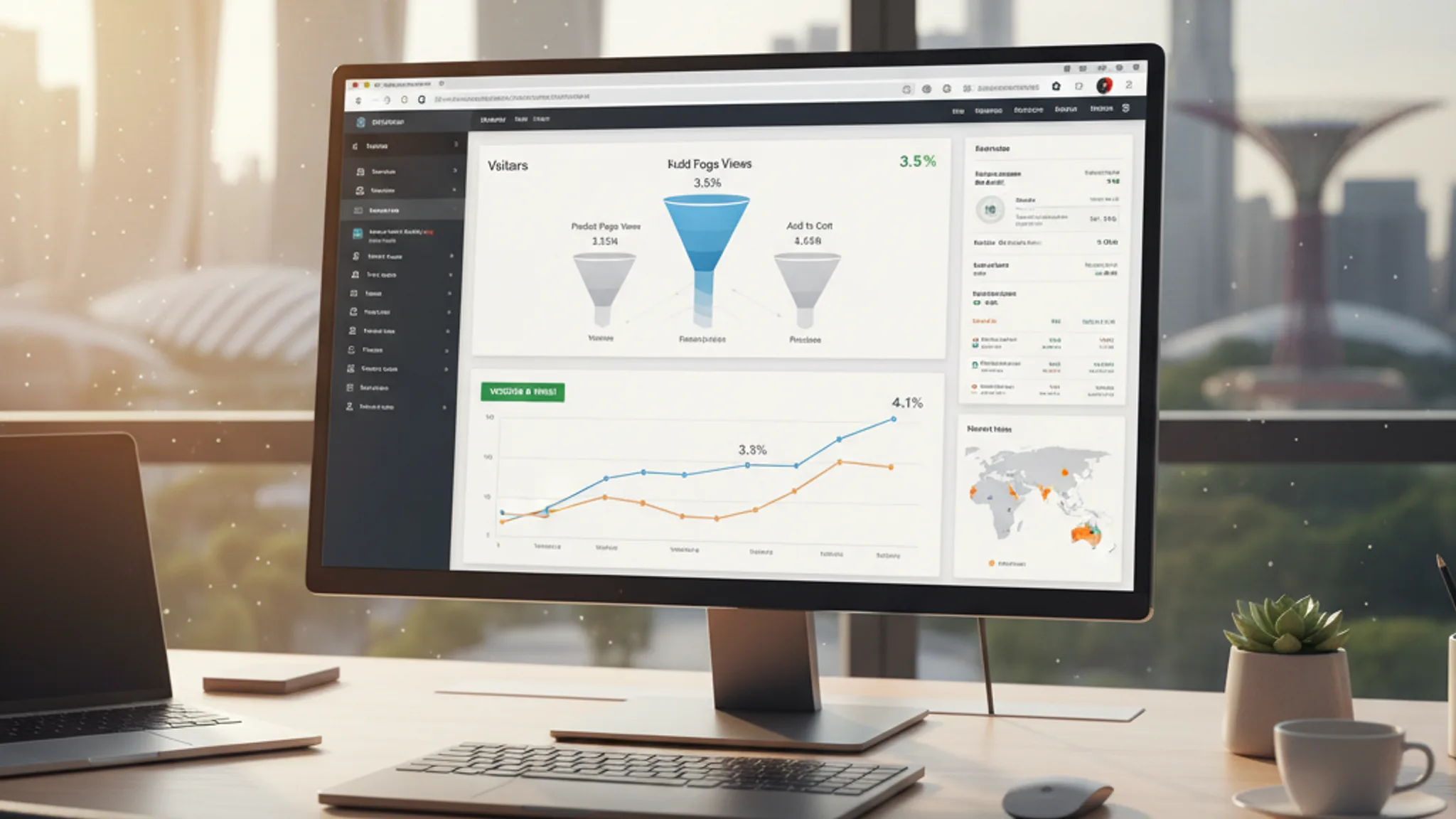





Your homepage is not a landing page. And that one mistake is probably why your Google Ads aren't converting.
We see it constantly: Singapore businesses spending $5,000 or more a month on ads, sending all that paid traffic straight to their homepage. The homepage has navigation links, a dozen different messages, a blog feed. Visitors don't know what to do, so they leave.
When we redesigned Perfect Style Salon's website and built dedicated landing pages for their ad campaigns, online enquiries jumped 180% within three months. Traffic increased 250%. Same salon, same services, just a much better front door.
This guide breaks down what goes into a landing page design in Singapore that actually converts: specific elements, local considerations, and real data from eight years of building these pages.
Key Takeaways
- 1 What Is a Landing Page (and Why It Converts Better Than Your Homepage) Jump to this section
- 2 The Anatomy of a High-Converting Landing Page Jump to this section
- 3 Landing Page Design Best Practices for Singapore Jump to this section
- 4 Landing Page Mistakes That Kill Conversions Jump to this section
- 5 Landing Pages for Google Ads vs SEO Traffic Jump to this section
What Is a Landing Page (and Why It Converts Better Than Your Homepage)
A landing page is a standalone page built for one purpose: getting a visitor to take a single, specific action: filling out a form, booking a consultation, or making a purchase.
The critical difference from your homepage: there are no distractions. No navigation menu. No sidebar. No "About Us" link pulling people away. Every element pushes toward one goal.
The numbers back this up. According to Unbounce's analysis of over 41,000 landing pages, the median conversion rate sits at 6.6% across industries. Compare that to typical website pages converting at 1–3%. That's a 2x to 6x improvement just by using the right page type.
When someone clicks your Google Ad for "hair salon Orchard Road," they have specific intent. A landing page that says "Book Your Hair Appointment at Our Orchard Road Salon" with a booking form right there converts far better than dropping them on a homepage that talks about nails, facials, hair, and your company history.
The Anatomy of a High-Converting Landing Page
After building landing pages for dozens of Singapore businesses, we've found six elements that consistently separate pages that convert from ones that bleed money.
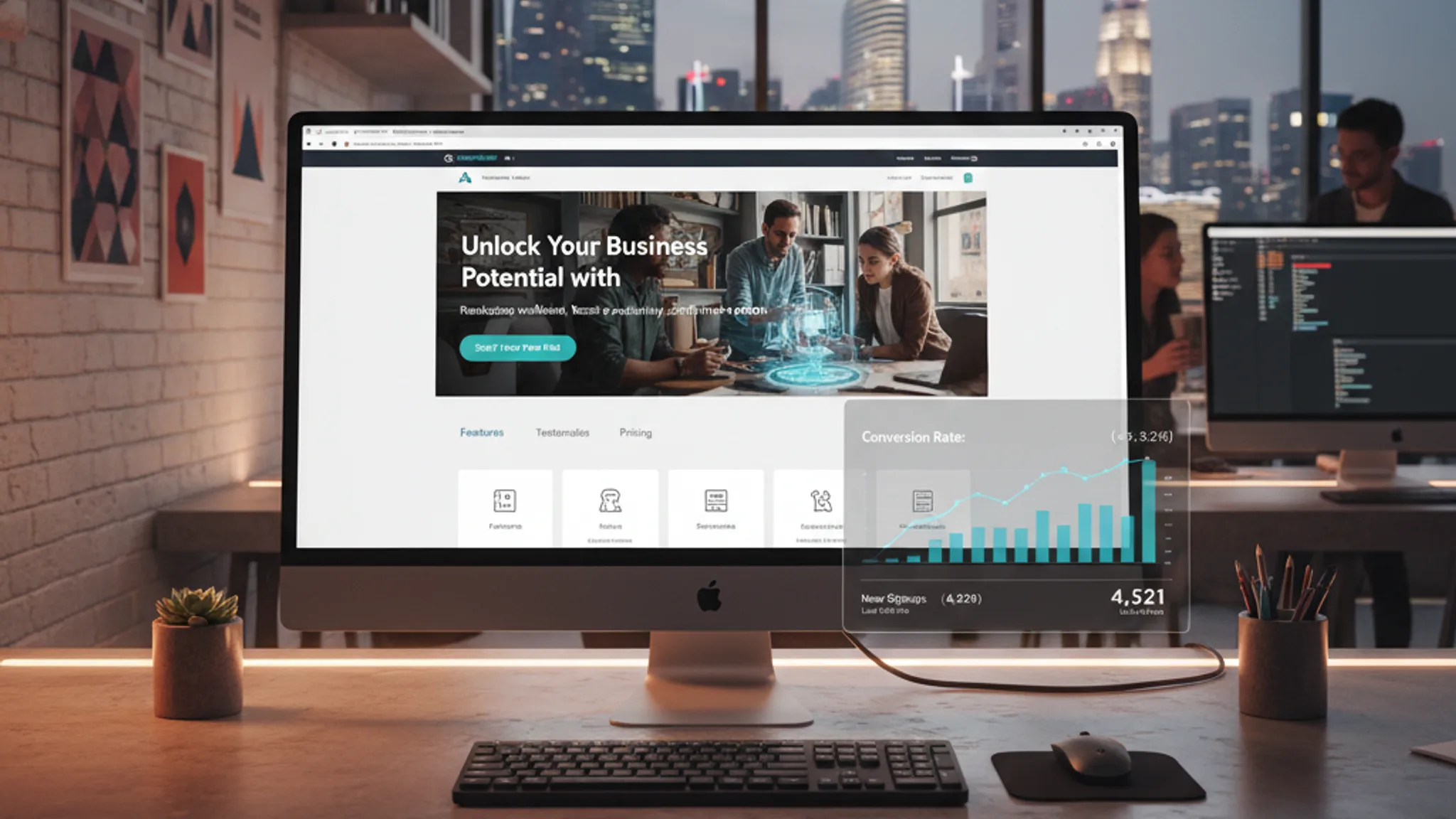
1. A headline that matches the ad copy. If your Google Ad says "Affordable Interior Design Packages from SGD 29,800," your landing page headline must echo that promise. Any disconnect and visitors bounce. Google calls this "message match" and it directly affects your Quality Score, which determines how much you pay per click.
2. A hero section that answers "Am I in the right place?" in under 3 seconds. Clear headline, supporting line, and a visual that reinforces the message. Include the primary CTA button above the fold, no scrolling required to understand the offer.
3. Benefits, not features. "We use React and Tailwind CSS" means nothing to most business owners. "Your website loads in under 2 seconds, so visitors don't leave before they see your products." That lands.
4. Social proof placed strategically. Testimonials, Google review ratings, client logos, case study metrics. For Perfect Style Salon, we prominently featured their 4.9-star Google rating with 250+ reviews. That kind of proof outperforms any copywriting.
5. One clear call-to-action. Not three. Not five. One. Repeated throughout the page, always driving toward the same action. The moment you add a competing CTA, you split attention and tank conversions.
6. Trust signals that reduce anxiety. In Singapore, include your UEN or ACRA registration, physical address, and phone number. For service businesses, a "No obligation, free consultation" line near the form can increase submissions by 20% or more.
Recommended reads
Landing Page Design Best Practices for Singapore
What works on American landing pages doesn't always translate here. After years of testing pages for the Singapore market, here's what actually matters.
Mobile-first is non-negotiable. Over 62% of web traffic in Singapore comes from mobile devices, and smartphone penetration sits at 97%. If your landing page doesn't work perfectly on a phone screen, you're losing the majority of potential customers. We design every landing page mobile-first, then adapt for desktop.
WhatsApp CTA buttons outperform forms. On landing pages where we've tested a traditional contact form against a "WhatsApp Us" button, WhatsApp consistently generates 30–50% more leads. For service businesses (tuition centres, clinics, home services), it's your highest-converting CTA.
Display pricing in SGD. Vague pricing kills trust. "Starting from SGD 1,500" converts better than "Contact us for pricing." Singapore consumers research extensively before reaching out. If your landing page won't give them a number, they'll try your competitor who will.
Match the page to the stakes. A Google Ads landing page should be fast and plain. A launch, a property preview or a product people want to hold is different. There a scroll story landing page that plays like a short film keeps people reading down to the form, and a 3D landing page lets them see the product from every side before they ask for a price.
Multilingual considerations. For mass-market services (renovation, tuition, F&B), having key sections in both English and Chinese can widen your funnel. We've seen bilingual landing pages convert 15–25% better for businesses targeting heartland areas.
Use local imagery. Stock photos of Western office buildings don't build trust with a Singapore audience. Use photos of your actual team, your shopfront, and recognisable local locations. If you don't have professional photos yet, invest in those before spending thousands on ads.
If your site needs a broader overhaul beyond landing pages, our web design services cover the full picture.
Landing Page Mistakes That Kill Conversions
We audit dozens of landing pages every year for Singapore businesses. The same mistakes come up again and again.
Too many CTAs. "Call us! Email us! Fill out the form! Follow us on Instagram!" When everything is a priority, nothing is. Pick one primary action.
Slow load times. Research from Portent shows a site loading in 1 second converts at 3x the rate of one loading in 5 seconds. Bounce probability increases by up to 90% at the five-second mark. We target under 2.5 seconds for every landing page we build.
No social proof. A landing page without testimonials or reviews is asking visitors to trust your claims alone. Even one genuine testimonial with a real name makes a measurable difference. We covered this in our piece on UX design principles that increase conversions.
Forms that ask for too much. Reducing form fields from 11 to 4 can increase conversions by 160%. Yet we still see landing pages asking for name, email, phone, company, job title, budget, timeline, and a detailed message. For lead generation, name + phone number + one qualifying question is enough.
Not matching the ad intent. If someone searches "cheap web design Singapore" and your landing page talks about premium bespoke design from SGD 8,000, you've wasted that click. The page must reflect the promise of the ad. We've written about more of these pitfalls in our post on website mistakes that cost you customers.
Landing Pages for Google Ads vs SEO Traffic
A visitor from a Google Ad and a visitor from organic search have different mindsets. Your page needs to meet them where they are.
Google Ads landing pages need tight message match. The visitor clicked a specific ad with a specific promise: deliver on it immediately. Google's Quality Score algorithm evaluates your landing page experience, and a poor one means you pay more per click and get shown less often.
For paid campaigns, build separate landing pages for each ad group. "SEO services Singapore" and "Google Ads management Singapore" need two different pages, not one generic services page. The extra effort pays for itself in lower CPC and higher conversion rates.
SEO landing pages need depth and authority. Organic visitors want comprehensive information. These pages can be longer, 1,500 to 2,500 words of useful content, structured with proper headings, internal links, and schema markup. They still need a clear CTA, but the path to conversion is longer. Build the page to support that journey rather than rushing visitors to a form.
We covered the broader paid vs organic debate in our Google Ads guide for Singapore SMEs, worth reading if you're weighing where to spend your marketing budget.
How to Test and Improve Your Landing Pages
The best-performing pages we manage have been through multiple rounds of testing. Here's how to approach it practically.
Start with your headline. It's the single element with the biggest conversion impact. Test a benefit-led version ("Get 3x More Leads From Your Website") against a specificity-led one ("Web Design Packages From SGD 2,500. Free Consultation"). Run both for at least two weeks.
Test your CTA next. Button colour matters less than button text. "Get My Free Quote" outperforms "Submit" because it reinforces value. Test placement too. Adding a second CTA button mid-page (after social proof) has increased conversions by 25% on pages we manage.
Minimum traffic for meaningful results. You need at least 1,000 visitors per variation for reliable A/B test results. If your page gets 200 visits a month, that takes 10 months. In low-traffic scenarios, make bigger, bolder changes and rely on before-and-after comparisons instead of simultaneous split tests.
Measure beyond conversion rate. Track scroll depth: if 80% of visitors never reach the CTA, the issue is page structure, not the offer. Use heatmaps (Hotjar or Microsoft Clarity, both free) to see where people click and hesitate.
Iterate quarterly. Even good pages go stale. We refresh landing pages for managed clients every quarter, updating testimonials, adjusting offers, testing new headlines. A page that converted at 8% last year might be at 5% today if left untouched.
A well-built landing page is the single highest-ROI investment you can make in your digital marketing. It sits between your advertising spend and your revenue, and even small improvements compound into serious results over months.
The principles are straightforward: one page, one goal, zero distractions. Match your message to the ad, load fast on mobile, use real social proof, and make the CTA impossible to miss. Then test, learn, and improve.
At Terris, landing page design in Singapore is one of the things we do best. We've built conversion-focused pages for salons, interior designers, corporate services firms, and e-commerce brands, and we bring the same data-driven approach to every project.
If your ads are generating clicks but not conversions, the problem is almost certainly your landing page. Talk to us about building one that actually works.

Written by
Terris
Founder & Lead Strategist
Terris has over 8 years of experience designing high-converting websites for Singapore businesses. From luxury brands to SMEs, he combines aesthetic design with strategic thinking to deliver websites that drive real business growth.
Want to see these strategies in action? Browse our portfolio or get in touch to discuss your project.