Terris Recommends 16,400+ monthly visitors Education & Enrichment
11 Best Chinese Tuition Centres in Singapore (November 2026)
Chinese tuition in Singapore: 11 centres compared by level, class size and results, plus how PSLE Chinese is marked and when Higher Chinese is worth it.
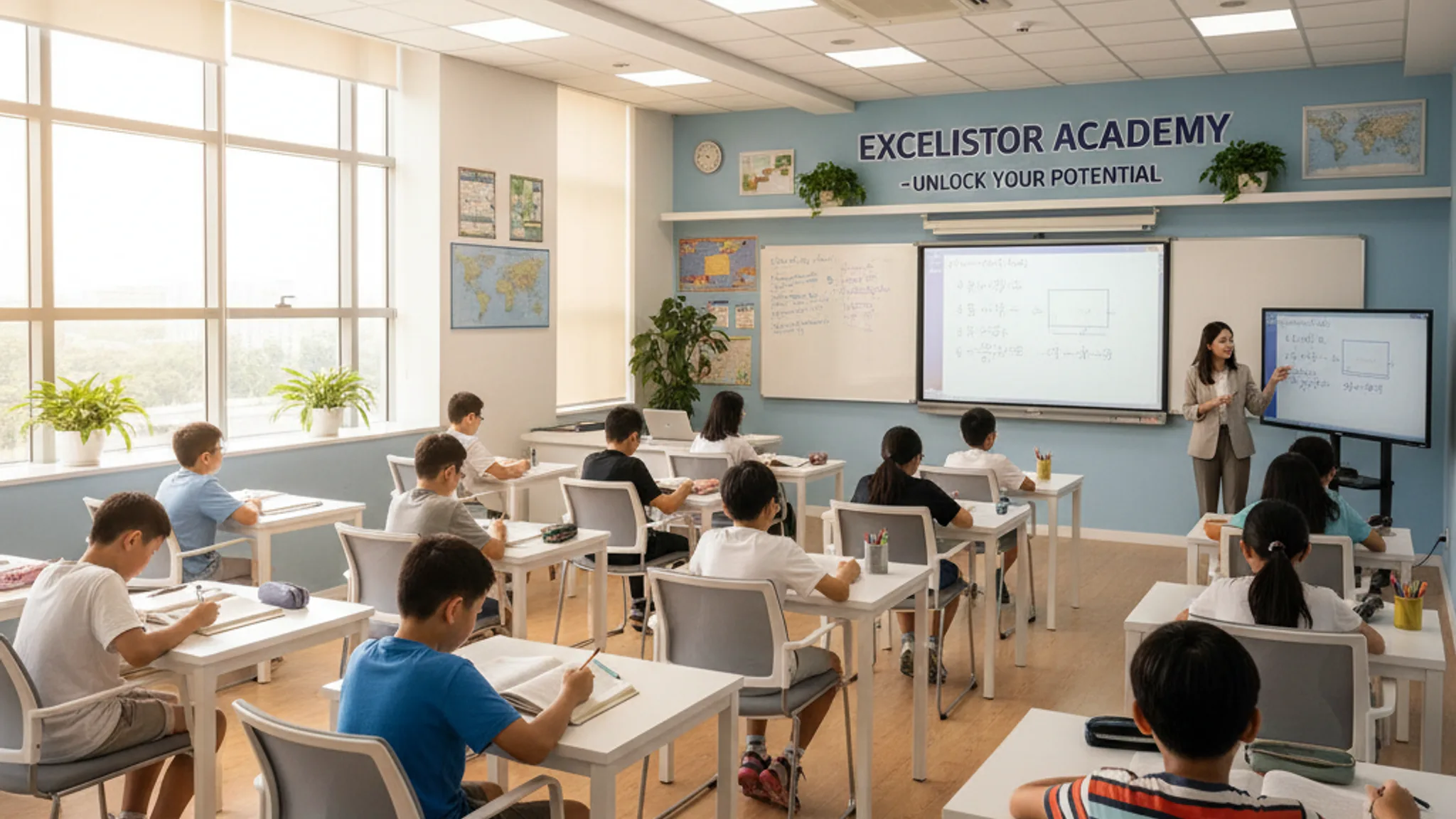
 1 Tien Hsia Language School
Why it's No. 1
This guide is part of Terris Recommends, my researched, hands-on picks of the best local businesses and services in Singapore. Every recommendation is researched and ranked by me.
See all recommendationsChinese is a quarter of your child's PSLE Score, and for many Singapore families it's the hardest quarter to help with at home. In the 2020 Census, more Chinese Singaporeans said they mainly speak English at home (47.6%) than Mandarin (40.2%), according to the Department of Statistics. So for a lot of children, a Chinese tuition centre is the main place they hear and speak the language outside school.
I compared Chinese tuition centres in Singapore on what can be checked: how long they've taught, how many branches they run, how big the classes are, who teaches, and which results they publish. I also read SEAB's exam papers so I could explain how PSLE Chinese is actually marked, because that changes what you should look for in a centre. Composition gets most of the attention, but it's only 20% of the grade.
Here are 11 centres, from play-based Mandarin for toddlers to a secondary specialist and a live online option. If your child needs help in more than one subject, my guide to the best tuition centres in Singapore covers the multi-subject chains.
| Centre | Best for | Levels | Branches | Class size |
|---|---|---|---|---|
| Tien Hsia Language School | A long track record and structured programmes | Preschool to Sec 4, incl. Higher Chinese | 11 | Not published |
| HAO Chinese Tuition Centre | Small classes for younger children | Ages 3 to 16 | 6 | 6 to 8 |
| Hua Language Centre | A Chinese-only specialist with ex-MOE curriculum leadership | 18 months to Sec 4 | 4 | 6 to 8 |
| Berries World of Learning | Play-based Chinese for preschool and lower primary | N1 to P6 | Around 20 | Not published |
| Wang Learning Centre | Exam-focused PSLE and secondary Chinese | P1 to Sec 4 | 14 | Not published |
| Unitimes Academy | A decorated former MOE Chinese teacher as principal | P1 to Sec 4 | 1 (Bukit Timah) | 4 to 8 |
| Hua Cheng Education Centre | Curriculum-first teaching across many centres | N1 to Sec 4, incl. Higher Chinese | 16 | Not published |
| Zhou's Academic Studio | Specific PSLE and O-Level results | P1 to Sec 4, plus adults | 3 | Small, size not stated |
| EduGrove | Published results across the east and north | 7 months to Sec 4 | 7 | Up to 12 |
| Chinese Distinctions | Secondary Chinese and Higher Chinese with a former RI teacher | Sec 1 to 4 | Studio plus online | Not published |
| Yi Dian Tong | Live online classes of four | P1 to Sec 4 | Online | 4 (2 for intensives) |
None of these centres publishes a full fee list online, so I've left fees out of the table. What to expect, and what to ask, is in the cost question near the end.
PSLE Chinese is marked out of 200 marks across four parts: composition is 20%, language use and comprehension 45%, oral 25% and listening comprehension 10%, according to SEAB's 2026 syllabus. Oral and listening together are 35% of the grade, and Paper 2 alone outweighs composition by more than two to one.
| Paper | What it tests | Time | Weight |
|---|---|---|---|
| Paper 1 Writing | One composition from a topic or a picture, at least 100 characters. An approved dictionary is allowed | 50 minutes | 20% |
| Paper 2 Language Use and Comprehension | Language MCQs, cloze, completing a dialogue and two comprehension passages | 1 hour 40 minutes | 45% |
| Paper 3 Oral | Reading a passage aloud (20 marks) and a conversation about a short video clip (30 marks) | About 10 minutes, with 10 minutes to prepare | 25% |
| Listening Comprehension | 10 multiple-choice questions | About 30 minutes | 10% |
The grade becomes an Achievement Level, from AL1 (90 marks and above) to AL8, and Chinese is one of the four subjects that add up to the PSLE Score. What this means for tuition: a centre that spends most of its time on composition templates is working on a fifth of the grade. Ask how it teaches comprehension and language use, and how often each child speaks in the video-clip conversation format, which is what the oral now looks like.
What I like is the structure. Each level has its own programme rather than one method stretched across ages, and it publishes its A1 results every year from 2016 to 2025, so you can see the record rather than take it on trust. Parents often mention a visible lift in their child's confidence speaking Mandarin, which is usually what changes first before the grades follow.
It doesn't publish fees, so ask for the monthly figure and what it includes before the trial. With this many branches, the teacher you get matters as much as the brand, so ask who will teach your child's class.
- Best known for
- Teaching Chinese since 1989, with A1 results published every year since 2016
- Branches
- 11 (Ang Mo Kio, Bukit Batok, Choa Chu Kang, Hougang, Jurong, Marine Parade, Orchard, Punggol, Sembawang, Tampines, Woodlands)
- Levels
- Preschool to Sec 4, including Higher Chinese
- Fees
- On enquiry
- Website
- tienhsia.com
Its early literacy method gets most of the praise from parents of younger children, and one theme comes up again and again in reviews: children look forward to class. When a P3 stops dreading Chinese, the grades tend to follow. HAO has grown to six centres: Balestier (Wai Wing Centre), Jurong East, Hong Kah North, Bukit Batok, Bedok Reservoir and Kovan.
Its site describes its teachers as experienced Chinese educators rather than former MOE teachers, so ask about the teacher's background at the trial. Fees aren't on the site either.

- Best known for
- Small classes and an early literacy method for young learners
- Branches
- 6 (Balestier, Jurong East, Hong Kah North, Bukit Batok, Bedok Reservoir, Kovan)
- Levels
- Ages 3 to 16
- Class size
- 6 to 8
- Website
- haochinesetuition.com
It covers everything from an 18-month playgroup to O-Level, in classes of six to eight, and changes its method with age: early literacy for the little ones, exam technique for older students. It also runs a Chinese as a Foreign Language track, useful for a child who has arrived from overseas or grows up in an English-speaking home, and an Elite programme for strong students.
Branches are at United Square, Parkway Parade, Greenwich V and Causeway Point. Fees aren't published, and as with any centre spread across several malls, the experience can differ by branch, so do the trial at the one you'd use.

- Best known for
- Chinese only since 1992, with a former MOE Chinese inspector as curriculum director
- Branches
- United Square, Parkway Parade, Greenwich V, Causeway Point
- Levels
- 18 months to Sec 4
- Class size
- 6 to 8
- Website
- hua.com.sg
It's one of the biggest Chinese enrichment networks here, with around 20 centres, so there's probably one near you. Parents mention the friendly teachers and the feedback after each lesson, handy when your child is too young to tell you what they learned. It also publishes its 2025 PSLE results, a sign it does more than play.
The caveat: Berries is at its best with younger children and costs more than a neighbourhood tutor. A P5 or P6 who needs heavy PSLE practice may do better at an exam-focused centre like Wang or Zhou's.

- Best known for
- Play-based Chinese for preschool and lower primary since 1993
- Branches
- Around 20 islandwide
- Levels
- N1 to P6
- Website
- berriesworld.com
One parent's review explains why they stayed three years: lessons that cover oral, composition and comprehension in one long sitting rather than one paper at a time. For a P6 family heading into the PSLE, that kind of all-round practice is what moves an AL.
It has grown to 14 centres plus its headquarters on East Coast Road, from Yishun and Punggol to Clementi and Jurong East. Fees aren't published. Because it's demanding, it suits a child who is coping and wants to push more than one who already dreads Chinese.

- Best known for
- Rigorous, exam-focused PSLE and secondary Chinese since 2007
- Branches
- 14 centres plus the East Coast Road headquarters
- Levels
- P1 to Sec 4
- Website
- wang.edu.sg
Classes are four to eight students, from P1 to Sec 4. Unitimes teaches English, Maths and Science as well as Chinese, so it isn't a Chinese-only centre, but Chinese is where its principal's background lies. By its own count, 95% of trial students enrol and parent satisfaction is 98%.
It's one centre, at Dunearn Village (896 Dunearn Road), so it suits families in Bukit Timah and the west. Fees aren't published. Ask whether your child's class is taught by the principal or by another teacher.

- Best known for
- A principal with national awards for teaching Chinese
- Location
- 896 Dunearn Road, #03-21/22 Dunearn Village
- Levels
- P1 to Sec 4
- Class size
- 4 to 8
- Website
- unitimes.sg
Its headquarters is at Thomson Plaza, and its centres run from City Square and Serene Centre to One Punggol, Heartbeat@Bedok and Loyang Point. Two of them, Bukit Timah Plaza and Century Square, were rebranded Choice Hua Sheng in July 2025, so don't be thrown if the signage differs. Parents mention patient teachers and regular updates on progress, which matters when you're trying to tell whether tuition is working.
Fees aren't published, but each centre lists its own WhatsApp number for enquiries. With 16 centres, ask whether the teacher at yours is the same one through the year.

- Best known for
- Curriculum-first Chinese teaching since 2000, with a PSLE oral programme
- Branches
- 16, headquartered at Thomson Plaza
- Levels
- N1 to Sec 4, including Higher Chinese
- Website
- huachengeducation.com.sg
Those are its own figures and they aren't tied to a year, but they're specific, and the studio has taught for over ten years in small classes that follow the MOE syllabus closely. It also runs Chinese painting and calligraphy, plus classes for adults and international students, which helps if a parent wants to learn alongside a child.
Branches are at Goldhill Plaza (Novena), KINEX (Paya Lebar) and Beauty World Centre. Fees aren't on the site, but it lists a WhatsApp number for enquiries. It suits an upper primary or secondary student who needs measurable improvement.

- Best known for
- Almost 90% at AL1 to AL3 in PSLE Chinese, by its own count
- Branches
- Goldhill Plaza (Novena), KINEX (Paya Lebar), Beauty World Centre
- Levels
- P1 to Sec 4, plus adult and international classes
- Website
- zas.sg
It starts early, with playgroups from seven months, and runs through nursery and kindergarten to the PSLE and O-Level, plus a separate composition class. Its seven centres are at White Sands (Pasir Ris), Parkway Parade, Our Tampines Hub, AMK Hub, The Woodleigh Mall, SAFRA Choa Chu Kang and Anchorvale Village.
Twelve is at the larger end for Chinese, where oral needs speaking time, so ask how oral is practised in class. Fees aren't published; ask on WhatsApp and book a trial.
- Best known for
- Published results: 61% of primary students at AL4 or better
- Branches
- 7 (Pasir Ris, Parkway Parade, Tampines, Ang Mo Kio, Woodleigh, Choa Chu Kang, Sengkang)
- Levels
- Playgroup from 7 months to Sec 4
- Class size
- Up to 12
- Website
- edugrove.com.sg
She holds a master's in Chinese education from NIE and an MOE teaching award. Classes run at her learning studio and live online, for Chinese and Higher Chinese only. That focus matters right now: from 2027, secondary students sit the new SEC exam, where Mother Tongue has a single written sitting in September, so there's no second attempt.
It's a studio rather than a chain, so places are limited and the address is given when you enquire. Fees and results aren't published. Ask for both, and for how lessons have been adapted for the SEC.
- Best known for
- A former RI and MGS teacher and O-Level examiner
- Location
- Learning studio (address on enquiry), plus live online
- Levels
- Sec 1 to 4, Chinese and Higher Chinese
- Website
- chinesedistinctions.sg
It teaches P1 to P4 Chinese, P5 Higher Chinese, PSLE comprehension, composition and oral, and secondary Chinese including an O-Level oral intensive. Regular lessons are 1.5 to 1.75 hours and intensives 50 minutes, materials are posted to you, and each child has a regular teacher who gives weekly feedback. It says 98% of its 2025 PSLE students improved by one to three grades.
Registration is S$30, and the 2027 fees are on its programme fee page as an image, so check there or ask by email. Online works best for children who will speak up on a screen. For a shy P2, I'd still start in a room.
- Best known for
- Small live online classes with materials posted home
- Format
- Live online, 4 per class (2 for PSLE and O-Level intensives)
- Levels
- P1 to Sec 4, including P5 Higher Chinese
- Fees
- S$30 registration; 2027 fees on its site
- Website
- yidiantong.com.sg
These are the things that separate a centre I'd recommend from one I'd quietly steer a friend away from.
- Teachers who know the exam. A tutor who has taught in MOE schools or marked PSLE and O-Level scripts knows where students lose marks. Hua's curriculum director, Unitimes' principal and Chinese Distinctions' founder all have that background.
- Speaking time. Oral and listening are 35% of PSLE Chinese. In a class of six to eight, every child speaks every lesson. In a class of 20, the shy ones hide. Ask how many minutes your child will speak.
- Paper 2, not just composition. Language use and comprehension is 45% of the grade. A centre should show you how it teaches it, not only its composition templates.
- Up to date with the exam. The PSLE oral is now a conversation about a video clip, and from 2027 secondary students sit the SEC. Materials should reflect both. You can check a centre is registered on MOE's list of private schools.
- The right fit for the level. A play-based centre is wonderful for a K2 child and wrong for a P6 who needs PSLE practice. Matching the centre to the stage matters more than chasing the biggest name.
For the broader picture across subjects, see my guide to tuition centres in Singapore, and for younger children, my roundup of enrichment classes.
Chinese tuition in Singapore costs about S$200 to S$600 a month for group classes, and S$300 to S$800 for O-Level Chinese, going by the ranges Hua Yi Education publishes. None of the 11 centres above lists a full fee schedule, so ask each for the monthly fee, the lesson length and what's included.
Multi-subject chains that teach Chinese do publish theirs, which gives you a benchmark. Mind Stretcher's 2027 fees for a primary weekday class run from S$250.70 to S$272.50 a month including GST, and AGrader's from S$250.70 to S$294.30. Both are in my tuition centres guide. Ask too whether materials, make-up lessons and holiday intensives are included, since those are often billed on top.
Higher Chinese is worth taking at PSLE if your child is already strong in Chinese and you're considering a SAP school. It's graded Distinction, Merit or Pass and doesn't count towards the PSLE Score, but students who pass it with a PSLE Score of 14 or better get a posting advantage into SAP schools.
The PSLE Higher Chinese paper has two written parts, a composition of at least 200 characters (40%) and language use and comprehension (60%), and no oral (SEAB). The rule for taking it in secondary school has also loosened: from the 2026 Sec 1 intake, an AL1 or AL2 in Chinese, or a Distinction or Merit in Higher Chinese, is enough, whatever the overall PSLE Score. If Higher Chinese is eating into time your child needs for a weaker subject, dropping it is a reasonable call.
If you don't speak Mandarin at home, the most useful thing is regular speaking practice somewhere else: a small class, a centre with a Chinese as a Foreign Language track, or short online sessions. You're in good company, since more Chinese Singaporean households now mainly speak English than Mandarin.
Schools help too. The Mother Tongue Support Programme gives extra help in small groups at P3 and P4, a reading programme started at P1 and P2 in 2025, and from P5 a less demanding Foundation Chinese course is available. Of the centres here, Hua (Chinese as a Foreign Language), HAO and Yi Dian Tong (small classes) and Berries (play-based, for young children) suit non-Mandarin homes best. Zhou's even runs adult classes if you'd like to learn alongside your child.
Exemption from Mother Tongue in Singapore is rare. MOE considers it only for a child returning from overseas who had no chance to learn an official Mother Tongue Language, or a child with special educational needs who has severe difficulty coping with learning overall. Parents apply through the school, before the first quarter of the year.
An exempted child can study a foreign or Asian language privately instead, and is given a Mother Tongue score for secondary school posting. For families moving here, my AEIS preparation guide covers how a child gets into a local school in the first place, and my IB tuition guide covers Chinese at international schools.
Group tuition is better for most students, because Chinese needs conversation and a class gives your child people to speak it with. One-to-one is worth the extra cost for a specific gap, such as oral confidence, composition, or catching up after moving from an English-speaking school.
Many families use a group class and add a short block of one-to-one or a two-student intensive, like Yi Dian Tong's, in the months before the PSLE oral.
Most parents have judged your centre before they call. They search for Chinese tuition, open a handful of websites, and quietly cross off the ones that look dated, load slowly, or don't show up on Google at all. The teaching might be excellent, but if the site doesn't show it, the enquiry never comes.
That's fixable. I've written a guide to website design and SEO for tuition centres in Singapore that walks through what works for this industry. If your site isn't pulling its weight, get in touch for a free consultation, or see how I build websites for tuition centres.
Choosing Chinese tuition in Singapore comes down to fit more than fame. Tien Hsia is the safe all-round start, HAO and Hua the small-class specialists, Berries the pick for the early years, and Wang and Zhou's the exam-focused centres for upper primary and secondary. For Sec 3 and 4, Chinese Distinctions is built for the new SEC, and Yi Dian Tong solves the travel problem.
Shortlist two or three, book trials, and watch how your child responds in the room. The right centre is the one where your child speaks up and starts surprising you in Mandarin at the dinner table. I have similar guides for English tuition, PSLE maths tuition, tuition centres across every subject, speech and drama classes and preschools.
Sources and references (11)
- isomer-user-content.by.gov.sg › 0005 y26 sy
- isomer-user-content.by.gov.sg › 0015 y26 sy
- moe.gov.sg › psle scoring system
- moe.gov.sg › 20240914 strengthening efforts for students to learn and use their mother tongue language from young
- moe.gov.sg › exemption
- moe.gov.sg › 20260303 mother tongue exemption or replacement for students with conditions such as autism spectrum disorder or dyslexia
- seab.gov.sg › secondary education certificate sec
- singstat.gov.sg › executive summary
- malaymail.com
- clas-huayi.com › how to choose chinese tuition singapore
- honeykidsasia.com › chinese language enrichment centres