








Every week we speak with Singapore founders who fall into one of two camps. The first spends $15,000 on a feature-packed website before confirming product-market fit. The second throws together a free Wix page and wonders why nobody takes them seriously. Both are making the same mistake. They are building for the wrong stage.
Website design for a startup in Singapore is not the same as website design for an established business. Your budget is tighter, your timeline is measured in weeks, and the Singapore ecosystem, with its grants, accelerators, and 4,500-plus active startups, gives you advantages most founders elsewhere do not have.
This guide covers what your startup website needs at each stage, what it should cost, which platforms make sense, and the grants that can cut your bill in half.
Key Takeaways
- 1 What a startup website actually needs at launch Jump to this section
- 2 Website design costs for startups in Singapore Jump to this section
- 3 Choosing the right platform for your startup website Jump to this section
- 4 Startup branding on a budget, getting it right the first time Jump to this section
- 5 SEO from day one, why startups cannot afford to ignore it Jump to this section
What a startup website actually needs at launch
Forget the 20-page sitemap. At launch, your startup website has one job: validate that real people care about what you are building. Everything else is a distraction.
An MVP website for a Singapore startup needs five things:
- A clear value proposition above the fold, visitors should understand what you do within five seconds. No jargon. Plain language.
- Social proof, a testimonial from a beta user, an accelerator logo, or a media mention. New businesses have a trust deficit; address it early.
- A single call to action, book a demo, join the waitlist, or request a quote. One action, not three competing buttons.
- Mobile-first design, over 97% of Singaporeans own a smartphone. Most early traffic comes from LinkedIn shares and WhatsApp forwards.
- Fast load times, a one-second delay reduces conversions by 7%. Startups cannot afford to leak visitors.
What you do not need at launch: 30 blog posts, a careers page, elaborate animations, or a customer portal. Those come later, when you have revenue and data to justify them. Build the minimum site that lets you test your message and collect leads.
We have seen founders launch with three pages, homepage, about, and contact, and land their first paying customers within a fortnight. The website did not close the deal, but it gave prospects enough confidence to book that first call.
Website design costs for startups in Singapore
Let us talk numbers. Website costs in Singapore vary wildly, but for startups specifically, here is what you should expect to pay based on what you actually need:
| Stage | What you get | Typical cost |
|---|---|---|
| Pre-seed / Idea stage | Landing page (1–3 pages), basic branding, contact form, mobile-responsive | $1,500 – $3,000 |
| Seed / Early traction | Full marketing site (5–8 pages), custom design, SEO foundations, CMS for blog | $3,000 – $5,500 |
| Series A / Growth | Custom-built site, advanced integrations (CRM, analytics, booking), multi-page blog, case studies, performance optimisation | $5,500 – $8,000+ |
These are realistic ranges for a capable Singapore agency or senior freelancer. Template sites from budget providers start around $500, but the trade-offs in design quality, speed, and SEO are significant.
The mistake we see most often: founders at the idea stage commissioning a $10,000 website with features they will not use for 18 months. That capital is better spent on customer acquisition or product development. Build for where you are today, with a clear upgrade path for tomorrow.
A sensible rule: invest 5–10% of your first-year marketing budget in your website. A $30,000 annual digital budget warrants roughly a $3,000 site, leaving room for paid ads, content, and SEO.
Recommended reads
Choosing the right platform for your startup website
Platform choice has long-term consequences. Here is an honest comparison for Singapore startups:
WordPress
Flexible, well-supported, and cost-effective for content-heavy sites with blogs and regular updates. Most developers know WordPress, so you will never struggle to find help. The downsides: ongoing maintenance (updates, security patches, plugin conflicts) and mediocre out-of-the-box performance. A poorly optimised WordPress site with ten plugins can take four to five seconds to load.
Custom-built (Astro, Next.js, or similar)
If performance matters, and for startups competing in SEO-heavy markets, it does, a custom framework delivers sub-two-second loads, perfect Lighthouse scores, and total design freedom. Higher upfront cost, but it pays for itself within six to twelve months through better rankings and conversions.
Website builders (Wix, Squarespace)
Tempting for their low entry cost, but SEO, speed, and customisation limitations become painful quickly. You will likely outgrow them within a year and face a full rebuild, meaning you pay twice. The only exception: validating an idea over a weekend.
Our recommendation: start with a well-built WordPress site or a lightweight custom site. Either gives you room to grow without a complete rebuild when you scale.
Startup branding on a budget, getting it right the first time
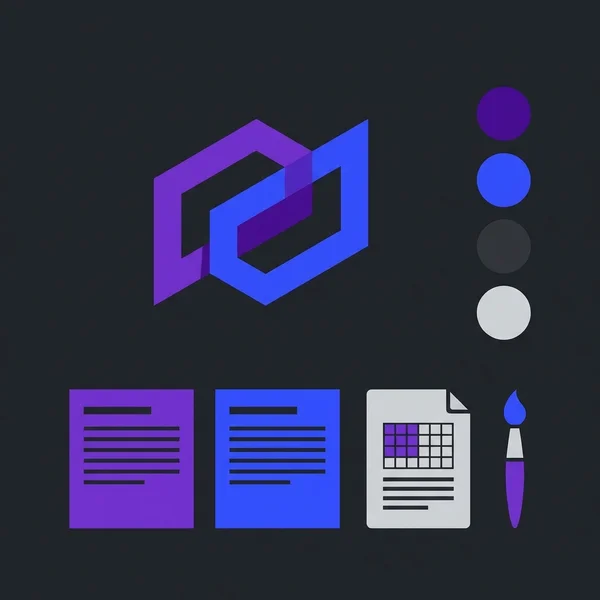
Your website is only as strong as the brand behind it. Inconsistent colours, a clipart logo, and no visual identity will undermine even the best-coded site. You do not need a $20,000 branding package. You need consistency:
- A professional logo, even a clean wordmark beats a DIY effort. See our logo design cost guide for realistic pricing.
- A defined colour palette. Two to three colours used consistently across your website, pitch deck, and socials. Colour consistency is the fastest way to look more established than you are.
- Typography that fits your positioning, a fintech startup should not use the same fonts as a children’s enrichment centre.
- A tone of voice, professional but approachable? Technical but human? Define it early and apply it everywhere.
Our brand identity checklist for Singapore startups covers which elements to invest in now versus later. Budget-wise, a startup branding package (logo, palette, typography, basic guidelines) typically runs $800 to $2,500 in Singapore. Bundling branding with website design can save 15–20%.
SEO from day one, why startups cannot afford to ignore it
A startup launches a website, pours money into paid ads for six months, then discovers zero organic traffic. We see it constantly. Retrofitting SEO is harder and more expensive than building it in from the start.
SEO is not a phase-two activity. It is a day-one foundation. The technical groundwork needs to be in place from launch:
- Clean URL structure,
/services/web-designnot/page?id=347&ref=nav - Proper heading hierarchy. One H1 per page, logical H2/H3 nesting
- Meta titles and descriptions, written for humans, optimised for search
- Schema markup: LocalBusiness, Organization, and FAQ structured data
- Core Web Vitals compliance: Google uses speed and interactivity as confirmed ranking signals
- Mobile-first indexing: Google indexes the mobile version first; a poor mobile experience tanks rankings
The cost of doing this at the build stage is minimal. Fixing it later costs significantly more. One practical tip: target one or two long-tail keywords from day one. A well-optimised homepage can start ranking within three to six months, delivering compounding organic traffic that reduces your paid-ad dependence.
Singapore grants that can fund your startup website
The Singapore government actively subsidises early digital costs. Here are the grants most relevant to startup web design cost reduction:
Productivity Solutions Grant (PSG)
The most commonly used website design grant. It covers up to 50% of qualifying costs, capped at $30,000 per company over a three-year window. For a $5,000 website, that is up to $2,500 back. Eligibility: registered in Singapore, annual group turnover under $100 million, at least 30% local shareholding. You must use a pre-approved vendor listed on GoBusiness, an unlisted vendor means automatic rejection. No payment may be made before your application is submitted. For a full walkthrough, read our PSG grant guide.
Startup SG Founder
Up to $50,000 in startup capital for first-time entrepreneurs, matching $5 for every $1 raised. Not earmarked for websites specifically, but the funds can cover your site, branding, and initial marketing. Eligibility: first-time founder, at least 30% equity, company less than six months old, applied through an Accredited Mentor Partner (NUS Enterprise, SMU IIE, or SUTD).
Enterprise Development Grant (EDG)
Covers strategic consulting, brand development, and digital marketing strategy, not the website build itself, but the strategic work that feeds into it. Useful for startups professionalising their market positioning at a slightly later stage.
Practical advice
Apply early. Processing takes six-plus weeks, so factor in a two-month buffer. Make sure your web design partner is experienced with grant paperwork, mistakes mean delays or outright rejections.
Real-world example: how we approached a startup website project
A Singapore B2B SaaS startup came to us post-seed round with a functioning product, a handful of paying customers, and a Squarespace site that looked like it was built in 2019, because it was. Their budget: under $5,000.
We delivered a six-page custom website (homepage, product overview, two use-case pages, about, contact), a brand refresh, SEO foundations with sub-2-second loads, a blog-ready CMS, and a “Request Demo” flow connected to their CRM.
Total cost: $4,800. PSG covered 50%, so they paid $2,400 out of pocket. Timeline: four weeks.
Within three months, inbound demo requests rose 40%. Two investors specifically mentioned the website during due diligence as evidence the company “had its act together.” That is the ROI of a well-built startup website. It works for you in rooms you are not even in. See similar work in our Kingsman case study.
Building a startup website in Singapore is not about spending the most or building the least. It is about deliberate choices that match your stage, budget, and growth trajectory. Start with an MVP site that earns trust and captures leads. Invest in branding and SEO from day one so you are not paying to fix them later. Choose a platform with room to grow. And take advantage of the grants Singapore offers. They exist precisely for businesses like yours.
If you are a Singapore startup looking for a website that punches above its weight without blowing your runway, we would like to hear from you. We have helped dozens of founders launch sites that look like they cost three times what they did, because smart design decisions matter more than big budgets.

Written by
Terris
Founder & Lead Strategist
Terris has designed and built websites for over 50 Singapore startups and SMEs, from pre-revenue founders to Series A companies. He specialises in high-converting, performance-first websites that grow with your business.
Want to see these strategies in action? Browse our portfolio or get in touch to discuss your project.