Terris Recommends 16,400+ monthly visitors Beauty & Grooming
7 Best Tattoo Studios in Singapore (August 2026)
The 7 best tattoo studios in Singapore for 2026, real minimum charges from S$80 to S$150, and the hygiene question with an official answer attached.
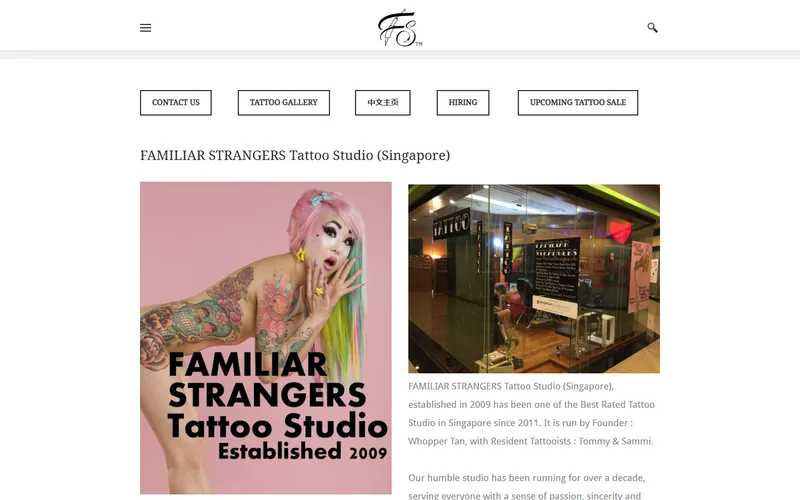 1 Familiar Strangers The lowest minimum, and real range
Why it's No. 1
This guide is part of Terris Recommends, my researched, hands-on picks of the best local businesses and services in Singapore. Every recommendation is researched and ranked by me.
See all recommendationsThere is one question worth asking any best tattoo studio Singapore shortlist, and it happens to have an official answer attached, which makes it much easier to ask without feeling rude.
Singapore blood banks defer donors for three months after a tattoo if it was not done with sterile, single-use, disposable needles, or if the donor simply is not sure. If it was done with them, there is no deferral at all. So the question is not awkward, it is practical: do you use single-use needles? A studio that answers instantly and specifically has told you something real. One that waffles has told you something too.
The other thing worth knowing before you book is the minimum charge. Every studio has one and here they run roughly S$80 to S$150, which means a very small design often costs the same as a considerably bigger one. This guide covers seven studios with their actual minimums, and it is honest about the asymmetry that should shape the whole decision: getting a tattoo is cheap and quick, and undoing one is neither.
Four things to settle before you book a consultation.
- Ask about single-use needles, and use the blood donation rule as your yardstick. Per Singapore blood donation guidance, a tattoo done with sterile single-use disposable needles carries no donation deferral, while one that was not, or one where you are unsure, carries a three-month deferral. That is a national health body treating the distinction as material, which is exactly why it is a fair question to ask a studio. Also look for an autoclave, fresh gloves, disposable ink caps and a workstation wiped down in front of you.
- Know the minimum before you design to a budget. Studio minimums here run from about S$80 at the accessible end to S$150 at several established studios. Below that threshold the size stops mattering, because you are paying for the setup, the sterile consumables and the artist's booked time rather than the square centimetres of ink. If you want something genuinely tiny, you may as well make it slightly larger and better.
- Pick the artist, then the studio. Fine line work, black and grey realism, Japanese, neo-traditional, illustrative and cover-ups are different skills, and very few people are excellent at all of them. Most studios here host several artists with distinct specialities, so browse individual portfolios rather than the studio's overall feed, and specifically look for healed photographs. Fresh ink flatters everyone. Healed work at six months is what you will actually be wearing.
- Understand the asymmetry before you commit. A S$150 tattoo takes an afternoon. Removing it takes a course of laser sessions over many months, costs a multiple of the original price, and often leaves a ghost rather than clean skin. My guide to the best tattoo removal clinics in Singapore has the numbers, and reading it before your first tattoo is a genuinely useful hour.
One structural point about the market here. Tattooing in Singapore has no sector-specific licence and no register to check, so unlike podiatry or optometry there is no official list telling you who is qualified. Studios operate under general health and safety expectations. That puts the verification burden on you, which is manageable, because the things that matter are visible: sealed needles opened in front of you, an autoclave, gloves changed between clients, and a studio that does not mind being asked.
If you are booking body work as part of a wider grooming run, my guides to the best waxing salons in Singapore and the best eyebrow embroidery studios in Singapore cover the two adjacent categories where the same single-use question applies.
| Studio | From | Since | Best for |
|---|---|---|---|
| Familiar Strangers | S$80 | 2009 | Japanese, Polynesian and portraits |
| 8 Volts Tattoo | S$100 | 2007 | Traditional and black and grey realism |
| Rise Above Tattoo | S$100 | 2012 | Realism and portraits, plus piercing |
| BMF Ink | S$120 | 2019 | Fine line and detailed black and grey |
| Visual Orgasm | S$150 | 2005 | A long-running studio, autoclave sterilisation |
| Vagabond Ink | S$150 | - | Realism, cover-ups, vegan inks |
| Fineline Tattoo and Art | S$150 | 2012 | Fine line and ornamental work |
That S$80 minimum is the lowest of the studios here, which matters more than it sounds for a first tattoo. The commonest way people end up disappointed is committing to something large before knowing how they react to the process, the pain and the healing. A studio with a low entry point and free consultations lets you start small, live with it for six months, and then decide.
Japanese and Polynesian work are both traditions with real rules about composition and flow, and they are not styles to hand to a generalist. A studio that has been doing them for over fifteen years is the right place to ask whether the design you have in mind actually works on the part of the body you want it on.
- Best for
- A first tattoo, and Japanese or Polynesian traditions
- Minimum
- From about S$80, with complimentary consultations
- Since
- 2009, founded by Whopper Tan
- Where
- #02-44 Balestier Plaza, 400 Balestier Road
- Website
- familiarstrangers.info
A studio built around a well-known lead artist has a specific advantage: the standard is set by someone with a reputation to protect, and that tends to hold across the team. It also means the lead artist's own diary may run months out, so if you specifically want Joe Wang rather than the studio, ask early and expect to wait.
The studio states that it follows strict sterilisation protocols. Ask the single-use needle question anyway, because a studio that answers it easily is confirming what it publishes, and one that does not is telling you the published claim is decorative.
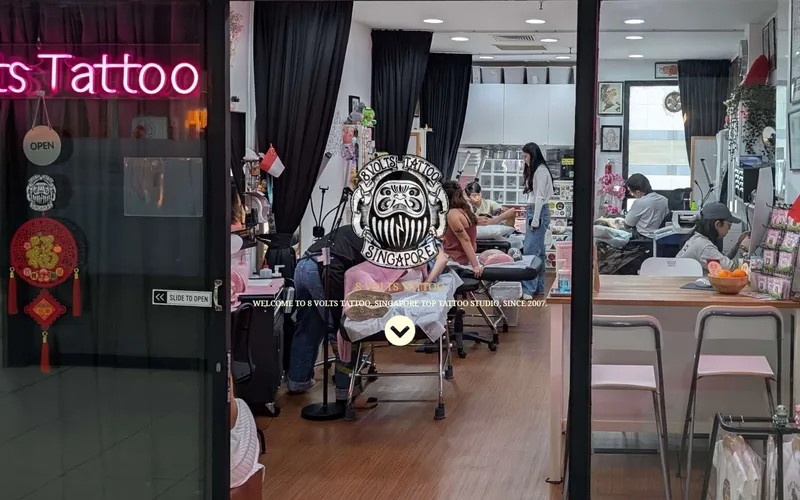
- Best for
- Traditional and realism, from a named lead artist
- Minimum
- Small tattoos from about S$100
- Since
- 2007, led by Joe Wang
- Where
- #03-12 Orchard Plaza, 150 Orchard Road
- Website
- 8voltstattoo.com
Having tattooing and piercing under one roof is convenient, and it means the same hygiene question covers both. Piercing carries the same single-use principle: fresh sterile needle, sterile jewellery, gloves changed. Ask once and you have covered the whole visit.
One practical note. Rather than a conventional website, riseabovetattoo.com.sg currently serves a Linktree page pointing to booking and social channels. That is increasingly normal for small studios whose portfolio genuinely lives on Instagram, but it does mean you cannot browse a gallery or a price list in the usual way. Go via the booking link or the Instagram account.
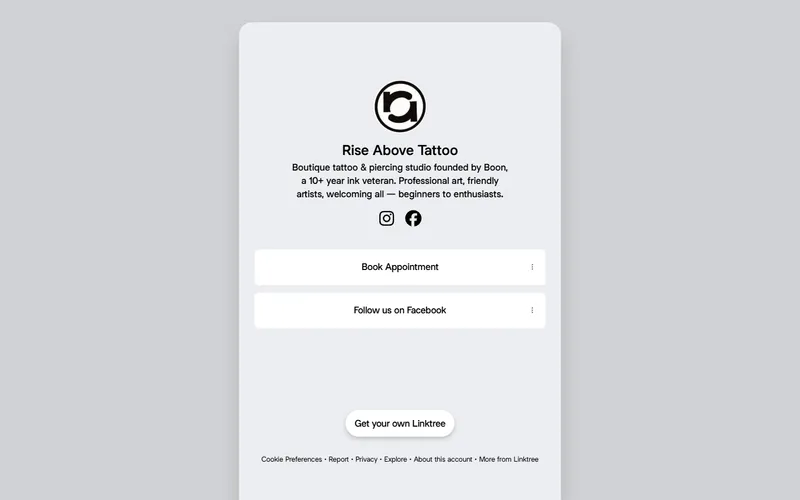
- Best for
- Realism and portraits, plus piercing in the same visit
- Minimum
- Tattoos from about S$100
- Since
- 2012, founded by Boon
- Where
- #05-18 Far East Plaza, 14 Scotts Road
- Website
- riseabovetattoo.com.sg (a Linktree page, not a full site)
Those backgrounds are not decoration. Calligraphy is the discipline of controlled line weight, and architecture is the discipline of proportion and composition, which are precisely the two things fine line tattooing lives or dies on. Fine line looks simple and is unforgiving, because there is nothing to hide a wobble behind.
The studio states that it uses single-use needles and meticulous sterilisation, which is the answer you are looking for, published rather than merely implied. Worth also asking how fine line ages: very thin lines can spread slightly over years, and a good artist will tell you where on the body that happens fastest.
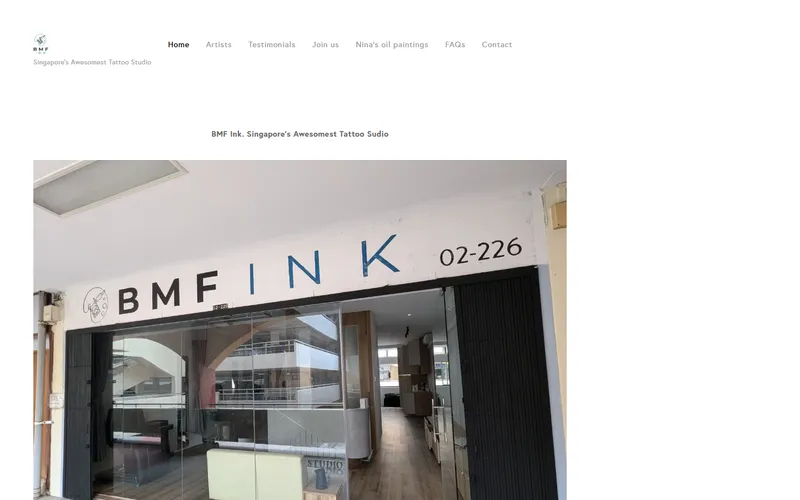
- Best for
- Fine line and detailed black and grey
- Minimum
- From about S$120
- Since
- 2019, founded by Nina
- Where
- #02-226, 803 King George's Avenue
- Website
- bmftattoo.com
Its hygiene description is the most specific of any studio here: single-use needles, disposable inks and caps, and all equipment sterilised in an autoclave. That is the full checklist rather than a general reassurance, and it is worth knowing what each part does. Single-use needles and disposable caps mean nothing crosses between clients. The autoclave handles the reusable metal parts, which is the piece people forget to ask about.
Two practical notes. The studio has moved to the Canton Street address, so check before travelling to an older listing. And its website carries a copyright line ending in 2021, so treat the site as a contact point rather than a current portfolio, and look at the studio's social channels for recent work.
- Best for
- A long-established studio that spells out its protocol
- Minimum
- From about S$150
- Since
- 2005
- Where
- 8B Canton Street, Level 3
- Hygiene
- Single-use needles, disposable inks and caps, autoclave sterilisation
- Website
- visual-orgasm.com
Cover-ups are the reason to note this studio specifically. Covering existing work is a genuinely harder problem than starting on clean skin, because the new design has to be dark enough and dense enough in the right places to hide what is underneath, which constrains the composition before you begin. Not every artist takes them, and the ones who do are usually explicit about it.
On vegan inks: some conventional tattoo inks use animal-derived ingredients such as bone char or shellac in the binder, so plant-based inks are a real distinction rather than a marketing one. Whether it matters is a personal call, and it is at least a specific, checkable claim.
- Best for
- Covering something you regret
- Minimum
- From about S$150
- Where
- #01-21, 333 Kreta Ayer Road
- Notable
- Vegan plant-based inks only, and cover-up work
- Website
- vagabondink.com
Ornamental tattooing, meaning patterns that follow the shape of the body rather than sitting on it like a sticker, is a distinct craft. Done well, a piece looks like it belongs on that arm specifically. Done badly, it looks like a print that was applied. The difference is in the placement and mapping, which is settled at the consultation, not on the day.
For fine and ornamental work, ask two things. Can I see healed photographs at a year, and how will this age on this part of the body. Thin lines on high-movement or high-friction areas soften faster, and an artist worth booking will tell you that unprompted.
- Best for
- Fine line and ornamental designs mapped to the body
- Minimum
- From about S$150
- Since
- 2012, founded by John Paul Cheng
- Where
- 282G River Valley Road
- Website
- finelinetattooandart.com
Small work is governed by the studio minimum, which here runs from about S$80 to S$150. Below that threshold size barely affects the price, because you are paying for the appointment slot, the sterile consumables and the setup rather than the ink. Larger pieces are usually quoted by the hour or by the project after a consultation.
The practical consequence is worth stating plainly: if you want something very small, you may as well make it a little larger and better designed, because it will cost the same. People routinely shrink a design to save money and end up paying the minimum anyway for something they like less.
For a large piece, ask how the studio quotes and whether the estimate covers touch-ups. Multi-session work should come with a plan: how many sittings, how long each, and what the total is expected to be. An artist who cannot give you that shape has not thought the piece through yet.
Yes, and how soon depends entirely on the needles. If the tattoo or piercing was done with sterile, single-use, disposable needles, there is no deferral period. If it was not, or if you are not certain, you can donate three months after the procedure.
That rule is genuinely useful beyond blood donation, because it converts a vague hygiene worry into a specific question with an official consequence. Asking a studio whether it uses single-use needles is not being difficult, it is asking about the exact thing a national blood service treats as the deciding factor. A professional studio answers immediately and will often show you the sealed packet being opened.
If you are a regular donor, plan around it. Book the tattoo after a donation rather than before one, and keep a note of what the studio told you, because "I am not sure" is treated the same as "no" and costs you three months either way.
Look at individual portfolios, not the studio feed, and filter by style first. Fine line, black and grey realism, Japanese, neo-traditional, illustrative and cover-up work are separate skills, and a studio feed blends several artists into something that tells you very little about who will actually be holding the machine.
Then look specifically for healed work. Fresh tattoos photograph beautifully because the skin is still raised and the ink is at its darkest, and every artist looks good in those pictures. Healed photographs at six months or a year show whether lines held, whether shading settled evenly and whether fine detail survived. Ask for them. Good artists are usually pleased to be asked.
Finally, use the consultation properly. Bring references, say where on the body it is going, and listen to what the artist says about size and placement. The most common regret is not the design, it is a design placed somewhere it does not suit, or made too small for the detail it contains. An artist who pushes back on your idea is usually doing their job.
For a first tattoo, Familiar Strangers, where the minimum starts around S$80 and consultations are free, so you can start small and decide later whether you want more. For traditional or realism work under a lead artist with an international reputation, 8 Volts.
For fine line, BMF Ink, whose lead artist comes from calligraphy and whose team includes an architect, which is exactly the right background for controlled line and proportion. For realism or piercing in the same visit, Rise Above. For a studio that spells out its full sterilisation protocol, Visual Orgasm, twenty years in. For covering something you regret, Vagabond Ink. For ornamental work mapped to the body, Fineline Tattoo and Art.
Two habits, both cheap. Ask about single-use needles, and treat the answer as information rather than a formality, because the national blood service certainly does. And ask for healed photographs at a year, not fresh ones. Everything looks good on the day.
A closing note for the studios. Several of the businesses here run on a Linktree or a site whose copyright line stopped years ago, and their real portfolio lives on Instagram. That works right up until someone is comparing four studios at midnight and wants to see healed work, prices and a booking form in one place. In a decision this permanent, the studio that answers the questions is the one that gets the deposit. If your website is the weak link, that is fixable, and it happens to be my day job. Take a look at my web design services in Singapore, or get a quote and I will tell you honestly what would help.