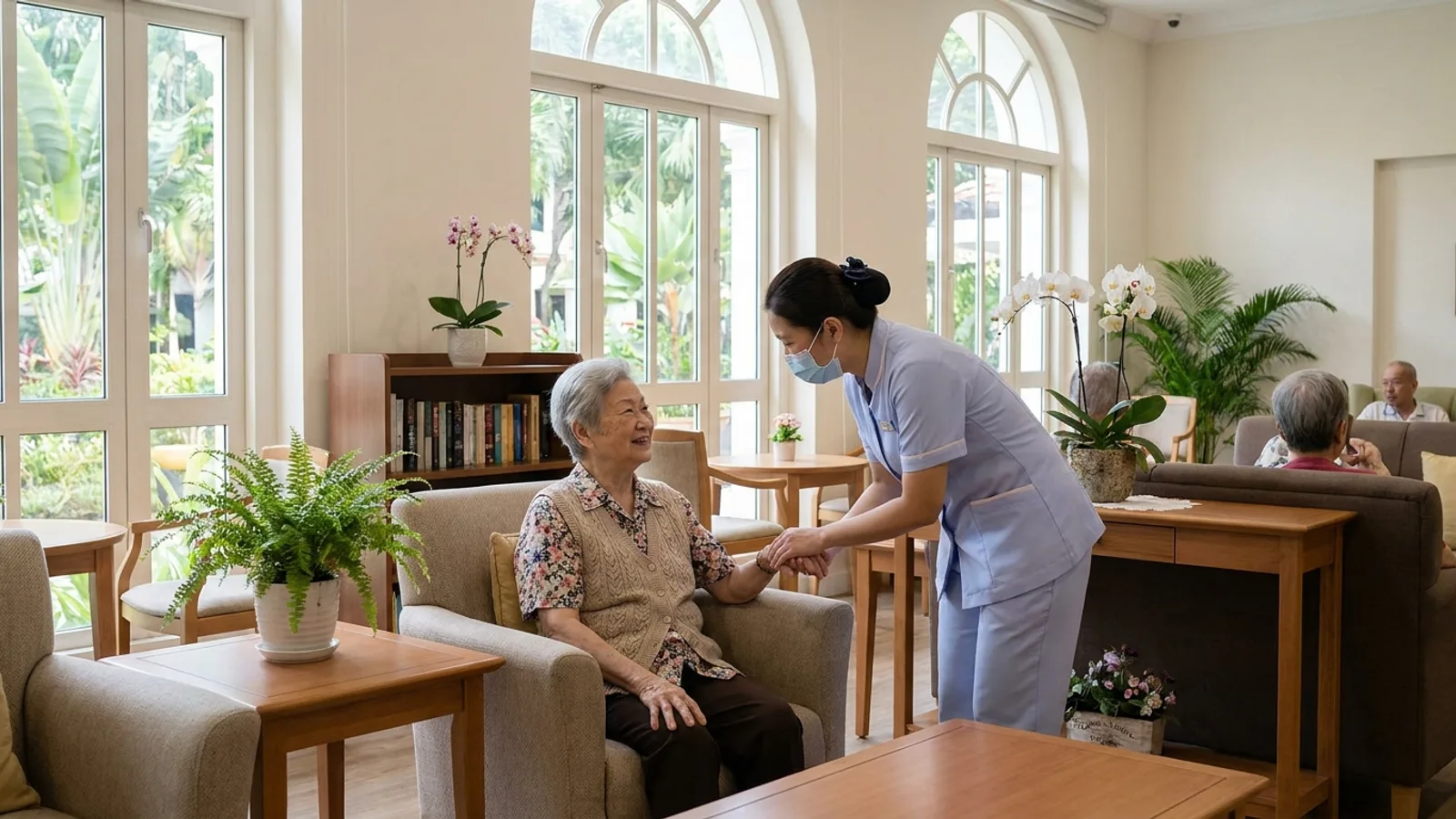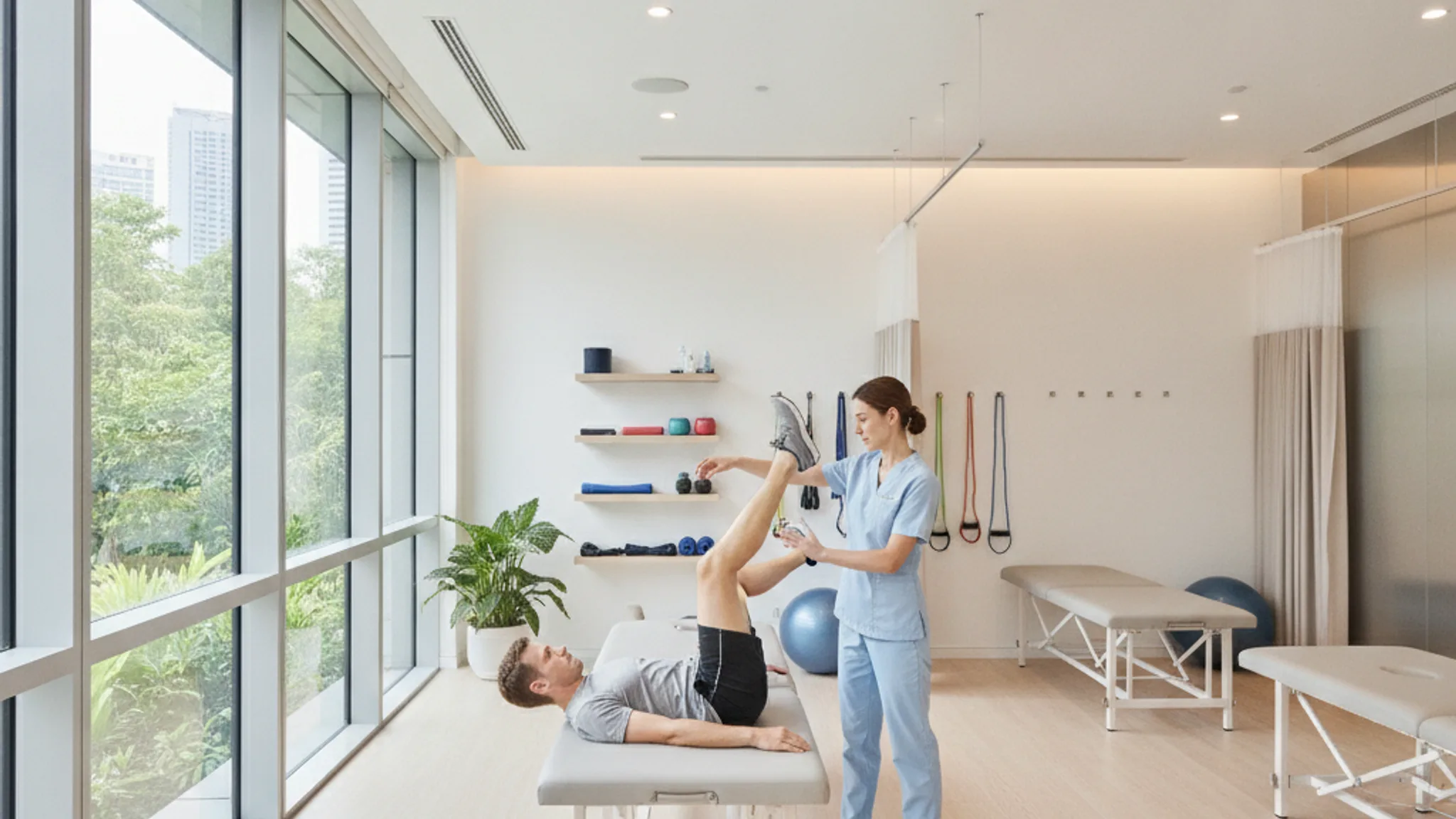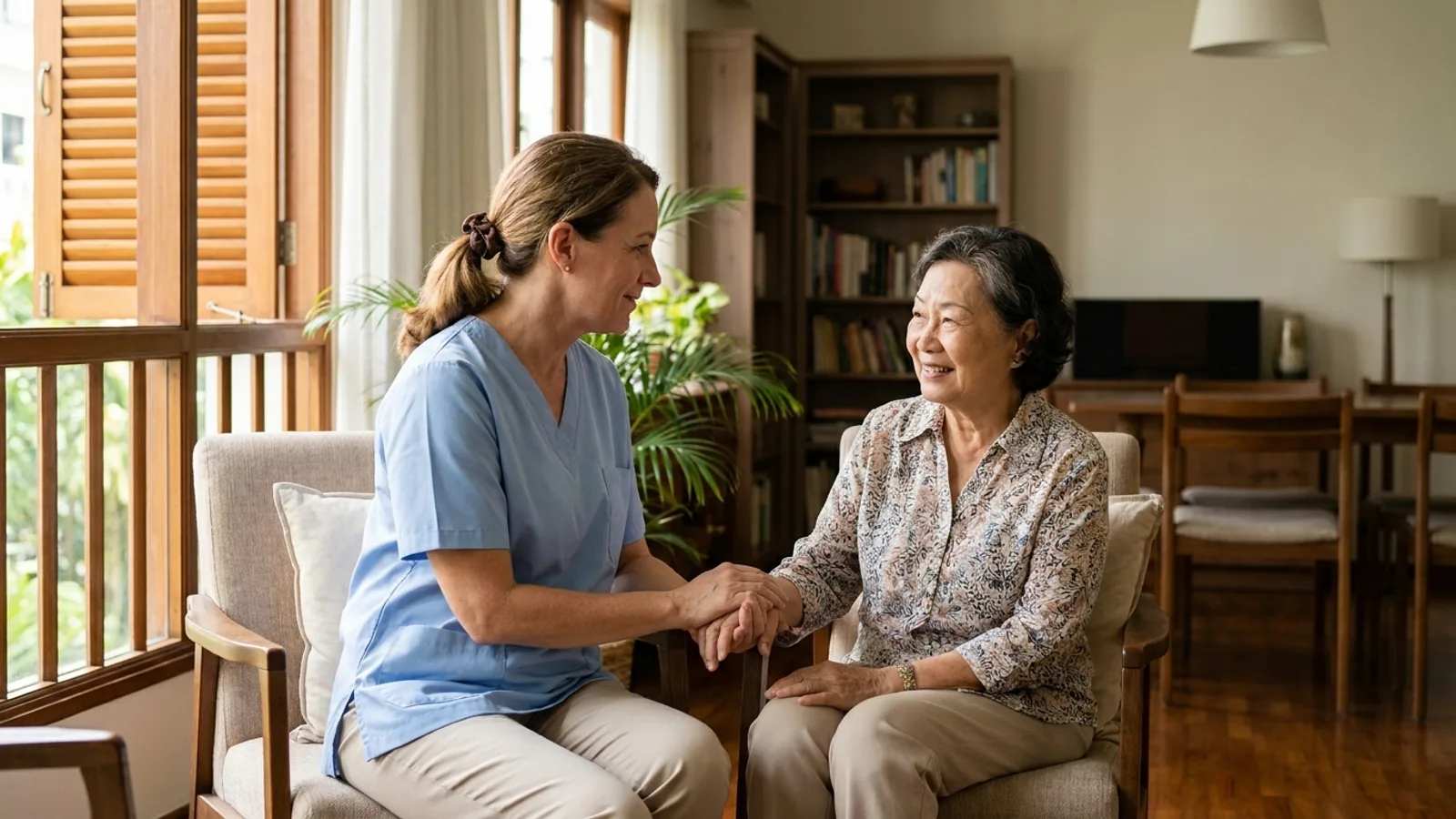
Arranging home nursing in Singapore is one of those things nobody prepares you for until you are suddenly doing it, usually the week a parent is discharged from hospital with a wound to dress or a feeding tube to manage. I went through exactly this with my own family, and the first thing I learnt is that people use 'home nursing' and 'home care' as if they mean the same thing. They do not, and picking the wrong one wastes money and time.
Home nursing means a registered nurse coming to the house to do clinical work: wound care, injections, tube feeding, stoma and catheter care, and monitoring after a hospital stay. A home caregiver, or care aide, handles the daily human stuff instead, showering, moving, feeding, and companionship. Then there are medical escorts for appointments, and live-in maid-caregivers for round-the-clock support. Most families end up needing a blend, and the good agencies help you figure out which.
So I spent a good while researching the providers, reading through what they actually offer, checking which ones are MOH-licensed rather than just matching freelancers, and noting who is listed for government subsidies. This is my honest shortlist of nine home nursing and caregiver agencies I would point a friend toward in 2026, covering nurse visits, live-in care, dementia and post-discharge support, and the subsidised options for eligible seniors.
Key Takeaways
- 1 Home nursing means a registered nurse coming to the home for clinical tasks like wound care, injections, tube feeding, and catheter care. A home caregiver handles bathing, mobility, and companionship. Work out which one you actually need before you call an agency.
- 2 Decide between hourly or per-visit help and a live-in arrangement. Visit-based nursing suits post-discharge recovery and specific procedures, while a live-in caregiver suits round-the-clock frailty or advanced dementia.
- 3 Prefer MOH-licensed home care providers over platforms that simply match you with freelancers, and check that nurses hold a valid Singapore Nursing Board practising certificate.
- 4 Eligible seniors can tap AIC subsidies and grants like the Home Caregiving Grant, which can bring subsidised home care down to a few dollars an hour. Ask every provider whether they are AIC-listed.
- 5 For 2026, budget roughly S$60 to S$150 for a nurse home visit, S$20 to S$40 per hour for a caregiver, and S$600 to S$1,200 a month for a trained live-in care aide, all before subsidies.
What I look for in a home nursing or caregiver agency in Singapore
Before the list, here is the criteria I use when judging any home care provider. This is a decision about someone vulnerable in your own home, so the bar is higher than for most services.
- Licensing you can verify. Under the Healthcare Services Act, home care providers should be licensed by the Ministry of Health (MOH). For clinical work, the nurse should hold a valid practising certificate from the Singapore Nursing Board. I favour licensed providers over platforms that simply connect you to freelancers with no accountability.
- The right level of care. A registered nurse is wasted on tasks a trained caregiver can do, and a caregiver cannot legally give injections or manage a complex wound. A good agency assesses the situation honestly and matches the right person, rather than upselling you.
- Subsidy know-how. Eligible seniors can access subsidies and grants through the Agency for Integrated Care (AIC), including the Home Caregiving Grant. Providers that are AIC-listed and walk you through the paperwork save you real money.
- Consistency of the care team. An elderly person does better with a small, familiar team than a different stranger every visit. I look for agencies that keep continuity and brief the next carer properly.
- Clear scope and pricing. Home care is stressful enough without surprise charges. The HealthHub caregiving resources are a good primer, and the best agencies are upfront about what a visit covers and what it costs before you commit.
Home nursing vs a home caregiver vs a medical escort
Get this distinction right and everything else gets easier, so it is worth a minute. These three roles overlap in people's minds but they are genuinely different jobs with different price tags.
Home nursing is clinical. A registered or enrolled nurse comes to the home to do things that need a licence: dressing a surgical or pressure wound, giving injections, inserting or flushing a urinary catheter, managing a nasogastric or PEG feeding tube, caring for a stoma or tracheostomy, and monitoring vital signs after a discharge. If a doctor sent your parent home with a procedure to keep up, this is what you need.
A home caregiver or care aide handles daily living instead: bathing and toileting, helping someone move safely, feeding, medication reminders, light exercise, and simple companionship. This can be hourly, part-time, or a live-in arrangement for someone who cannot be left alone. A medical escort is a narrower service, someone to accompany a frail person to and from a clinic or hospital appointment, often with wheelchair transport. Many families combine all three, and it pairs naturally with the right mobility aids and, where recovery is the goal, home physiotherapy. When care at home is no longer enough, my guide to the best nursing homes in Singapore is the next step.
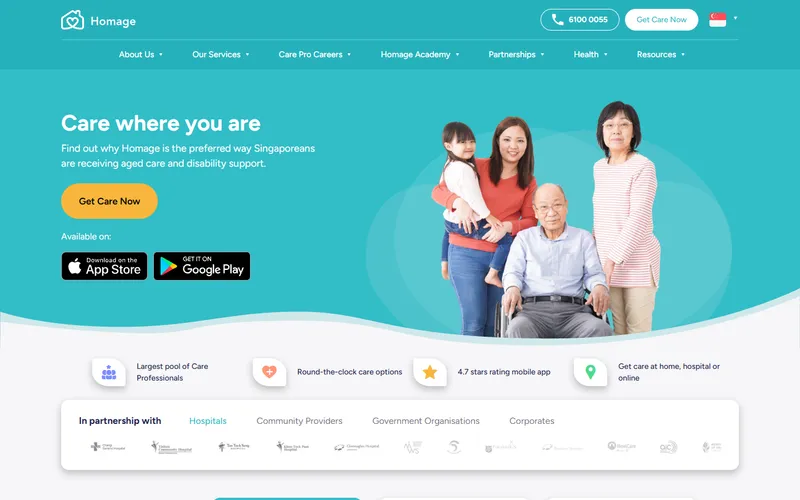
1. Homage
On the clinical side, its nurses are enrolled or registered with a valid Singapore Nursing Board practising certificate and handle wound care, injections, tube feeding, catheter care, and post-hospitalisation monitoring. On the caregiving side, its care pros cover bathing, mobility, and companionship, and the same platform can arrange medical escorts and night care. Care is subsidy-eligible, and Homage guides you on grants where you qualify.
What keeps Homage at the top of my list is how much friction it removes. You describe the need, it matches a suitable carer, and you can scale up or down as your parent recovers. For most families starting from zero, it is the easiest first call.
- Best known for
- On-demand app matching of registered nurses and care professionals for visit-based care
- Location
- 12 Kallang Avenue, island-wide home visits
- Website
- homage.sg
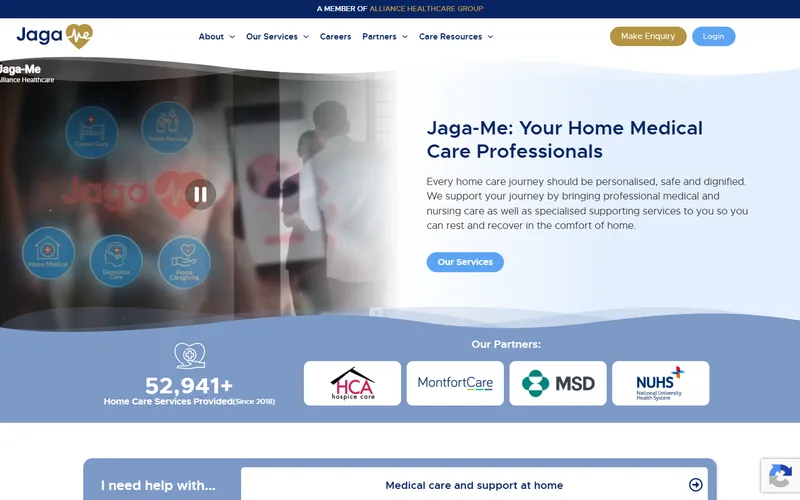
2. Jaga-Me
Its team handles the demanding stuff: nasogastric tube feeding, stoma care, tracheostomy care, urinary catheter management, wound dressings, IV infusion therapy, and phlebotomy, alongside daily-living support and medical escorts. It also covers cancer, palliative, and dementia care, plus allied health like physiotherapy and speech therapy, so a single provider can follow a patient through a difficult stretch.
Being backed by a larger healthcare group gives Jaga-Me a clinical depth that a pure caregiving agency cannot match. If your situation involves feeding tubes, palliative needs, or a mix of nursing and therapy, it is the one I would shortlist.
- Best known for
- Mobile medical and complex nursing procedures plus palliative and dementia care
- Location
- Bukit Batok Crescent and St George's Road, island-wide home visits
- Website
- jaga-me.com
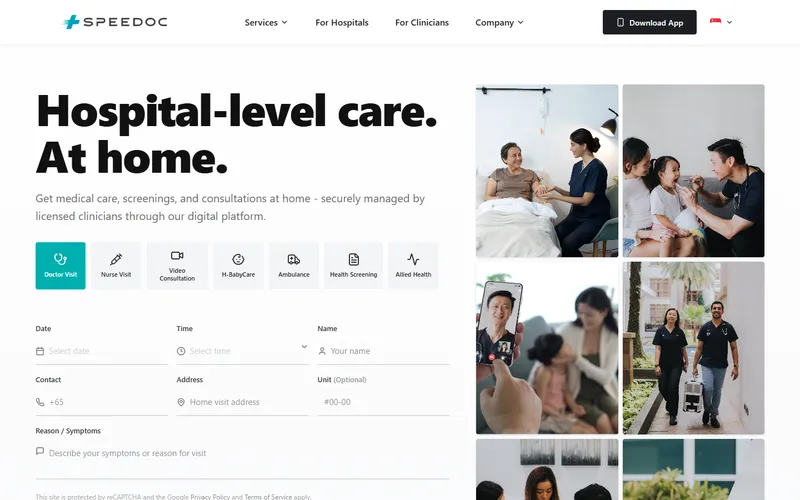
3. Speedoc
Its house-call nurses are registered with a valid Singapore Nursing Board practising certificate and carry meaningful ward experience, and they cover the usual clinical range of wound care, injections, tube feeding, and catheter care. What sets Speedoc apart is the wider ecosystem around it: doctor house calls, telehealth follow-ups, and even hospital-at-home style monitoring, so a post-discharge patient can be reviewed without a trip back to A&E.
For families juggling a recovery where the medical picture is still changing, Speedoc's blend of nurses, doctors, and telehealth in one app is a strong fit. Its per-visit pricing is also refreshingly transparent by the standards of this industry.
- Best known for
- House-call nurses paired with doctor visits and telehealth for post-discharge care
- Location
- Island-wide house calls across Singapore
- Website
- speedoc.com
4. NTUC Health
Its home care spans home personal care, home nursing, home therapy, and home medical, plus an interim caregiver service for the vulnerable weeks straight after a discharge. It also runs disability assessments accredited for grant applications like CareShield Life and the Home Caregiving Grant, and its dementia day care can give a home carer respite during working hours. Subsidised rates can start from just a few dollars an hour for those who qualify.
The care model is built around a small, familiar team and structured training rather than a rotating cast of strangers. If your priority is affordable, sustainable care for an ageing parent over months and years, NTUC Health is the sensible backbone.
- Best known for
- Large MOH-subsidised home care with post-discharge interim support and dementia day care
- Location
- Island-wide home care across multiple regions
- Website
- ntuchealth.sg
Recommended reads
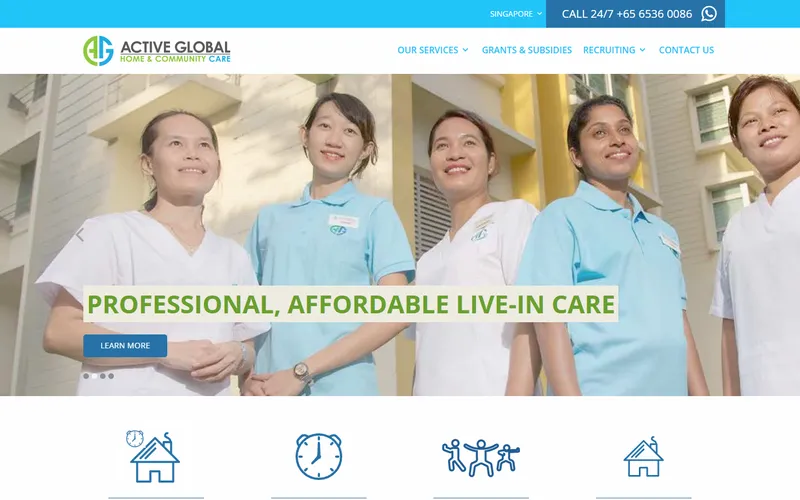
5. Active Global Caregivers
Beyond live-in care, it runs local private nursing, a part-time household service scheme, subsidised home care under MOH, senior care centres open every day, and home medical visits. Its caregivers are trained for specific conditions including dementia, stroke, cancer, and diabetes, which is reassuring when a diagnosis demands more than generic help. The company holds a valid employment agency licence, so the placement side is properly regulated.
Live-in care is a big commitment and the fit between carer and family matters enormously. Active Global's experience across conditions and its round-the-clock hotline make it my first stop for households that need constant, in-home support rather than scheduled visits.
Contact Active Global Caregivers directly
- Best known for
- Trained live-in caregivers and condition-specific dementia and stroke care
- Location
- 51 Goldhill Plaza, Novena, island-wide placement
- Website
- activeglobalcaregiver.sg
6. TOUCH Home Care
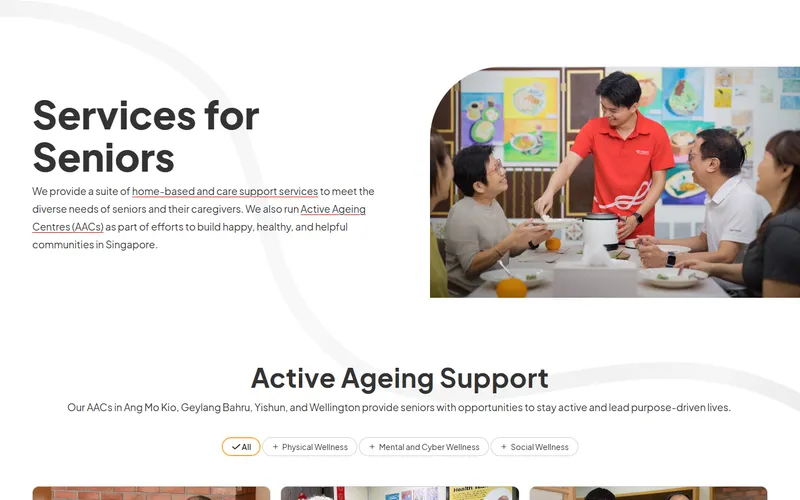
Run under TOUCH Community Services, it provides home personal care such as showering, housekeeping, and medication reminders, along with medical escort services and its long-running Meals-on-Wheels programme that delivers hot food to seniors who cannot shop or cook. For an older person living alone with little caregiver support, that combination of practical help and a regular friendly face is quietly invaluable.
TOUCH is not the place for complex private nursing, and demand for subsidised care means it works best when accessed through the proper referral channels. But as a compassionate, community-rooted option for seniors ageing in place on a tight budget, it earns its spot on this list.
Contact TOUCH Home Care directly
- Best known for
- Subsidised home personal care and Meals-on-Wheels for homebound seniors
- Location
- Community care centres serving seniors island-wide
- Website
- touch.org.sg
7. Econ Healthcare
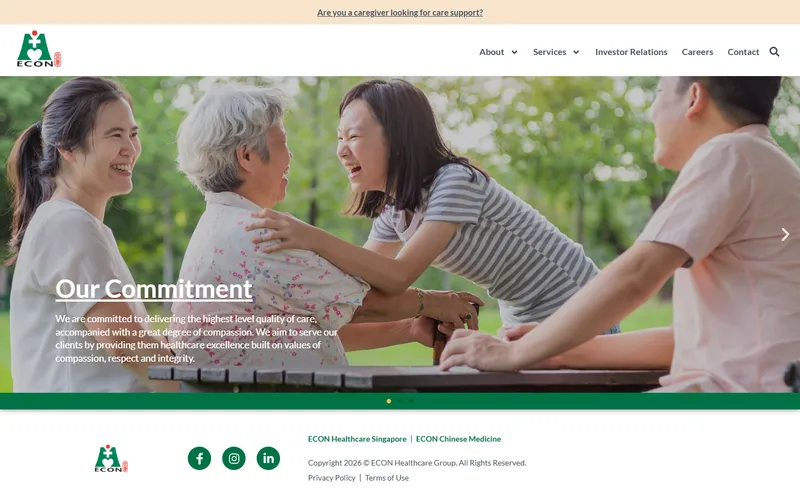
Its home care draws on a large pool of nursing and caregiving staff and the systems of a group that runs residential facilities, which means clinical governance and continuity are baked in rather than improvised. For families who want the reassurance of a long-standing, regulated healthcare group rather than a young startup, that track record counts for a lot.
The scale also gives Econ a useful advantage: if home care alone is no longer enough, the same organisation can step you across to day care or residential nursing without starting the search over. For continuity across the whole eldercare journey, it is a dependable choice.
- Best known for
- A 30-year established eldercare group with home care backed by residential experience
- Location
- Island-wide, part of a regional eldercare group
- Website
- econhealthcare.com
8. CareLink Home Nursing Services
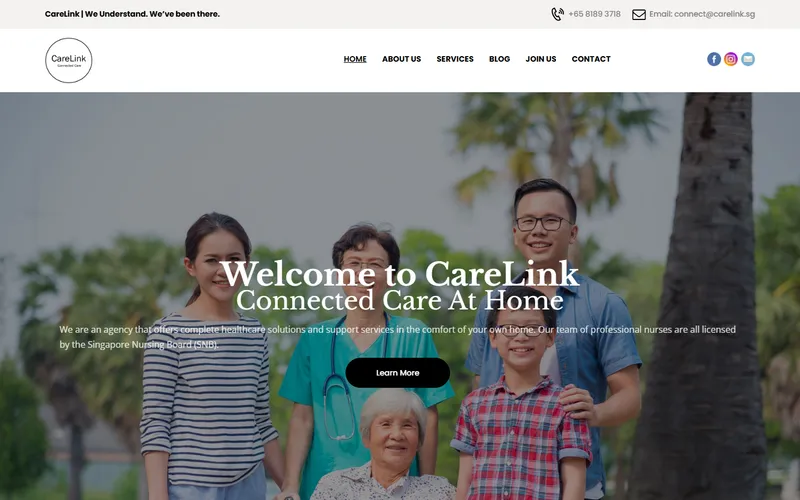
Its team is licensed by the Singapore Nursing Board, and alongside private nursing it offers home medical services, caregiver training, and the rental or purchase of home medical equipment. That last part is more useful than it sounds, because a family setting up care at home often needs a hospital bed, wheelchair, or oxygen concentrator sorted at the same time as the nursing itself.
Being a smaller, nursing-led provider, CareLink tends to be personal and responsive, which some families prefer over an app. If you want SNB-licensed nursing arranged around your own schedule, with equipment sorted in the same conversation, it is worth a call.
- Best known for
- SNB-licensed private nursing with flexible hours and home equipment rental
- Location
- Island-wide home visits across Singapore
- Website
- carelink.sg
9. Aseana Caregivers
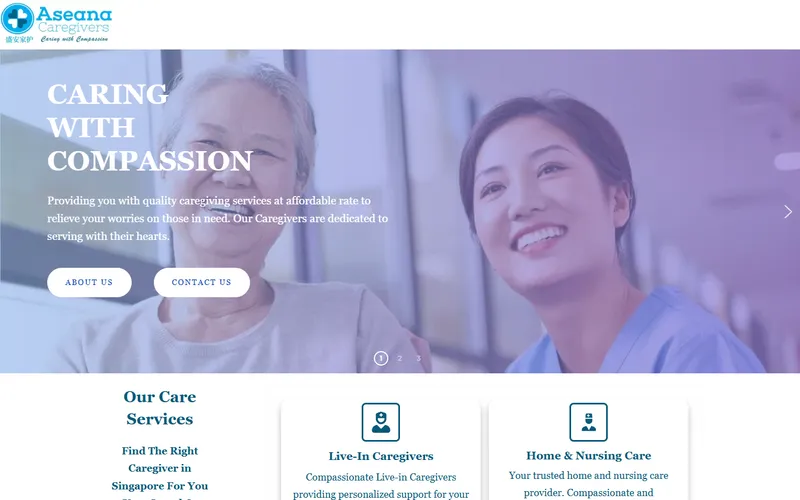
Its caregivers cover the daily-living essentials of elderly and convalescent care, from bathing and mobility to companionship and post-discharge support, and it handles both live-in and scheduled arrangements. The longevity matters here: an agency that has been matching caregivers to families for over a decade has learnt what makes a placement actually work, which is mostly about fit and communication.
For families who want a caregiver-first agency with a settled track record, rather than the newest name in the space, Aseana is a solid, no-drama option. As always, meet the proposed caregiver and be clear about the specific tasks before you commit.
- Best known for
- A 15-year caregiver-first agency for elderly and convalescent home care
- Location
- Island-wide caregiver placement across Singapore
- Website
- caregivers.com.sg
The 9 home nursing and caregiver agencies compared
Here is the quick reference I would use to narrow the shortlist. The right choice depends mostly on whether you need clinical nursing or daily caregiving, and whether you need visits or a live-in carer.
| Provider | Nurse or caregiver | Visits or live-in | Best for |
|---|---|---|---|
| Homage | Both | Visits | Fast on-demand booking after a discharge |
| Jaga-Me | Both | Visits | Complex procedures, palliative and dementia |
| Speedoc | Nurse (plus doctors) | Visits | Post-discharge monitoring with telehealth |
| NTUC Health | Both | Visits | Subsidised, long-term community care |
| Active Global Caregivers | Caregiver (plus nursing) | Live-in and visits | Live-in dementia and stroke care |
| TOUCH Home Care | Caregiver | Visits | Subsidised care for homebound seniors |
| Econ Healthcare | Both | Visits | Continuity across the eldercare journey |
| CareLink | Nurse | Visits | Flexible SNB-licensed nursing plus equipment |
| Aseana Caregivers | Caregiver | Live-in and visits | Established caregiver-first placement |
What home nursing and caregiving costs in Singapore in 2026
Prices vary with the level of care, the length of the visit, and whether you qualify for subsidies, so treat these as ballpark market ranges for 2026 rather than quotes. Always ask each agency for a written breakdown before you commit.
| Service | Typical 2026 cost (before subsidies) |
|---|---|
| Registered nurse home visit | From around S$60 to S$150 per visit, depending on the procedure and duration |
| Home caregiver / care aide | Around S$20 to S$40 per hour, often with a minimum session |
| Live-in caregiver (trained care aide) | Around S$600 to S$1,200 per month, plus placement and any applicable levy |
| Medical escort to an appointment | From around S$80 for a few hours, more for wheelchair transport or a full day |
| Subsidised home care (eligible seniors) | From just a few dollars an hour after AIC subsidies |
The single biggest lever on cost is subsidy eligibility. If your loved one is a Singapore citizen or permanent resident who is homebound, it is well worth checking what you qualify for through AIC before paying full private rates, because the difference can be dramatic.
Frequently asked questions about home nursing in Singapore
How much does home nursing cost in Singapore?
A registered nurse home visit in Singapore typically costs from around S$60 to S$150 per visit in 2026, depending on the procedure and how long it takes. A trained home caregiver usually runs about S$20 to S$40 per hour, and a live-in care aide roughly S$600 to S$1,200 a month before placement costs. These are private full rates. Eligible seniors can bring the cost down substantially through government subsidies, so always ask each provider what you qualify for before assuming you will pay the full amount.
Are there subsidies for home care in Singapore?
Yes. The Agency for Integrated Care (AIC) administers subsidies and grants for eligible Singapore citizens and permanent residents, including the Home Caregiving Grant for those who need help with daily activities, and means-tested subsidies for home nursing and home personal care. Payouts from CareShield Life or ElderShield can also help. Providers like NTUC Health and TOUCH work within these schemes and can guide you through the assessment and paperwork, which is often the hardest part.
What is the difference between home nursing and a home caregiver?
Home nursing is clinical work done by a registered or enrolled nurse, such as wound care, injections, tube feeding, and catheter management. A home caregiver, or care aide, is not a nurse and instead helps with daily living: bathing, mobility, feeding, medication reminders, and companionship. If a doctor sent your loved one home with a procedure to maintain, you need a nurse. If they mainly need help getting through the day safely, a caregiver is the right, and more affordable, choice.
How do I choose between visit-based care and a live-in caregiver?
Visit-based care suits specific tasks and post-discharge recovery, where a nurse or caregiver comes for an hour or two at set times. A live-in caregiver suits someone who genuinely cannot be left alone, such as a person with advanced dementia or severe frailty who needs supervision around the clock. Live-in care costs more per month but less per hour of coverage. Many families start with visits and move to a live-in arrangement, or a maid-caregiver, as needs increase.
Are home nursing agencies in Singapore regulated?
Home care providers should be licensed by the Ministry of Health (MOH) under the Healthcare Services Act, and nurses doing clinical work must hold a valid practising certificate from the Singapore Nursing Board. Caregiver placement agencies also need a valid employment agency licence. My advice is to verify licensing before you engage anyone, and to prefer a licensed provider over an informal platform that simply matches you with freelancers who carry no accountability.
Need a website for your home care or nursing agency
Here is something I notice constantly while researching providers like these: in home care, trust is everything, and yet many excellent agencies have websites that quietly undermine it. Slow load times, no clear explanation of nursing versus caregiving, hidden pricing, and no mention of MOH licensing or subsidies all make an anxious family click away to a competitor who explains things clearly.
When someone is searching for home nursing in Singapore, they are usually stressed and comparing two or three agencies in one sitting. A fast, reassuring website that explains your services, spells out your credentials, and shows up on Google for the searches families actually type will win that comparison. I have written a detailed guide on digital marketing for healthcare businesses in Singapore that covers SEO, Google Ads, and reviews for exactly this kind of provider.
If you run a home care or nursing agency and want a website that turns worried searches into enquiries, get in touch for a free consultation. You can also explore my web design services to see how I work. And if you are caring for an ageing parent, my related guides to the best nursing homes in Singapore and the best mobility aids in Singapore are worth a read too.
How much does home nursing cost in Singapore?
A registered nurse home visit in Singapore costs from about S$60 to S$150 per visit, depending on the procedure and duration. A trained home caregiver runs roughly S$20 to S$40 an hour, and a live-in care aide about S$600 to S$1,200 a month before placement costs and levy.
These are private full rates, so check what subsidies your parent qualifies for first.
What is the difference between a home nurse and a caregiver?
A home nurse is a registered or enrolled nurse who can do clinical work: wound dressing, injections, catheter and feeding-tube care, and vitals monitoring. A caregiver or care aide handles daily living, so showering, feeding, mobility, toileting and company, but cannot perform clinical procedures.
Most families need far more caregiver hours than nurse visits, which is also the cheaper combination.
There is no single best provider for home nursing in Singapore, only the best fit for what your family actually needs. If you want fast, flexible nurse or caregiver visits, start with Homage or Speedoc. For complex clinical needs, Jaga-Me has the depth. For subsidised, long-term care, NTUC Health and TOUCH lead. And for a live-in caregiver, Active Global and Aseana are the specialists, with Econ Healthcare and CareLink rounding out dependable, well-established options.
My advice: be honest about whether you need a nurse or a caregiver, check subsidy eligibility with AIC before paying private rates, and meet the proposed carer before you commit. The right arrangement is the one that keeps your loved one safe and comfortable at home, and lets you breathe again. If you found this helpful, keep an eye on the Terris Recommends series for more honest picks across Singapore, including my guides to the best nursing homes and best physiotherapy clinics in Singapore.
Spotted something out of date in this guide?
Suggest an edit or a business to add. This guide is pre-filled for you.

Professional Opinion-haver
Terris
Chief Recommender · I do the digging so you don't have to
Terris is a Singapore-based web designer and digital strategist who has spent 8+ years building websites for local businesses. His Terris Recommends series shares personal picks for the best service providers across Singapore, informed by his experience working with businesses across industries.
Want to see these strategies in action? Browse our portfolio or get in touch to discuss your project.