The best satay Singapore has is mostly not in the places visitors are sent, and the first thing worth knowing has nothing to do with taste. Every stall has a minimum order. Ten sticks is normal and some want twenty, so two people cannot stroll up and try three. You commit before you taste, which makes choosing the stall matter more here than with almost any other hawker dish.
The second thing is that satay is really two dishes wearing one name. Hainanese and Teochew stalls grill pork and blend pineapple through the peanut sauce for a sweet-tart finish. Malay and Javanese stalls grill chicken, beef and mutton, are halal, and serve a chunkier, darker, more savoury sauce. Order without checking and you get whichever the stall does.
So here are seven I would queue for, with what a stick actually costs, what the minimum is, and which are halal. One caution up front: Chuan Kee Satay at Old Airport Road appears in most guides to this dish and has closed, so ignore any list that still sends you there.
Key Takeaways
- 1 Every stall has a minimum order and almost nobody mentions it. Ten sticks is standard and Haron Satay wants twenty, so two people cannot wander up and try a few. Decide before you queue.
- 2 Satay Street at Lau Pa Sat does not exist during the day. Boon Tat Street has to close to traffic first, so the carts appear from 7pm on weekdays and 3pm at weekends, and run to around 3am. Jump to Satay Street at Lau Pa Sat: check the time before you go
- 3 Pork satay and halal satay are two separate traditions sharing a word. Kwong Satay is pork, Haron and Sri Geylang are halal, and at least one directory has Kwong filed under halal, which it is not. Read the stall sign, not the listing. Jump to Sri Geylang Satay at Satay by the Bay: halal, charcoal and a skyline
- 4 The peanut sauce is what actually varies. Hainanese-style stalls blend pineapple through it for a sweet-tart finish; Malay and Javanese stalls serve it chunkier, darker and more savoury. The meat differs far less than the sauce does.
- 5 Prices run S$0.60 to S$1.00 a stick in 2026. Shi Xiang is S$0.60, most stalls sit around S$0.80 to S$0.90, and Haron is S$1.00 with a twenty-stick minimum, so that is a S$20 opening order. Jump to Shi Xiang Satay: S$0.60 a stick, and it earns it
What to know before you queue for satay
Four things, and the first one costs money.
- There is a minimum order, always. Ten sticks is the standard and Haron Satay asks for twenty. At S$1.00 a stick that is a S$20 commitment before you have tasted anything. Two people who want to sample several stalls should plan around this rather than discovering it at the front of the queue.
- Pork or halal, decided by the stall, not by you. These are different culinary traditions that share a name. Kwong Satay and Shi Xiang grill pork. Haron Satay and Sri Geylang are halal and serve chicken, beef and mutton. Check the stall's own sign: I found at least one food directory filing Kwong Satay under halal listings, which is simply wrong, and it is the kind of error that gets repeated across aggregator sites.
- The sauce is where stalls actually differ. Hainanese-style peanut sauce carries grated pineapple, which gives it a sweet-tart edge, and Pang's and Shi Xiang both do this. Malay and Javanese sauce is chunkier, darker and more savoury, and Haron's is the reference version. Two stalls can grill nearly identical chicken and taste completely different because of the bowl next to it.
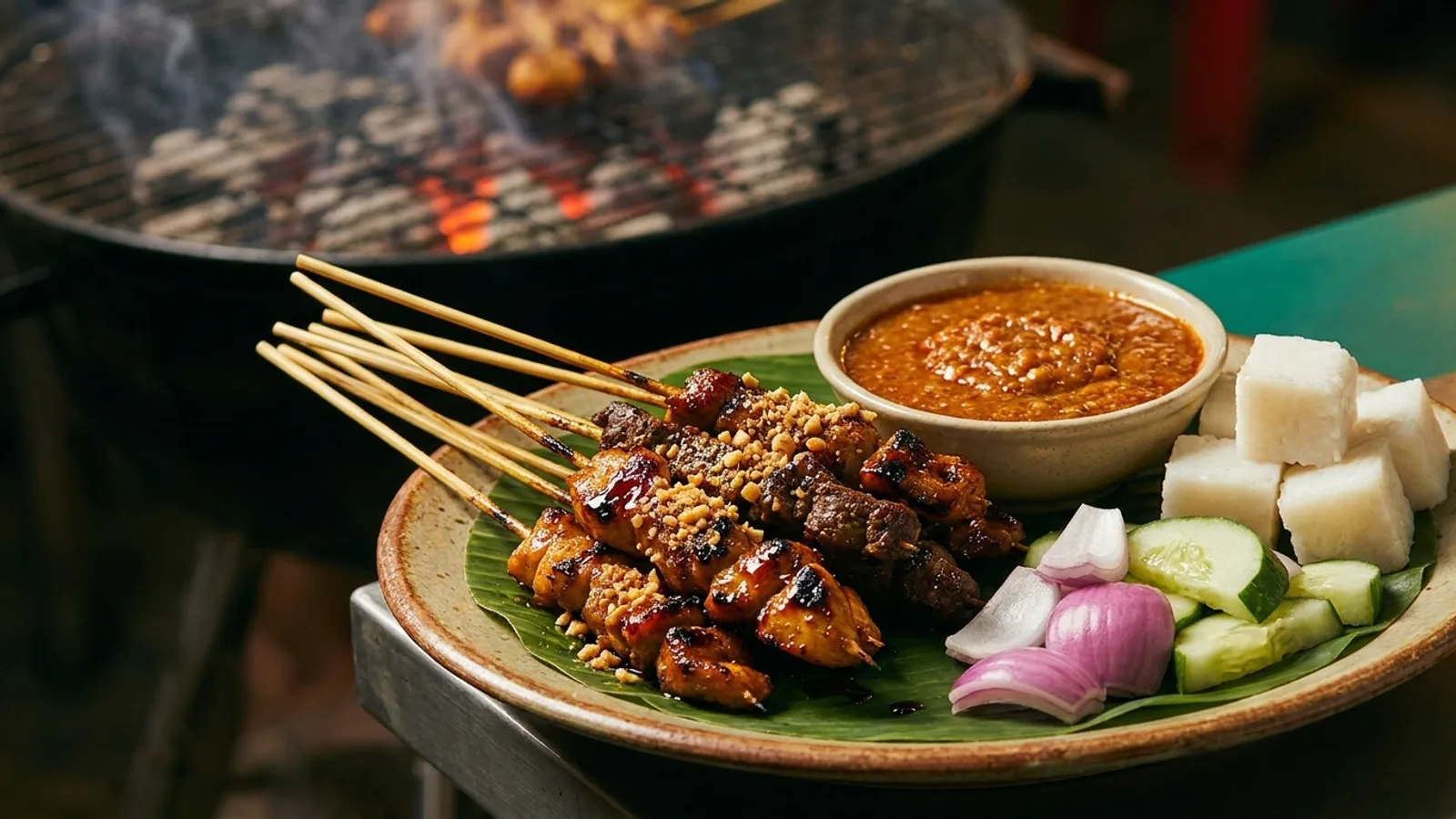
- Ketupat is not a garnish. The compressed rice cake exists to be dunked, and eating satay without it is missing about a third of the dish. Order it. It is usually a dollar or two and no stall will think you are odd.
One structural thing about this food in Singapore: charcoal grilling is what makes satay taste like satay, and charcoal is exactly what modern ventilation requirements make difficult in new premises. That is a slow squeeze on the dish. The stalls below all still grill over charcoal, which is a large part of why they are the ones worth queueing for.
How the best satay stalls in Singapore compare
| Stall | Where | Price a stick | Halal | Best for |
|---|---|---|---|---|
| Haron Satay | East Coast Lagoon, Stall 55 | S$1.00, min 20 | Yes | The benchmark, and the sauce |
| Kwong Satay | Geylang, Lorong 29 / 27A | From S$0.80 | No | Pork belly satay |
| Shi Xiang Satay | Chinatown Complex, #02-079 | S$0.60, min 10 | No | The cheapest good satay in town |
| Pang's Satay | Chinatown Complex | S$8 for 10 | No | Hainanese sauce with pineapple |
| Satay Street | Boon Tat Street, Lau Pa Sat | From about S$0.70 | Mixed stalls | The setting, after 7pm |
| Sri Geylang Satay | Satay by the Bay | Around S$0.80 | Yes | Charcoal satay with a skyline |
| Soon Huat Satay Beehoon | East Coast Lagoon, Stall 15 | By the bowl | No | Satay sauce as a noodle dish |
1. Haron Satay: the one everything else is measured against
Haron Satay at East Coast Lagoon Food Village is where I send anyone who wants to understand why this dish has a reputation. Haron Abu Bakar founded it in 1980, his two daughters run it now, and it has been named among Singapore's Hawker Masters by The Straits Times. It also used to supply satay to Singapore Airlines Business and First Class cabins, which is a strange and very Singaporean credential.
The sauce is the reason. It is thick, chunky, and more savoury than sweet, with none of the pineapple sharpness the Hainanese stalls use, and it clings to the meat rather than sliding off it. Chicken, beef and mutton, all halal, all grilled over charcoal to order, which is why there is a wait.
The practical detail: S$1.00 a stick with a twenty-stick minimum, so the entry price is S$20. That is the most expensive satay on this list per stick and the largest minimum, and it is still the one I would spend the money on. Go at dusk and eat it outside by the water.
Where: Stall 55, East Coast Lagoon Food Village, 1220 East Coast Parkway
Price: S$1.00 a stick, minimum 20 sticks
Halal: Yes. Chicken, beef and mutton
Since: 1980, founded by Haron Abu Bakar, now run by his daughters
Best known for: A thick, savoury, chunky peanut sauce, and a Hawker Masters listing
2. Kwong Satay: pork belly on a stick, which is not a normal option
Kwong Satay in Geylang grills pork belly satay, and that alone justifies the trip. Almost every stall does lean pork, chicken or beef; belly is fattier, chars harder at the edges and renders as it cooks, so you get caramelised crust and soft interior in a way lean meat cannot manage. If you like pork, order it and order more than you planned.
The family history runs back to the 1960s, when the current owner's grandfather sold satay from a trishaw in Katong, with the Geylang flagship established at Lorong 29 in the 1980s. It trades in a coffeeshop setting, prices start around S$0.80 a stick, and the char is properly aggressive rather than polite.
To be explicit, because a food directory has this wrong: Kwong Satay is not halal. It serves pork alongside chicken and mutton. If that matters for your table, Haron or Sri Geylang are the stalls to go to instead.
Where: Geylang, Lorong 29 and Lorong 27A
Price: From about S$0.80 a stick
Halal: No. Serves pork
Since: Family trade from the 1960s, Geylang flagship from the 1980s
Order this: Pork belly satay, which very few stalls offer
3. Shi Xiang Satay: S$0.60 a stick, and it earns it
Shi Xiang sits in the quieter green section of Chinatown Complex Market and Food Centre and charges S$0.60 a stick with a ten-stick minimum, which makes a full satay lunch cost about the same as a coffee and a pastry. At that price you would forgive a lot. You do not have to.
The meat is well marinated and stays juicy rather than drying out on the grill, and the peanut sauce is thick and genuinely chunky rather than the smooth commercial kind. It rates 4.7 on Tripadvisor, which for a hawker stall with no marketing and no website is a real signal.
Two practicalities. The owner opens around 12.30pm, so this is a lunch and afternoon stall rather than a supper one. And it takes cash or QR payment, which is worth knowing before you queue.
Where: #02-079, Chinatown Complex Market & Food Centre, 335 Smith Street
Price: S$0.60 a stick, minimum 10 sticks
Halal: No
Opens: Around 12.30pm. Cash or QR payment
Best for: The cheapest satay on this list that is still genuinely good
Recommended reads
4. Pang's Satay: Hainanese satay, and pineapple in the sauce
Pang's is also in Chinatown Complex and it is the clearest example of the Hainanese approach on this list. Everything is handmade, and the peanut sauce carries grated pineapple through it, which turns the whole thing sweet-tart rather than purely savoury. Against Haron's dark, chunky Malay-style sauce it is a genuinely different dish.
Pricing is S$8 for ten sticks, so S$0.80 each with the minimum built in. It carries one of the strongest Google ratings of any satay stall in Singapore, around 4.6 across more than a hundred reviews, which for a hawker stall is a lot of people bothering to leave a rating.
If you are trying to work out which satay tradition you actually prefer, Pang's and Haron on separate days is the cleanest comparison available. Same skewer, opposite sauce philosophy.
Where: Chinatown Complex Market & Food Centre
Price: S$8 for 10 sticks
Halal: No
The sauce: Hainanese style, with grated pineapple for a sweet-tart finish
Best for: Tasting the Hainanese tradition against the Malay one
5. Satay Street at Lau Pa Sat: check the time before you go
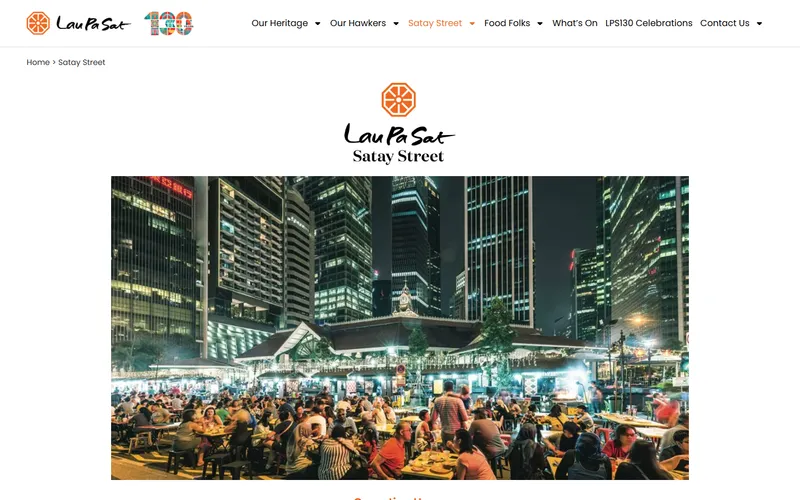
Satay Street is the one visitors have heard of, and the thing to know is that it does not exist during the day. Boon Tat Street beside Lau Pa Sat has to be closed to traffic before the carts can set up, so nothing happens until 7pm on weekdays and 3pm at weekends. It then runs until around 3am. People turn up at six on a Tuesday and find an ordinary road.
Nine carts operate, covering chicken, beef, mutton and pork across Chinese and Malay styles, so a mixed table can eat together. Prices start around S$0.70 a stick and the sets run up to about S$26. Stalls 7, 8 and 10 are the ones with the reputations and the longest queues, and stalls 7 and 8 typically wrap up around 1am.
Is it the best satay in Singapore? No, and it does not need to be. Eating charcoal-grilled skewers in the middle of a closed road under office towers is a genuinely good hour, and that is what you are queueing for. Come for the setting, not the sauce.
Website: laupasat.sg
Where: Boon Tat Street, beside Lau Pa Sat
Hours: From 7pm weekdays, from 3pm weekends, to about 3am
Price: From about S$0.70 a stick, sets to about S$26
Go to: Stalls 7, 8 and 10. Both halal and pork stalls operate
6. Sri Geylang Satay at Satay by the Bay: halal, charcoal and a skyline
Satay by the Bay is the hawker centre inside Gardens by the Bay, and Sri Geylang Satay is the stall to head for. It is halal, with roots in Geylang, and the chicken and beef are marinated in lemongrass, turmeric and cumin then grilled over charcoal until the edges take colour.
The sauce is thick and slightly sweet, served with ketupat, cucumber and raw onion in the traditional arrangement. Around S$0.80 a stick puts it in the normal range, and the meat is properly charred rather than merely warmed, which is not guaranteed at a location this convenient for tourists.
The honest pitch is the combination. Genuine charcoal satay, halal, and a view of the Gardens, all in one place, which no other stall on this list can offer. If you are showing someone around and want one satay stop that works for everybody, this is it.
Where: Satay by the Bay, Gardens by the Bay
Price: Around S$0.80 a stick
Halal: Yes
The marinade: Lemongrass, turmeric and cumin, charcoal-grilled
Best for: A halal satay stop that also works as an outing
7. Soon Huat Teochew Satay Beehoon: the satay dish nobody orders
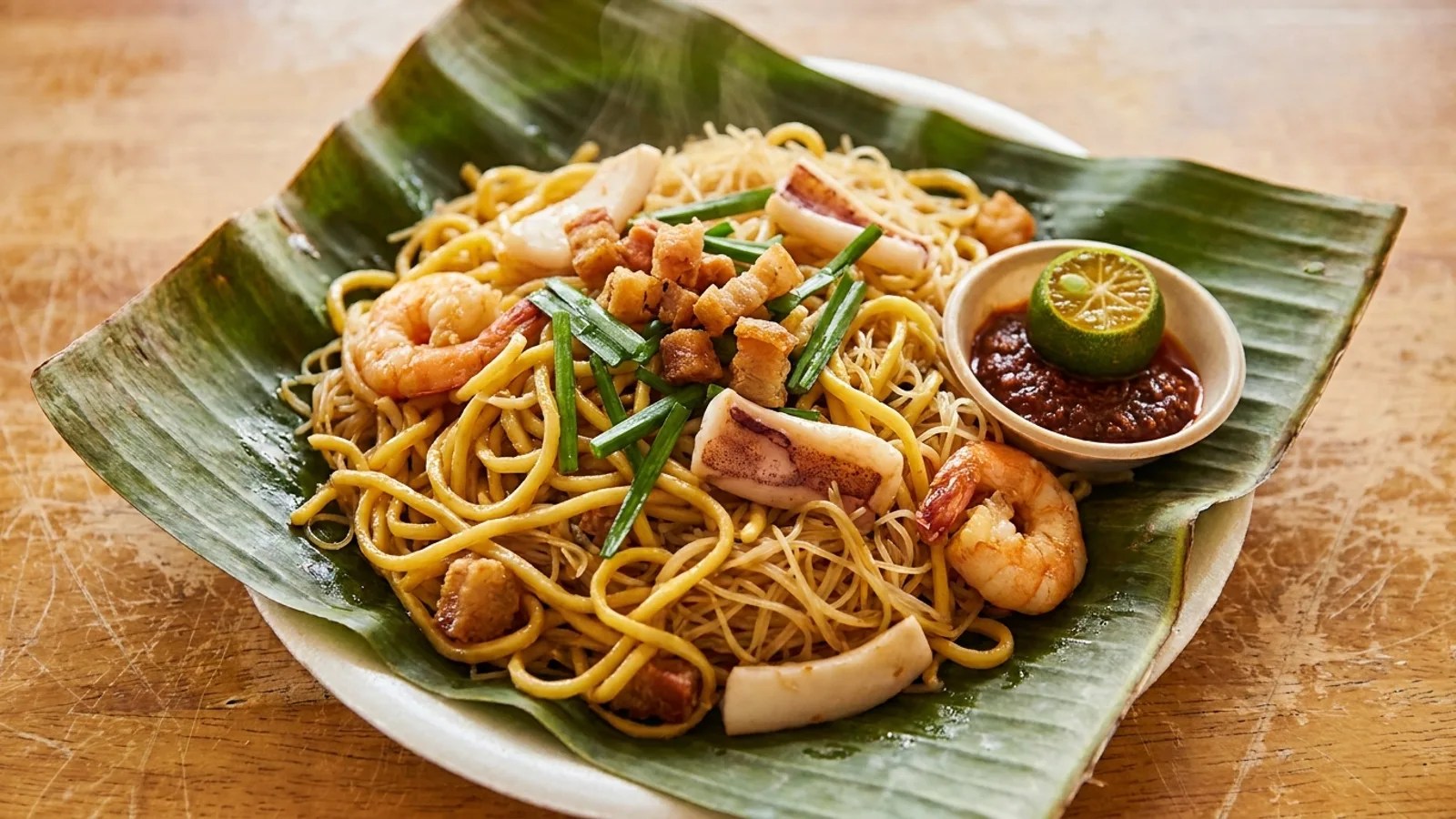
Satay bee hoon is a Singaporean invention and it barely exists anywhere else: rice vermicelli under a ladle of thick satay peanut sauce, with cockles, prawns, sliced pork, cuttlefish and kangkong on top. It is messy, deeply savoury, and it is disappearing from hawker centres because it is fiddly to make.
Soon Huat has been doing it since 1960 and is the version to try, from Stall 15 at East Coast Lagoon Food Village, with a second outlet at ABC Brickworks. The sauce is thick enough to coat everything rather than pool at the bottom, which is the whole test of the dish.
It is on this list because it is the same sauce doing a completely different job, and because East Coast Lagoon lets you eat Haron's satay and Soon Huat's bee hoon in one sitting. That is the best satay meal available in Singapore and it is two stalls apart. Roxy Laksa is in the same hawker centre, which turns it into a proper spread, and it is in my best laksa in Singapore picks.
Where: Stall 15, East Coast Lagoon Food Village, plus ABC Brickworks Food Centre
Price: By the bowl
Halal: No
Since: 1960
Order this: Satay bee hoon, and pair it with Haron at Stall 55
How much does satay cost in Singapore?
Satay in Singapore costs S$0.60 to S$1.00 a stick in 2026, and every stall sets a minimum order. Shi Xiang Satay is the cheapest at S$0.60 with a ten-stick minimum, most stalls sit at S$0.80 to S$0.90, and Haron Satay charges S$1.00 with a twenty-stick minimum, so its opening order is S$20. Ketupat, cucumber and onion are usually a dollar or two extra.
| What | Cost | Note |
|---|---|---|
| A stick | S$0.60 to S$1.00 | Beef and mutton usually cost more than chicken |
| Standard minimum | 10 sticks | So roughly S$6 to S$9 to start |
| Haron Satay minimum | 20 sticks | S$20 opening order, the largest here |
| Ketupat and sides | S$1 to S$3 | Order it, the sauce needs something to soak into |
| Two people eating properly | S$15 to S$25 | 20 to 25 sticks plus sides and drinks |
Satay is priced for volume, so the sensible order for four people is thirty or forty sticks across two meats rather than ten each. It arrives faster and the grill runs more evenly with a bigger batch.
Where can I get halal satay in Singapore?
Haron Satay at Stall 55 in East Coast Lagoon Food Village is the best halal satay in Singapore, serving charcoal-grilled chicken, beef and mutton at S$1.00 a stick with a twenty-stick minimum. Sri Geylang Satay at Satay by the Bay in Gardens by the Bay is the other one worth going to, at around S$0.80 a stick. Several of the nine carts on Satay Street at Lau Pa Sat are halal too, though pork stalls operate alongside them.
Satay is one of the easier hawker dishes to eat halal, because the Malay and Javanese traditions are the original ones and pork satay is the later Chinese adaptation. Still, check the stall sign rather than a directory: aggregator listings get this wrong, and MUIS certification can be verified on the MUIS halal directory.
What time does Satay Street at Lau Pa Sat open?
Satay Street on Boon Tat Street opens from 7pm on weekdays and from 3pm at weekends, running until around 3am. The carts cannot set up until the street is closed to traffic, which is why nothing is there during a weekday afternoon. Stalls 7 and 8, the two with the longest queues, typically finish around 1am.
Nine satay carts operate, covering chicken, beef, mutton and pork across both Chinese and Malay styles, with prices from about S$0.70 a stick and sets up to around S$26. Arrive shortly after opening if you want a table without waiting, because the after-work crowd from the surrounding office towers arrives fast.
What is the difference between pork satay and Malay satay?
Malay and Javanese satay is halal and uses chicken, beef or mutton, marinated with lemongrass, turmeric and cumin, served with a chunky, dark, savoury peanut sauce. Chinese and Hainanese pork satay is a later local adaptation, and its peanut sauce typically has grated pineapple blended through it, giving a sweeter and more tart finish. They share a name and a skewer and taste noticeably different.
In practice the sauce distinguishes the two more than the meat does. Haron Satay is the reference for the Malay style and Pang's Satay for the Hainanese one, and eating both is the quickest way to work out which you prefer. Always check the stall signage, since a single hawker centre will have both kinds trading side by side.
My verdict on the best satay in Singapore
If you eat satay once and want it to be the good version, Haron Satay at East Coast Lagoon. It is the most expensive per stick and has the biggest minimum, and the sauce is the reason the dish has a reputation. Go at dusk, order twenty, and eat them outside.
Kwong Satay if you eat pork, because pork belly on a skewer is genuinely uncommon and genuinely better. Shi Xiang at S$0.60 a stick if the budget is the brief, and it is not a compromise. Pang's if you want to taste the Hainanese pineapple sauce against the Malay one. And Satay Street for the evening rather than the food, remembering that it does not exist before 7pm on a weekday.
Two habits. Ask the minimum before you join the queue, because ten or twenty sticks is a decision, not a suggestion. And order the ketupat, since the sauce is the best part of this dish and it needs somewhere to go.
A closing caution that applies well beyond satay: Chuan Kee Satay at Old Airport Road is still listed as a top pick on plenty of guides and has closed. Hawker stalls turn over faster than the pages ranking for them get updated, so check a stall exists before travelling across the island for it. For the wider picture, my guide to the best restaurants in Singapore is the hub for this whole cluster. If you run a food business and your own listing is the one going stale, that is fixable, and it happens to be my day job. Take a look at my web design for restaurants, or get a quote and I will tell you honestly what would move the needle.
Spotted something out of date in this guide?
Suggest an edit or a business to add. This guide is pre-filled for you.

Professional Opinion-haver
Terris
Chief Recommender · I do the digging so you don't have to
Terris is a Singapore-based web designer and digital strategist who has spent 8+ years building websites for local businesses. His Terris Recommends series shares personal picks for the best service providers across Singapore, informed by his experience working with businesses across industries.
Want to see these strategies in action? Browse our portfolio or get in touch to discuss your project.