Choosing between international movers Singapore has is harder than choosing a local mover, because the thing you are buying mostly happens where you cannot see it. Your shipment leaves a warehouse here and arrives at a house on another continent, handled by a company you never spoke to.
Which is why one credential does more work than anything else on a website: FIDI-FAIM accreditation. It is audited by an independent third party, covering both operational quality and financial health, and it applies across the alliance, so the partner handling your destination leg is held to the same standard. That is a materially different proposition from a mover who simply says it does international work.
Relocations here run roughly S$3,800 to S$19,500 depending on volume, destination and services. Sea freight takes about one to four weeks in transit, air three to ten days, and customs adds to both. This guide covers seven movers, explains what the accreditation actually buys, and is direct about insurance.
Key Takeaways
- 1 FIDI-FAIM accreditation is the only quality filter in this industry that means something, because it is audited by a third party. Accredited movers undergo mandatory independent audits of their operational and financial health, which is a genuinely different thing from a logo on a website.
- 2 FIDI movers quote higher, and the reasons are specific rather than vague: comprehensive transit insurance, the audit burden itself, and proper export-grade packing materials. Whether that premium is worth it depends on what is in the shipment.
- 3 The destination leg is a different company, and that is where international moves usually go wrong. Your Singapore mover hands your shipment to a partner overseas, and the value of an alliance like FIDI is that the partner is held to the same audited standard rather than being whoever was cheapest.
- 4 Budget roughly S$3,800 to S$19,500 for a relocation depending on volume, destination and services, with international moves commonly quoted around US$2,000 to US$8,000 and up. Sea freight takes about one to four weeks in transit, air freight three to ten days, and customs clearance sits on top of both.
- 5 Insurance is not included by default and it is not optional in practice. Ask what cover is on the shipment, whether it is all-risk or restricted, what the excess is, and whether you need a valued inventory. A sea container is genuinely at risk in a way a cross-town move is not.
Accreditation, the destination leg, and what insurance really covers
Four things to settle before you take a quote.
- Ask whether the mover is FIDI-FAIM accredited. FAIM is the quality standard of the FIDI Global Alliance and it requires mandatory third-party audits of a mover's operations and financial health rather than a self-declaration. In an industry where anyone can call themselves an international mover, an audited standard is the only filter with teeth. Accredited firms typically quote higher because of comprehensive transit insurance, the audit burden and export-grade packing materials, and those are real costs rather than a brand premium.
- Remember there are two companies in every international move. Your Singapore mover packs and ships. A partner at the other end clears customs, delivers and unpacks. Most bad international moving experiences happen on that second leg, which is exactly the part you did not choose. The point of an alliance is that the destination agent works to the same audited standard, so ask specifically who handles the destination and what standard they are held to.
- Choose sea or air on value, not on instinct. Sea freight is far cheaper and runs about one to four weeks in transit, before customs. Air freight is three to ten days and costs a multiple. The sensible pattern for most households is a small air shipment of the things you cannot live without for a month, with everything else by sea. Deciding that split early also shapes the packing.
- Treat insurance as a decision, not a formality. Cover is not automatic, and the difference between all-risk and restricted cover matters enormously on a sea shipment that will be handled by several parties across weeks. Ask what is covered, what the excess is, whether you need a valued inventory listing high-value items, and what happens with pairs and sets. Then decide, rather than initialling whatever is in the quote.
One guard worth stating. This is not the same job as a local move. If you are moving within Singapore, my guide to the best movers in Singapore is the right one, and if you are relocating a company rather than a household, the best office movers in Singapore covers a different set of problems again. International moving involves export packing, customs documentation, freight booking and a foreign delivery agent, and none of those appear in a domestic quote.
If a storage gap is likely between leaving here and taking possession there, raise it at quoting stage. Storage in Singapore, storage at destination and the choice between them is a real cost decision, and my guide to the best self storage in Singapore covers the local half.
How the best international movers in Singapore compare
| Mover | Type | Strength | Best for |
|---|---|---|---|
| Asian Tigers | Regional network | Deep Asia-Pacific coverage | Moves within and out of Asia |
| Crown Relocations | Global network | Full relocation services, not just freight | Corporate relocations with support services |
| Santa Fe Relocation | Global network | Mobility, immigration and moving | Assignments with visa and settling-in needs |
| Allied | Global network | Long-established global brand | Common destinations, wide agent coverage |
| M&P International Freights | Singapore based | Freight-led international moving | Cost-conscious sea freight moves |
| Collin's Movers | Singapore based | Local and international under one roof | A local mover you already trust |
| Asiatic Relocation | Singapore based | Publishes on FIDI and agent selection | Understanding the standard before choosing |
1. Asian Tigers: built around this region
That regional depth is the reason to start here for an Asian move. Shipping to Tokyo, Hong Kong, Sydney, Jakarta or Shanghai involves customs regimes, documentation and delivery conditions that differ enormously across the region, and a network that operates in those markets daily makes fewer of the small errors that turn into two weeks stuck at a port. Regional knowledge shows up as things not happening.
For a move to Europe or North America the global networks below have equally strong destination coverage, so compare on the destination agent rather than on brand. Ask who specifically handles delivery at the other end and what standard they hold.

- Best for
- Moves within Asia, where regional knowledge shows
- Network
- Built around the Asia-Pacific
- Ask
- Who handles the destination leg, and to what standard
- Website
- asiantigersgroup.com
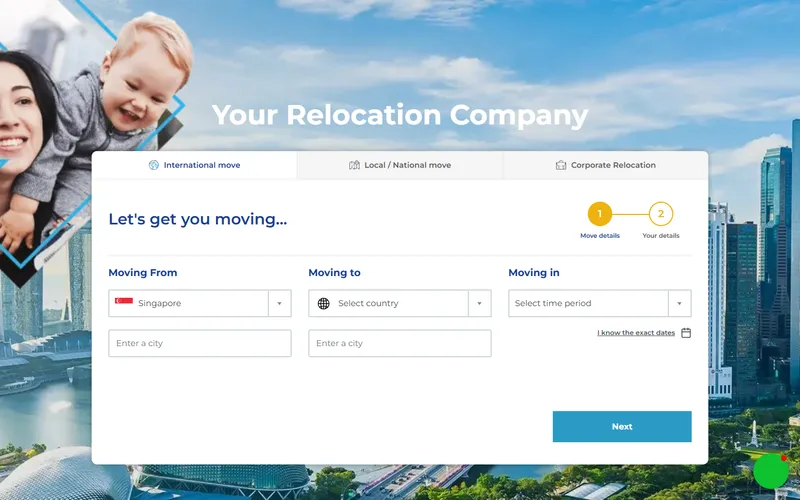
2. Crown Relocations: the services around the shipment
An international move is rarely only about boxes. There is home search at the other end, school search for anyone with children, temporary accommodation, and the settling-in that decides whether an assignment works. Those services cost money and they are frequently paid for by an employer, so if your company is funding the move, ask what the relocation package actually includes before you assume it is just the shipping.
If you are paying for it yourself and only need household goods moved, you may be buying capability you do not need. Ask for a quote scoped to moving alone and compare it against the Singapore-based movers further down this list.
- Best for
- Company-funded relocations with support services attached
- Type
- Global relocation network
- Beyond moving
- Home search, school search, settling-in support
- Website
- crownrelo.com
Recommended reads
3. Santa Fe Relocation: mobility and immigration alongside the move
That combination matters more than it sounds, because immigration timing drives everything else. You cannot sensibly ship a household to a country before the right to live there is confirmed, and you also cannot leave the shipment until the last minute given sea freight runs one to four weeks plus customs. Having the same provider watching the visa timeline and the freight booking removes a coordination risk that otherwise sits entirely with you.
If your visa is already granted and settled, this is more service than a straightforward household move needs. If you are moving on an assignment where the paperwork is still in progress, it is the sensible structure.
Contact Santa Fe Relocation directly
- Best for
- Assignments where the paperwork is still moving
- Covers
- Global mobility, immigration and moving
- Why it matters
- Visa timing drives the shipping schedule
- Website
- santaferelo.com
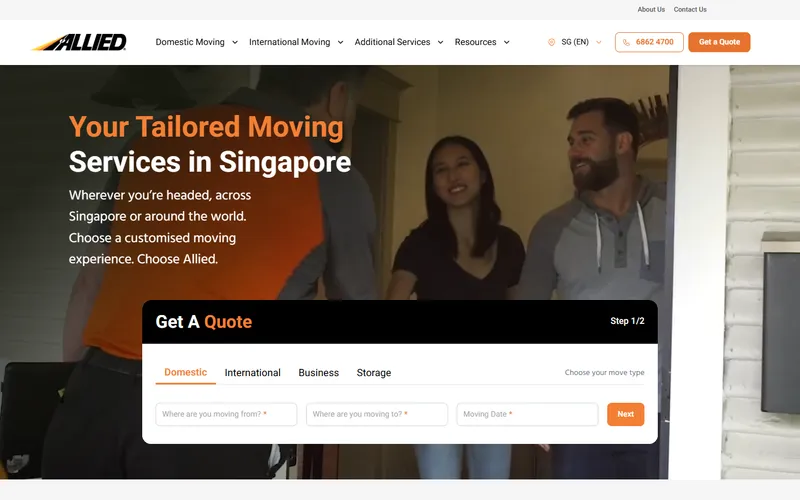
4. Allied: wide agent coverage on common routes
For a common corridor, to Australia, the UK, the United States or Western Europe, a large network usually has a well-drilled agent at the other end who handles Singapore shipments routinely. Routine is underrated. Most of what goes wrong in an international move is not dramatic, it is a document filed slightly wrong or a delivery window missed, and an agent who does this route weekly makes fewer of those errors.
Compare the network quotes against each other rather than treating them as one tier. Pricing between the big names on the same route can differ substantially depending on how their consolidation schedules happen to fall in the month you are moving.
Contact Allied directly
- Best for
- Australia, the UK, the US and Western Europe
- Type
- Long-established global network
- Strength
- Well-drilled agents on common corridors
- Website
- allied.com
5. M&P International Freights: freight-led, and priced accordingly
That suits a specific customer: someone shipping a normal household of furniture and boxes to a common destination, paying for it themselves, and willing to trade some hand-holding for a better number. If you do not need home search, immigration support or a dedicated move manager, you should not be paying for a structure that provides them.
The things to nail down are exactly the ones a full-service provider would handle for you: what insurance cover is included and at what excess, who the destination agent is and what they do on arrival, and what customs documentation you are responsible for producing. Get those in writing and this tier is very good value.
- Best for
- A straightforward sea shipment at a keener price
- Approach
- Freight-led international moving
- Get in writing
- Insurance cover, destination agent, customs paperwork
- Website
- mp.com.sg
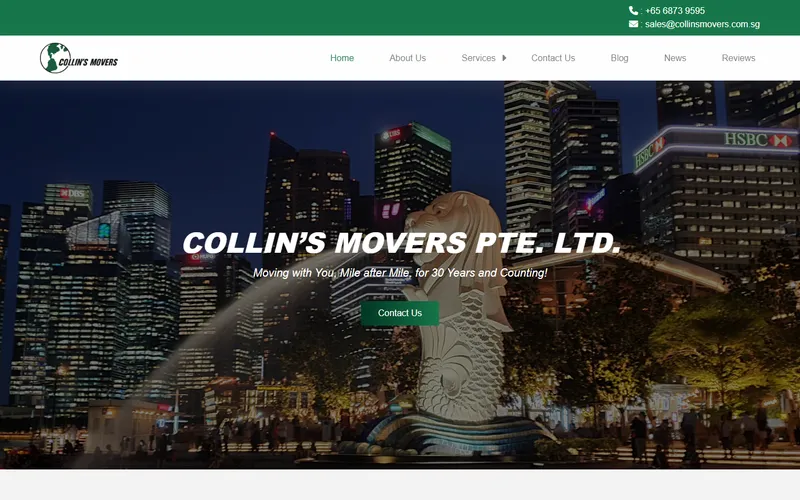
6. Collin's Movers: local and international from the same firm
Plenty of international moves are actually two moves. A household leaves a condo, some of it goes into storage or to a family member here, and the rest ships overseas. Splitting that between a local mover and an international one means two survey visits, two inventories and an argument waiting to happen about anything that goes missing between them. One firm doing both keeps a single inventory and a single point of responsibility.
Ask specifically about their international accreditation and destination network, since a firm strong locally is not automatically strong on the overseas leg. It is a fair question and a good operator will answer it directly.
- Best for
- A move that is really two moves
- Covers
- Local and international moving
- Useful when
- Part of the household stays here and part ships
- Ask about
- International accreditation and the destination network
- Website
- collinsmovers.com.sg
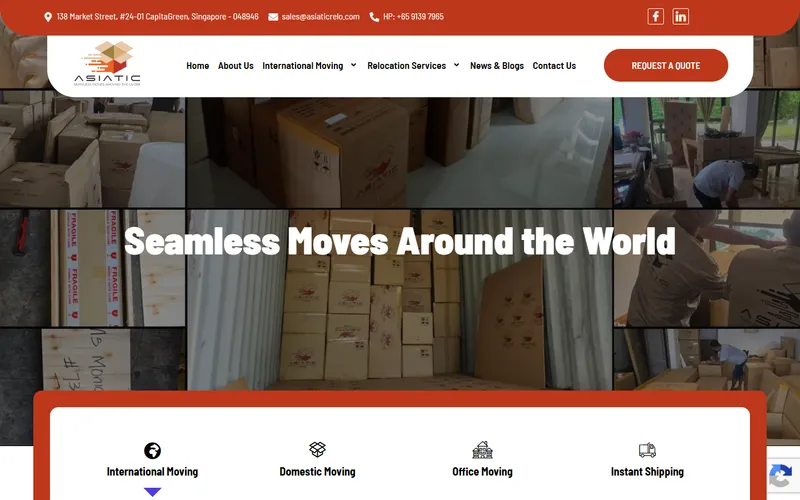
7. Asiatic Relocation: the one explaining the standard
Its explanation of why FIDI-accredited movers quote higher is unusually candid: comprehensive transit insurance, mandatory third-party audits and premium packing materials. That framing is useful because it turns a price difference into a list of things you can decide whether you want. If your shipment is mostly IKEA furniture and books, the premium may not be worth it. If it includes a piano, artwork or anything irreplaceable, it plainly is.
The other point it makes well is that FIDI membership governs the destination leg through the alliance network, which is the part of an international move you have the least visibility into and the least ability to fix.
- Best for
- Understanding the standard before you compare quotes
- Notable
- Publishes guides on FIDI certification and agent selection
- Useful framing
- Why accredited movers cost more, itemised
- Website
- asiaticrelo.com
How much does an international move from Singapore cost?
Relocation services from Singapore commonly run S$3,800 to S$19,500 depending on distance, volume and what services are included, and international moves are frequently quoted in the region of US$2,000 to US$8,000 and upward. The spread is wide because a studio apartment going to Kuala Lumpur and a four-bedroom house going to London are barely the same product.
The variables that move the number most are shipment volume, destination country, and whether you send goods by sea or air. Sea freight runs about one to four weeks in transit and costs far less. Air freight is three to ten days and costs a multiple of it. Customs clearance sits on top of both and can extend delivery beyond the transit estimate.
Get at least three quotes from a home survey rather than an online form, because a surveyor walking your flat produces a volume estimate that is actually comparable. And confirm what is excluded: insurance, storage at either end, customs duties and taxes at destination, long carry or stairs at delivery, and any handyman work to dismantle built-in items are all commonly outside the headline figure.
What is FIDI-FAIM accreditation and does it matter?
FAIM is the quality standard of the FIDI Global Alliance, and it matters because it is audited independently rather than self-declared. Accredited movers undergo mandatory third-party audits covering operational quality and financial health, which is a meaningful bar in an industry where anyone can advertise international moving.
The financial audit is the part people overlook and it protects you directly. A mover that fails financially mid-shipment, with your household goods somewhere between a warehouse and a port, is the genuine worst case in this category. An audited balance sheet does not eliminate that risk and it substantially reduces it.
The other benefit is the destination leg. FIDI members work with alliance partners at the other end who are held to the same FAIM standard, so the company delivering to your new home was not simply the cheapest available. Accredited movers do quote higher, for stated reasons: comprehensive transit insurance, the audit burden and export-grade packing materials. Whether that premium is worth paying is a judgement about what is in your shipment, and for anything irreplaceable it usually is.
My verdict on international movers in Singapore
Start by asking every mover on your shortlist one question: are you FIDI-FAIM accredited, and who handles my destination leg. The answers will thin the list quickly and for the right reasons.
For a move within Asia, Asian Tigers, whose network is built around this region rather than extended into it. For a company-funded relocation with home search and settling-in attached, Crown. Where the visa is still in progress and timing is the risk, Santa Fe. For common corridors to Australia, the UK, the US or Western Europe, Allied.
If you are paying yourself and want a straightforward sea shipment priced keenly, M&P International Freights, with the insurance and destination agent confirmed in writing. If part of the household stays in Singapore, Collin's Movers keeps it on one inventory. And read Asiatic Relocation first whatever you choose, because its explanation of what accreditation buys is the clearest in this market.
One last habit: decide the insurance deliberately. A sea container crossing an ocean over several weeks, handled by multiple parties, is a genuinely different risk from a lorry crossing town, and the cover is not automatic.
A closing note for the trade. This is a category where the customer is often leaving the country, comparing three quotes on a laptop late at night, and cannot visit anybody. The website is the entire showroom. The mover whose site explains accreditation, transit times and what insurance covers wins the survey booking before a phone rings. If yours is the weak link, that is fixable, and it happens to be my day job. Have a look at my web design services in Singapore, or get a quote and I will tell you straight what I would change.
Spotted something out of date in this guide?
Suggest an edit or a business to add. This guide is pre-filled for you.
Sources & References (7)

Professional Opinion-haver
Terris
Chief Recommender · I do the digging so you don't have to
Terris is a Singapore-based web designer and digital strategist who has spent 8+ years building websites for local businesses. His Terris Recommends series shares personal picks for the best service providers across Singapore, informed by his experience working with businesses across industries.
Want to see these strategies in action? Browse our portfolio or get in touch to discuss your project.