The best self storage Singapore offers is not the cheapest unit, and the reason is the weather. Singapore sits at 80% to 90% humidity most of the year, and a non-air-conditioned storage unit exposes everything inside it to exactly that. Wood, leather, fabric, electronics and paper can be damaged within weeks rather than years.
Climate-controlled units cost roughly 20% to 35% more, which reads like an upsell on a comparison page and is closer to a requirement for anything you actually care about. If you are storing garden tools, save the money. If you are storing a sofa, a guitar or boxes of documents through a six-month renovation, do not.
Beyond that the market is more transparent than most: storage is priced per square foot per month, generally S$2.00 to S$5.00, so once you know the rate the only question is how much space you need. Here are six providers worth comparing, with the terms that actually differ between them.
Key Takeaways
- 1 Humidity is the decision, not the price. Singapore runs at 80% to 90% humidity, and a non-aircon unit exposes wood, leather, fabric, electronics and documents to it directly. Climate-controlled units cost roughly 20% to 35% more and remove that risk entirely.
- 2 Storage is priced per square foot per month, generally S$2.00 to S$5.00, with Lock+Store quoting from as low as S$1.80. Once you know the rate, the only real variable is how much space you genuinely need.
- 3 Expect S$50 to S$100 a month for a locker, S$189 to S$458 for a furniture-sized unit of 46 to 65 sq ft, and S$350 to S$500 for a large room of 80 to 140 sq ft.
- 4 The extras are where providers differ most. StorHub charges no security deposit, no admin fee and imposes no minimum contract, which is unusual in this sector and worth comparing against everyone else.
- 5 Promotional rates are the norm rather than the exception, with offers running to three months free. Work out the ongoing rate after the promotion ends before signing, because that is the price you will pay for most of the term.
Aircon or not, and how the pricing actually works
Four things. The first decides whether your belongings survive.
- Climate control is not a luxury tier here. Standard units sit at ambient Singapore humidity, 80% to 90%. That means mould on fabric and leather, warping and swelling in wood, corrosion on electronics contacts, and paper that cockles and foxes. Aircon units run about 20% to 35% more. For a renovation, an overseas posting or anything with sentimental value, that premium is the cheapest insurance in this guide.
- Price is per square foot per month. The market runs roughly S$2.00 to S$5.00 per sq ft, and Lock+Store quotes from as low as S$1.80. Converting any quote back to a per-square-foot figure is the only way to compare providers honestly, because unit sizes are not standardised.
- Match the size to the job, not to the anxiety. Lockers and mini units run S$50 to S$100 a month. A furniture-sized unit of 46 to 65 sq ft is S$189 to S$458. A large room of 80 to 140 sq ft is S$350 to S$500. Most people over-book, so measure or ask the provider to size it from a list of what you are storing.
- Read the extras, because that is where they differ. Security deposit, admin fee, minimum contract, and whether insurance is mandatory and included. StorHub is notable for charging no deposit, no admin fee and requiring no minimum contract, which is not the norm.
On promotions: introductory offers running to three months free are standard across this sector, so the advertised figure is frequently not the rate you will pay for most of your term. Work out the ongoing monthly cost after the promotional period and compare on that. Where a headline rate was never genuinely charged, that is the kind of misleading pricing CASE exists to take complaints about.
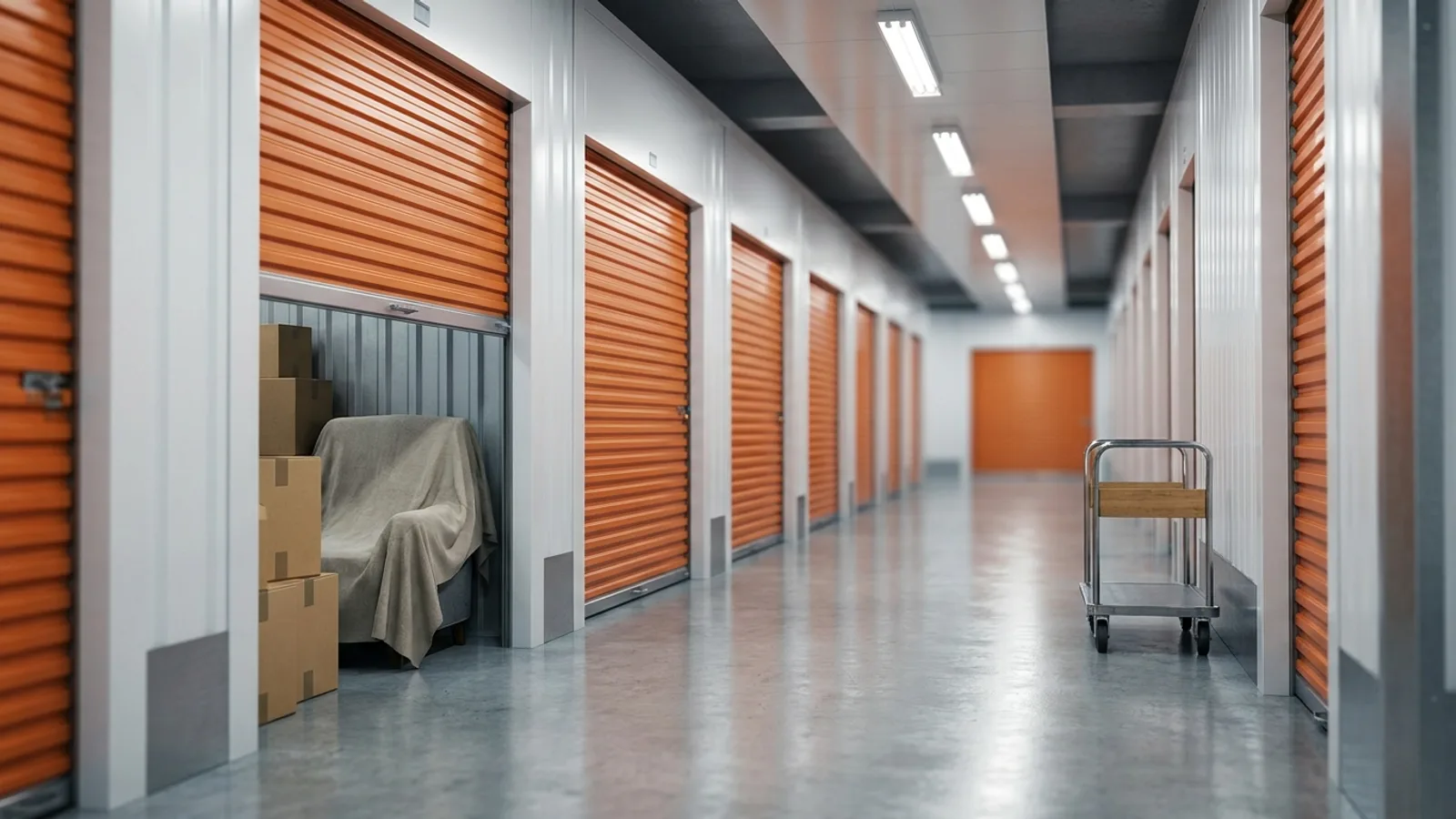
One practical note if this is a move rather than a declutter: check access hours and whether there is a loading bay and trolleys, because a cheap unit you can only reach between 9 and 6 on weekdays is not cheap if you have to take leave to use it. My picks of the best movers in Singapore cover the other half of that job.
How the best self storage providers in Singapore compare
| Provider | From | Notable terms | Best for |
|---|---|---|---|
| StorHub | Climate-controlled from about S$51/month | No deposit, no admin fee, no minimum contract | The cleanest terms in the sector |
| Lock+Store | From about S$1.80 per sq ft | Units 2.3 to 2.6m high, lockers 1.1 to 1.3m | The lowest per-square-foot rate |
| Extra Space | Market rates | Regional operator across Asia | Branch coverage and scale |
| Store Friendly | Market rates | Publishes comparison pricing | Transparent published rates |
| Boxpark | Market rates | Value positioning | Comparing on price per sq ft |
| Beam | Market rates | Valet and on-demand model | Storing without visiting a facility |
1. StorHub: the terms nobody else matches
Those terms matter most in exactly the situation people usually need storage: a renovation that might run two months or might run five, a move with an uncertain completion date, a stint overseas of unknown length. Being able to leave when you are done, without forfeiting a deposit or paying out a contract, is worth more than a dollar or two per square foot.
Climate-controlled units start from around S$51 a month at the small end, which given the humidity argument above is where most people should be looking anyway.
Note: storhub.com.sg sits behind a Cloudflare check that blocks automated capture, so there is no screenshot for this entry.
Contact StorHub directly
- Best for
- Storage of uncertain length, which is most storage
- From
- Climate-controlled units from about S$51 a month
- Terms
- No security deposit, no admin fee, no minimum contract
- Pricing
- Published online rather than on enquiry
- Website
- storhub.com.sg
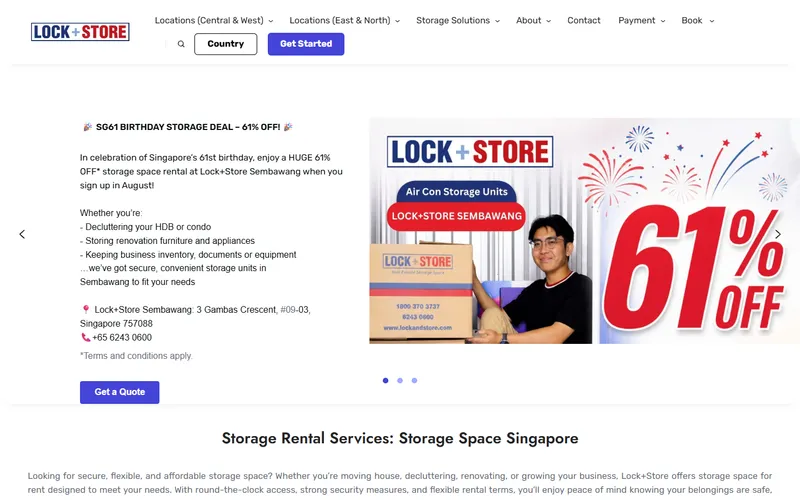
2. Lock+Store: the lowest rate per square foot
It also publishes its dimensions properly, which sounds mundane and is not: storage units run 2.3 to 2.6 metres high and lockers 1.1 to 1.3 metres. Height is the variable people forget, and it is the difference between stacking boxes four high in the space you paid for and stacking them two high.
Ask specifically which units are climate-controlled and what the difference in rate is, since the headline per-square-foot figure will be for the standard product. That is normal across the sector rather than particular to them.
- Best for
- The lowest per-square-foot rate, if you use the height
- From
- About S$1.80 per square foot
- Dimensions
- Units 2.3 to 2.6m high, lockers 1.1 to 1.3m
- Ask about
- Which units are climate-controlled, and the rate difference
- Website
- lockandstore.com
3. Extra Space: the regional operator
Its Singapore site now sits under extraspaceasia.com rather than the old extraspace.sg address, which redirects. Worth knowing if you are following a link from an older guide or a saved bookmark.
Pricing is at market rates rather than at the value end, and the offer is convenience and consistency rather than the cheapest square foot. For a business storing stock or documents where predictability matters more than saving fifty dollars a month, that is a reasonable trade.
Contact Extra Space directly
- Best for
- Being close to a facility, and business storage
- Note
- The older extraspace.sg address now redirects here
- Strength
- Branch coverage across Singapore and the region
- Website
- extraspaceasia.com
Recommended reads
4. Store Friendly: publishes what things cost
Treat a competitor comparison published by a competitor with the appropriate scepticism, obviously. It is still a reasonable starting point for the shape of the market, and it makes the per-square-foot conversion easier to do across several providers at once.
As with everyone here, confirm which units are climate-controlled and what the ongoing rate is after any introductory offer, since those two questions determine both whether your belongings survive and what you actually pay.
Contact Store Friendly directly
- Best for
- Getting a sense of market rates before enquiring
- Strength
- Openly published pricing, including comparisons
- Caveat
- A competitor comparison written by a competitor
- Website
- storefriendly.com.sg
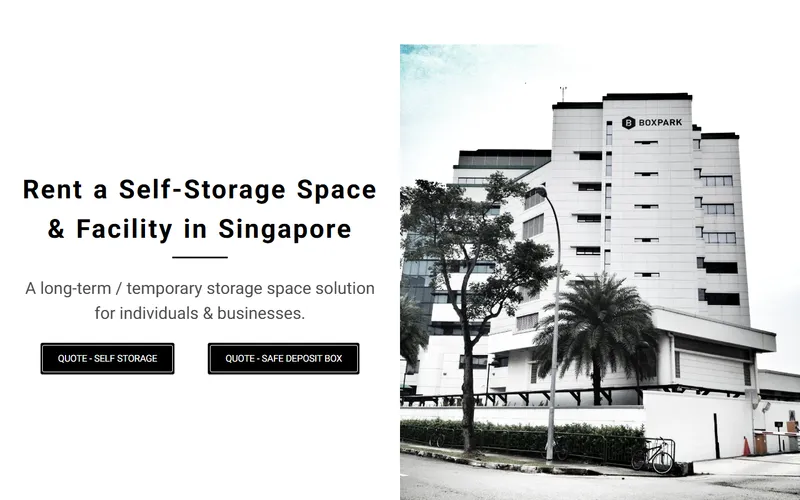
5. Boxpark: comparing on the number that matters
The important discipline is being honest about which category your belongings fall into. People routinely put a sofa or a box of photographs into a standard unit to save S$40 a month and regret it, and the damage is not recoverable.
Ask for the rate per square foot, the ongoing rate after any promotion, whether insurance is required and whether it is included. Those four answers make any two providers directly comparable.
Contact Boxpark directly
- Best for
- Humidity-tolerant items where price is the only variable
- Positioning
- Value end of the market
- Ask for
- Rate per sq ft, post-promotion rate, insurance terms
- Website
- boxpark.com.sg
6. Beam: storage without going to a storage facility
It works well when you have a defined set of boxes, you do not need frequent access, and you have no easy way to move things yourself. It works badly when you want to browse what you own, add and remove items often, or store furniture you may need at short notice.
Compare it on total cost including collection and retrieval rather than on a monthly rate, because the retrieval fees are the part that changes the arithmetic. If you expect to ask for things back more than once or twice, a conventional unit is usually cheaper and less frustrating.
- Best for
- Boxed items you will not need back often
- Model
- Valet storage, collected and returned on request
- Compare on
- Total cost including collection and retrieval fees
- Website
- beam.sg
How much does self storage cost in Singapore?
Self storage in Singapore costs roughly S$2.00 to S$5.00 per square foot per month, with Lock+Store quoting from as low as S$1.80. In practice that means about S$50 to S$100 a month for a locker or mini unit, S$189 to S$458 for a furniture-sized unit of 46 to 65 sq ft, and S$350 to S$500 for a large room of 80 to 140 sq ft. Climate-controlled units cost roughly 20% to 35% more than standard ones.
| Size | Monthly | Typical use |
|---|---|---|
| Locker or mini unit | S$50 to S$100 | Documents, seasonal items, a few boxes |
| 46 to 65 sq ft | S$189 to S$458 | The contents of a room, or furniture during a renovation |
| 80 to 140 sq ft | S$350 to S$500 | A whole flat, or business stock |
| Climate control | Add 20% to 35% | Anything made of wood, leather, fabric, paper or electronics |
Convert every quote to a rate per square foot before comparing, since unit dimensions are not standardised between providers, and check the ongoing rate after any introductory promotion. Offers of up to three months free are common, and the post-promotion rate is what you will pay for most of the term.
Do I need air-conditioned storage in Singapore?
For anything made of wood, leather, fabric, paper or electronics, yes. Singapore sits at 80% to 90% humidity for most of the year, and a standard non-air-conditioned unit exposes stored items to that directly, which can cause mould, warping, corrosion and paper damage within weeks rather than years. Climate-controlled units cost roughly 20% to 35% more.
Standard units are perfectly appropriate for humidity-tolerant items such as garden tools, sports equipment, metal shelving or goods in sealed containers. The mistake worth avoiding is putting a sofa, a musical instrument or boxes of photographs into a standard unit to save S$40 a month, because that damage cannot be undone.
What size storage unit do I need?
A locker or mini unit at S$50 to S$100 a month holds documents, seasonal items and a handful of boxes. A unit of 46 to 65 sq ft at S$189 to S$458 holds the contents of a room or a household of furniture during a renovation. A large room of 80 to 140 sq ft at S$350 to S$500 holds a whole flat or business stock.
Ask the provider to size it from a list of what you are actually storing rather than guessing, because most people over-book. Check the ceiling height too: units typically run 2.3 to 2.6 metres and lockers 1.1 to 1.3 metres, and using that height by stacking properly is the difference between needing one size and the next one up.
Which self storage in Singapore has no deposit or minimum contract?
StorHub charges no security deposit and no admin fee, and does not require a minimum contract, which is unusual in Singapore self storage where deposits and lock-in periods are common. It also publishes its pricing online rather than quoting on enquiry, with climate-controlled units from about S$51 a month.
Those terms matter most for storage of uncertain length, which describes most storage: a renovation that overruns, a move with a shifting completion date, or an overseas posting. When comparing providers, ask specifically about the deposit, the admin fee, the minimum term and the notice period required to leave, since those four items differ more between providers than the headline rate does.
My verdict on self storage in Singapore
Decide on humidity before you decide on price. If what you are storing includes wood, leather, fabric, paper or electronics, book a climate-controlled unit and treat the 20% to 35% premium as part of the cost rather than an upsell. If it is tools and sealed boxes, take the cheapest compliant square foot and do not think about it further.
Then: StorHub if the length of time is uncertain, because no deposit, no admin fee and no minimum contract is worth more than a small difference in rate. Lock+Store from about S$1.80 per square foot if you have done the conversion and want the lowest rate, and if you will actually stack to the 2.3 to 2.6 metre ceiling you are paying for. Extra Space if being close to a branch matters. Beam if you would rather never visit a facility, priced on total cost including retrieval.
Two habits. Convert every quote to a price per square foot, because unit sizes are not standardised and that is the only honest comparison. And ask what the rate becomes after the introductory offer, since three months free is common and the other nine are the ones you pay for.
One last note for the trade. This is a category where the single most decision-relevant fact, that Singapore humidity will damage ordinary belongings in a standard unit, tends to appear as a feature bullet for the premium tier rather than as advice. The operator willing to tell people plainly which of their items need aircon and which do not would earn a great deal of trust, and would sell more of the higher tier while they were at it. If your website is the weak link, that is fixable, and it happens to be my day job. Take a look at my web design services in Singapore, or get a quote and I will tell you honestly what would move the needle.
If the storage is a gap in an overseas move, raise it at quoting stage. My guide to the best international movers in Singapore covers how that decision is priced at both ends.
Spotted something out of date in this guide?
Suggest an edit or a business to add. This guide is pre-filled for you.
Sources & References (7)

Professional Opinion-haver
Terris
Chief Recommender · I do the digging so you don't have to
Terris is a Singapore-based web designer and digital strategist who has spent 8+ years building websites for local businesses. His Terris Recommends series shares personal picks for the best service providers across Singapore, informed by his experience working with businesses across industries.
Want to see these strategies in action? Browse our portfolio or get in touch to discuss your project.