The best chilli crab Singapore serves is worth eating at least once, and this is an unusually good month to decide where, because the address most associated with the dish is about to stop selling it. The East Coast Seafood Centre is being redeveloped. JUMBO shuts its original flagship there on 30 September 2026 after 39 years, and Long Beach is moving up the park to Coastal PlayGrove.
The other thing worth knowing before you book is how the price works, because almost nobody gets this right the first time. Crab is sold by weight and quoted per 100g. A menu showing S$10.80 is showing you S$108 a kilo, and the crab a server will suggest for two or three people weighs about a kilo. That is where the famous bill shock comes from, and it is entirely avoidable.
So here are nine places I would send someone, from the restaurant run by the inventor's son to a zi char shop in Alexandra Village, plus the three sauces and the one question to ask before the kitchen starts cooking. Prices are 2026, and crab is market-priced, so I have said where a number is a guide rather than a fixed rate.
Key Takeaways
- 1 The East Coast Seafood Centre is being redeveloped. JUMBO closes its original flagship there on 30 September 2026 after 39 years, and Long Beach moves to Coastal PlayGrove, opening in the first week of September. If eating chilli crab at the address most associated with it matters to you, that window is weeks wide. Jump to Long Beach Seafood: black pepper crab, and a new East Coast address
- 2 The menu price is per 100g, not per crab, and that is the whole reason people get a shock at the till. JUMBO quotes S$10.80 per 100g, which is S$108 a kilo, and a crab big enough for two or three runs 1kg to 1.2kg.
- 3 Ask the per-kilo price and ask to see the crab weighed before the kitchen cooks it. Every good restaurant will do this and it is completely normal. It is also the only way to know the bill in advance.
- 4 Chilli crab was invented in 1956 by Mdm Cher Yam Tian, then 23, who swapped bottled chilli into the tomato sauce she had been stir-frying the crabs her husband caught off the beach. Roland Restaurant is run by her son and prints the year on its menu.
- 5 Chilli, black pepper and white pepper are three different dishes, not three heat levels. A lot of people order chilli crab and work out afterwards that white pepper was what they actually wanted.
Read the price before you order, and other things worth knowing
Four things. The first one is worth about fifty dollars.
- The number on the menu is per 100 grams. Not per crab, not per portion. JUMBO quotes S$10.80 per 100g, so a kilo is S$108. Across the restaurants here the market runs roughly S$80 to S$150 a kilo depending on the size and the day, and a crab that feeds two or three is 1kg to 1.2kg. So the crab alone is usually S$85 to S$150 before rice, vegetables, mantou or drinks.
- Ask for it to be weighed in front of you. Ask the per-kilo price, pick a size, and ask to see the crab weighed before it goes to the kitchen. This is completely normal, every reputable place does it without blinking, and it is the only way to know the bill before it arrives. If a restaurant is reluctant, that tells you something.
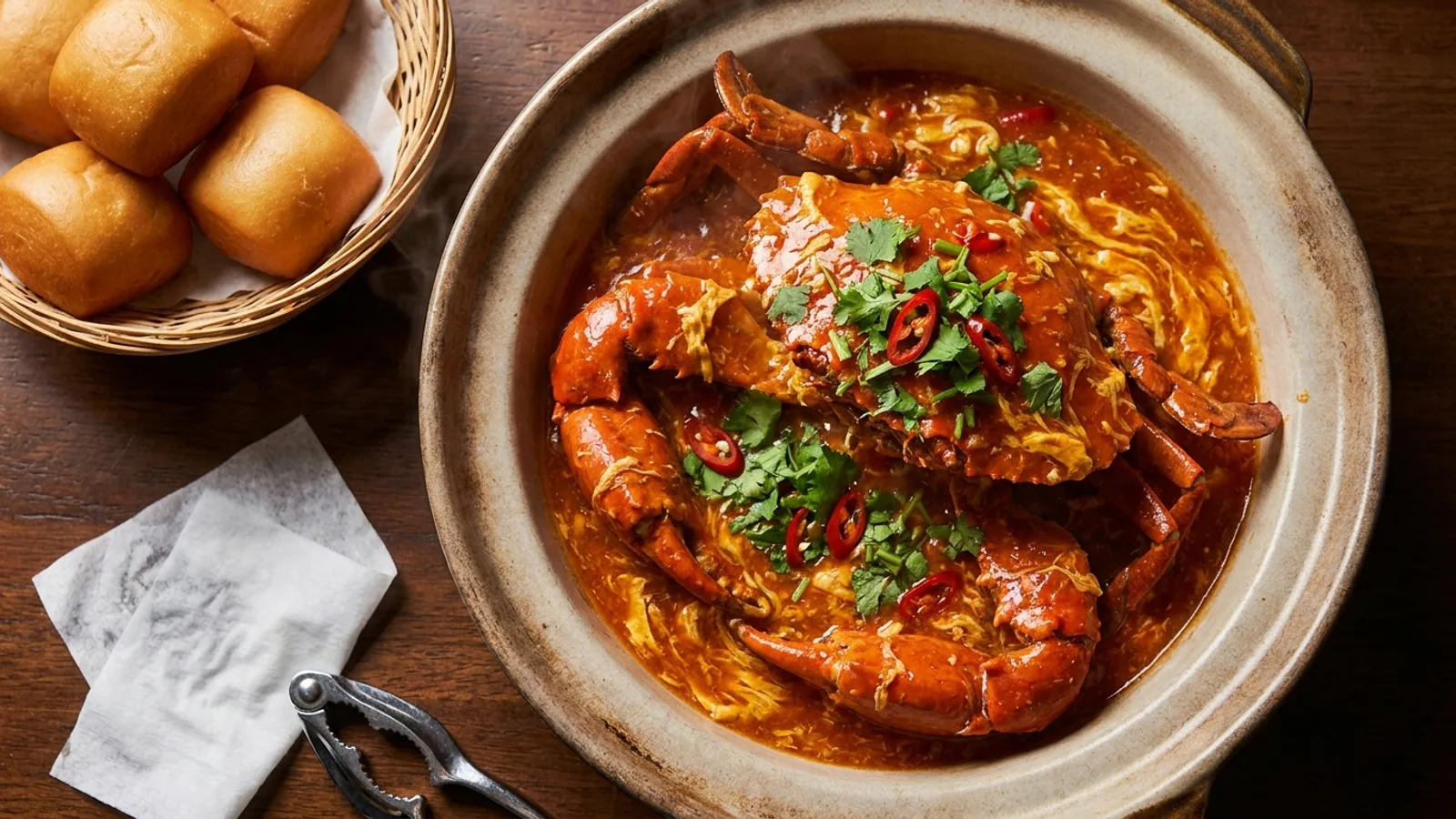
- Chilli, black pepper and white pepper are different dishes. Chilli crab is the sweet-savoury tomato and chilli gravy thickened with ribbons of egg. Black pepper is dry, dark and pungent, and Long Beach has claimed it for decades. White pepper is the aromatic middle path, drier than chilli and gentler than black, and No Signboard is the name that popularised it. Order by the sauce you want, not by the famous one.
- It is Sri Lankan mud crab, and size drives the price more than the sauce does. Almost none of it is local. Sri Lankan mud crab is the premium standard and can exceed two kilos; cheaper mud crab from Malaysia, Indonesia or Vietnam comes in smaller and costs considerably less. A restaurant that tells you which it is serving is being straight with you.
And the history, because it is more specific than most food origin stories and it is genuinely verifiable. In 1956 Mdm Cher Yam Tian, then 23, was steaming the crabs her husband, a police constable, brought home from the beach. He asked for something different, so she stir-fried them in tomato sauce. He said it was good but too sweet, and suggested chilli. They sold it from a pushcart, then from a shack lit by hurricane lamps that Mr Lim named Palm Beach Seafood after the trees. They retired and sold up in 1985. Their son Roland Lim opened Roland Restaurant in Marine Parade to keep it going, and it is still there. Mdm Cher died in 2023, aged 90.
How the best chilli crab restaurants in Singapore compare
| Restaurant | Known for | Typical spend per pax | Best for |
|---|---|---|---|
| Roland Restaurant | The original family recipe | S$50 to S$70 | The version closest to the 1956 dish |
| JUMBO Seafood | The famous one | S$60 to S$90 | A first chilli crab, and thick sweet gravy |
| Long Beach Seafood | Black pepper crab | S$60 to S$90 | Pepper over chilli |
| No Signboard Seafood | White pepper crab | S$50 to S$80 | Late nights in Geylang, to 1.30am |
| Keng Eng Kee | Third-generation zi char | S$40 to S$60 | Eating where locals eat, not tourists |
| Palm Beach Seafood | Waterfront and the original name | S$70 to S$100 | The view, and visitors |
| Mellben Seafood | Claypot crab bee hoon soup | S$50 to S$60 | Crab in soup rather than gravy |
| Uncle Leong Seafood | Value and inventive sauces | S$40 to S$60 | Feeding a family without a shock |
| Red House Seafood | Reliable, several waterfront sites | S$60 to S$90 | A safe booking near town |
1. Roland Restaurant: the closest thing to the original
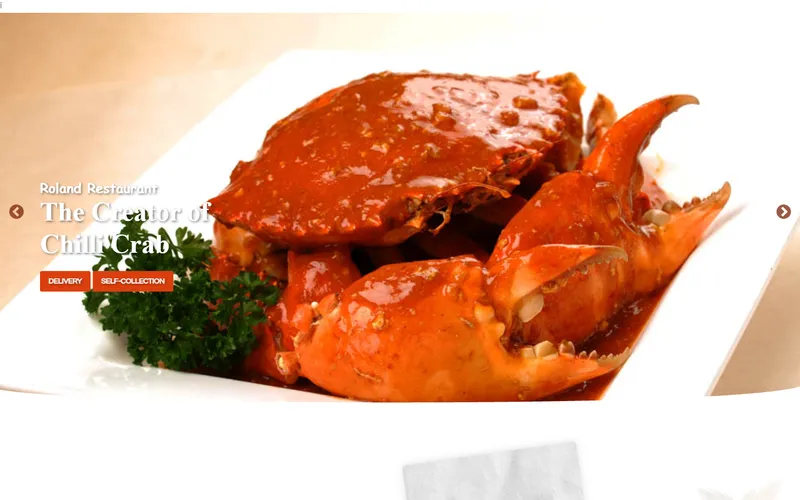
Roland Restaurant is run by Roland Lim, son of Mdm Cher Yam Tian, who invented the dish in 1956. The menu prints the year and the claim, and the Michelin Guide has profiled it as a heritage restaurant. That would be a nice story attached to mediocre food at a lot of places. Here it is attached to a genuinely different chilli crab.
The gravy is thinner, tangier and noticeably less sweet than JUMBO's, which is closer to what the dish was before decades of tourist-facing refinement pushed it sweeter. If you have only eaten the modern version, this one reads as sharper and more tomato-forward, and the first reaction is often that something is missing. Give it three mouthfuls. The sugar is what was missing, and you stop wanting it.
It is a large, plain function-room sort of place on the sixth floor of a Marine Parade HDB carpark block, which is not what anyone expects from the restaurant with the strongest claim to the dish in Singapore. Book at weekends. It fills with families who have been coming for thirty years.
Website: rolandrestaurant.com.sg
Where: 89 Marine Parade Central, #06-750
Price: About S$50 to S$70 per pax
The sauce: Thinner, tangier, much less sweet than the modern standard
Best known for: The 1956 family recipe, and the year printed on the menu
2. JUMBO Seafood: the famous one, and its flagship closes on 30 September
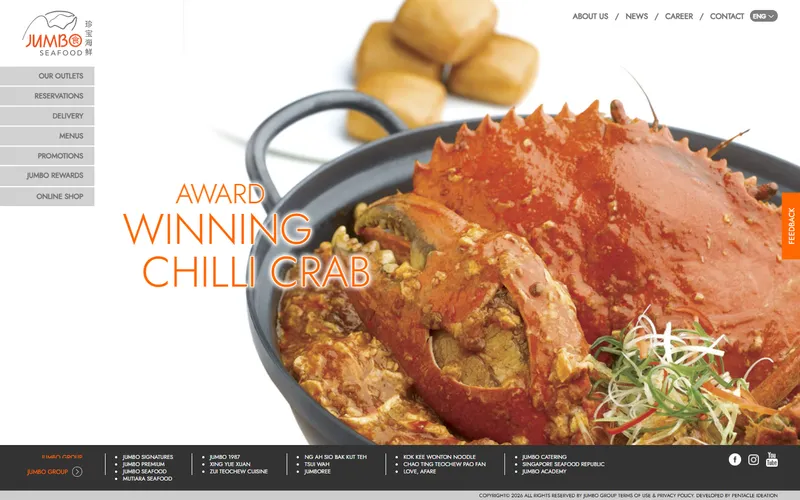
JUMBO is the chilli crab most visitors have heard of and it earns the reputation. The gravy is thick, glossy, sweet-leaning and heavy with egg ribbon, the crabs are consistently meaty, and it is the safest possible first chilli crab because nothing about it will surprise anyone. Crab is quoted at S$10.80 per 100g, so budget S$108 a kilo and around S$60 to S$90 a head once the table is fed.
The news is that the original East Coast Seafood Centre outlet, where the brand started in 1987, closes for good on 30 September 2026 when its lease ends. NParks is redeveloping the East Coast Park site, so this is not a relocation of that address, it is the end of it after 39 years. Six other JUMBO outlets carry on.
If eating chilli crab at the East Coast Seafood Centre is on your list, do it in September. Expect it to be busy, expect a wait, and book. Everyone in Singapore has now read the same announcement.
Website: jumboseafood.com.sg
Price: S$10.80 per 100g, so about S$108 a kilo
The sauce: Thick, sweet-leaning, heavy on egg ribbon
Closing: East Coast Seafood Centre flagship, 30 September 2026, after 39 years
Best for: A first chilli crab, and anyone who wants no surprises
3. Long Beach Seafood: black pepper crab, and a new East Coast address
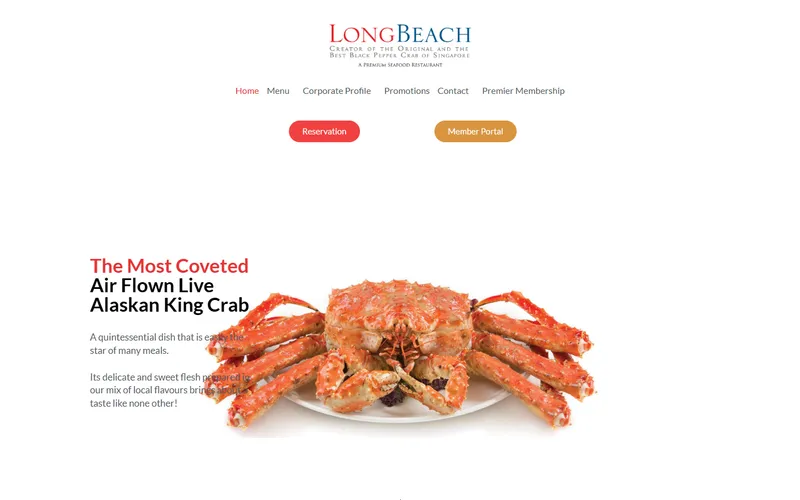
Long Beach has claimed black pepper crab for decades and it is the reason to come. It is a completely different dish from chilli crab: dry rather than saucy, dark, and aggressively peppery in a way that makes your lips tingle. If someone at the table finds sweet gravy cloying, this is the order that converts them.
Their chilli crab is also good and runs spicier than JUMBO's, so the two are a real choice rather than the same thing at different addresses. Budget S$60 to S$90 a head.
Logistics changed this year. The East Coast Seafood Centre outlet is moving to Coastal PlayGrove, about an eight-minute drive further along the park, opening in the first week of September 2026. Check which address you are booking, because directions written before this summer point at a site that is closing.
Website: longbeachseafood.com.sg
Price: About S$60 to S$90 per pax
Order this: Black pepper crab, which is what they are actually known for
Moving: East Coast outlet to Coastal PlayGrove, first week of September 2026
Best for: Anyone who prefers pepper to sweetness
4. No Signboard Seafood: white pepper crab, and open until 1.30am
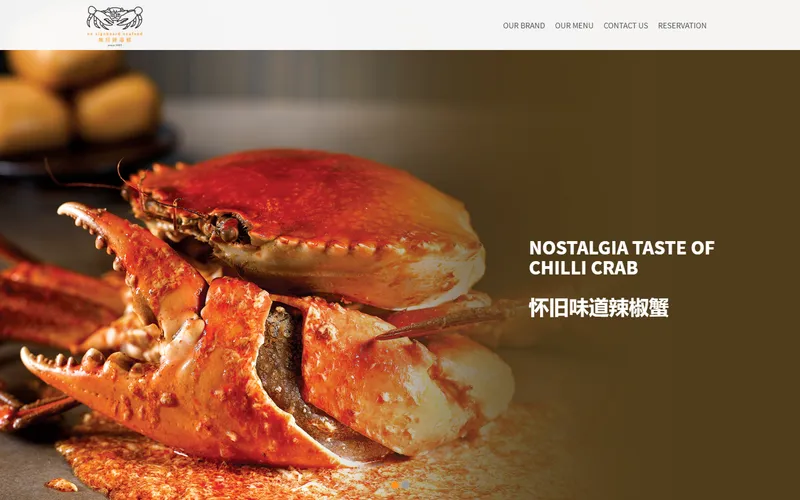
No Signboard is the restaurant that made white pepper crab a thing people order by name. It sits between the other two: drier than chilli crab, far more fragrant than black pepper, and it lets you actually taste the crab rather than the sauce. For anyone who has decided chilli crab is too sweet and black pepper too blunt, this is the answer, and most people have never tried it.
Their chilli crab is rich and eggy and perfectly good. But ordering chilli crab here is a bit like ordering a steak at a seafood restaurant, technically fine and not the point.
The Geylang flagship at 414 Geylang Road runs until 1.30am, which makes it one of very few places in Singapore where a proper crab dinner is possible at midnight. Budget S$50 to S$80 a head. It is a plain room in a lively part of town, and that is part of the appeal.
Website: nosignboardseafood.com
Where: 414 Geylang Road, plus other outlets
Price: About S$50 to S$80 per pax
Order this: White pepper crab, which they popularised
Hours: Geylang flagship runs to about 1.30am
Recommended reads
5. Keng Eng Kee: the zi char shop locals send each other to
Keng Eng Kee, universally shortened to KEK, is a third-generation family zi char business that started as a hawker stall on Old Havelock Road in the 1970s and now trades from Alexandra Village, SAFRA Tampines and Punggol. It is a regular on the Michelin Bib Gourmand list and it is where people who live here send each other, which is a different recommendation from where they send visitors.
The crab is good and cheaper than the big seafood names, roughly S$40 to S$60 a head, and you can have it chilli, black pepper or white pepper. But the honest reason to come is that everything around the crab is excellent too: this is a zi char kitchen, so the moonlight horfun and the claypot liver are not filler while you wait, they are half the meal.
Alexandra Village is a coffee shop setting, plastic stools and all, which is the correct amount of ceremony for this food. Order ahead at weekends. Their crab pricing tracks the market rather than sitting on the website, so ask when you call.
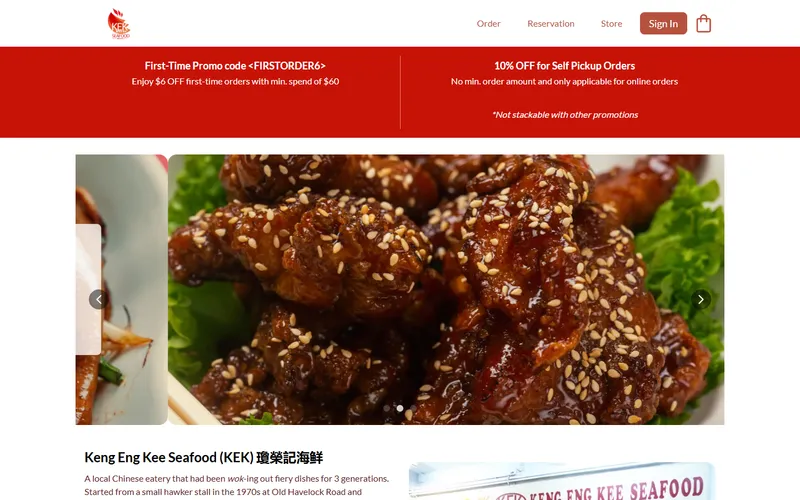
Order online: kengengkee.oddle.me
Where: Alexandra Village, SAFRA Tampines and Punggol
Price: About S$40 to S$60 per pax, crab at market rate
Recognition: Michelin Bib Gourmand regular
Order this: Crab, plus the moonlight horfun and claypot liver
6. Palm Beach Seafood: the name the dish was first sold under
Palm Beach is the name Mr Lim gave the seaside shack where his wife's chilli crab was first sold, after the coconut palms along the beach. The business changed hands in 1985 and the modern Palm Beach is a different operation from the family, so treat the connection as heritage rather than lineage. Roland is the one with the direct family line.
What it does have is the setting. The waterfront room is the most photogenic place on this list to eat chilli crab, and for visitors that matters more than a fifteen percent difference in gravy. Expect to pay for it: S$70 to S$100 a head is the realistic number once you have ordered a crab of any size.
Book a table by the water or the premium is wasted. If you are choosing between here and JUMBO on flavour alone it is close, and the view is the tiebreaker.
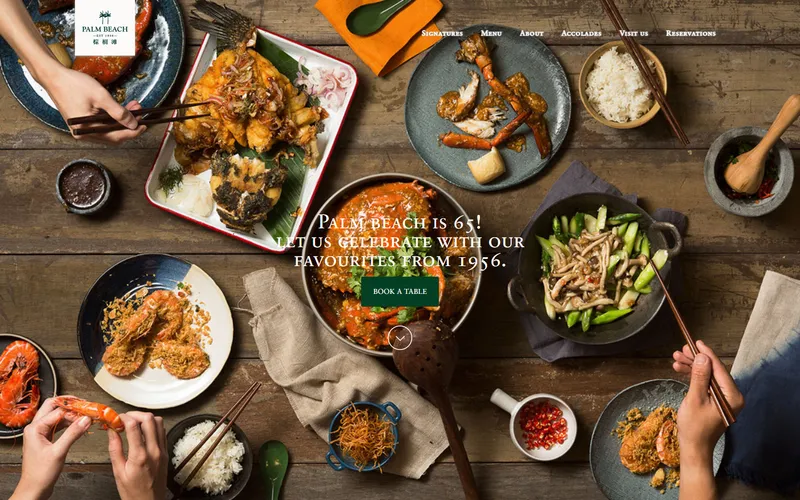
Website: palmbeachseafood.com
Price: About S$70 to S$100 per pax
Best for: The waterfront setting, and hosting visitors
Note: Carries the historic name; the founding family sold up in 1985
Book: Ask for a table by the water
7. Mellben Seafood: crab in soup, which changes the whole meal
Mellben is on this list for a dish that is not chilli crab at all. Its claypot crab bee hoon soup is a milky, deeply savoury broth with the crab sitting in it and rice vermicelli soaking up everything the shell gives off. If you have eaten chilli crab a few times and found the gravy dominates, this is the version where the crab is unmistakably the point.
The Ang Mo Kio original at 232 Ang Mo Kio Avenue 3 holds a Michelin Plate and is where to go. Average spend runs about S$50 to S$60 a head and crab bee hoon is around S$70 a kilo, cheaper than the big seafood names for a better piece of cooking.
Two practical things. It opens at 5pm and closes at 10pm, so it is dinner only. And the queue starts forming around 6pm and does not really stop, so reserve or arrive early. The Ang Mo Kio original does not run its own website; the Tanjong Pagar branch trades as Mellben Signature.
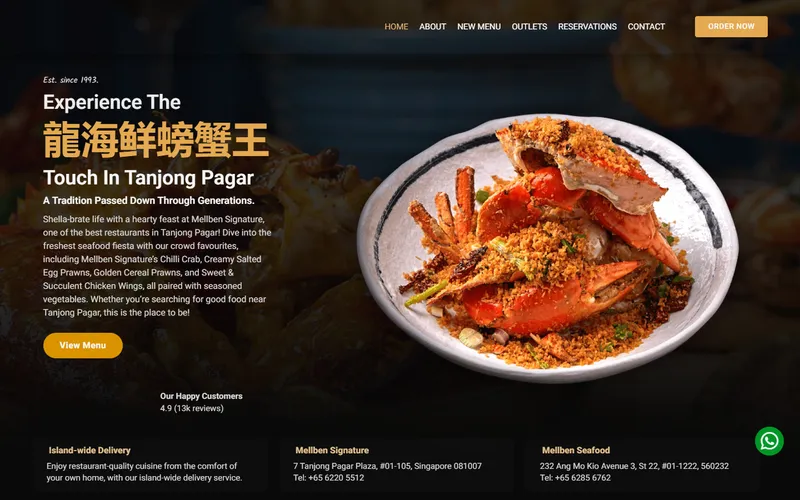
Where: 232 Ang Mo Kio Avenue 3 for the original, plus Mellben Signature at Tanjong Pagar
Price: About S$50 to S$60 per pax, crab bee hoon around S$70 a kilo
Hours: Dinner only, 5pm to 10pm, queue from about 6pm
Recognition: Michelin Plate
Order this: Claypot crab bee hoon soup, not the chilli crab
8. Uncle Leong Seafood: the one that feeds a family without a shock
Uncle Leong is the value pick and the least intimidating bill on this list, roughly S$40 to S$60 a head. It has been running since the early 2000s and its signature is the Shimmering Sand crab, introduced in 2002, a salted egg treatment that predates the salted egg trend by more than a decade.
The menu has gone further than most into inventive sauces, including a mala crab and an Oreo butter crab, both around S$76.50 for a 900g crab. The Oreo one sounds like a joke and has its defenders. I would order the Shimmering Sand first and treat the rest as a dare for a second visit.
Punggol is the main outlet and it is a long way out for anyone in town, which is a real part of why it costs less. For a family dinner where a S$150 crab would sour the evening, this is the sensible call.
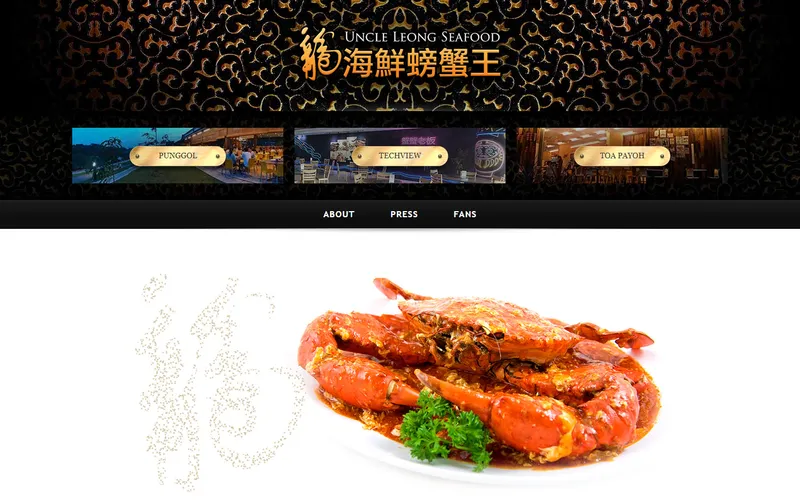
Website: uncleleongseafood.com
Where: Punggol, plus other outlets
Price: About S$40 to S$60 per pax, specialty crabs around S$76.50 for 900g
Order this: Shimmering Sand crab, their salted egg signature since 2002
Best for: Family dinners on a budget that has to hold
9. Red House Seafood: the safe booking near town
Red House is the one I suggest when someone needs a table tonight, near town, that will not disappoint anyone. It has been trading since the 1970s, it has several waterfront and city sites, and the chilli crab is a competent, well-balanced version that sits between JUMBO's sweetness and Roland's tang.
Nothing here is the best example of anything on this list, and that is the recommendation. It is consistent, the rooms are comfortable, it takes bookings properly, and it handles a group of eight without drama. Budget S$60 to S$90 a head.
If you are choosing your one chilli crab meal of a trip, one of the others has a better story. If you are feeding colleagues on a Thursday, this is the correct answer.
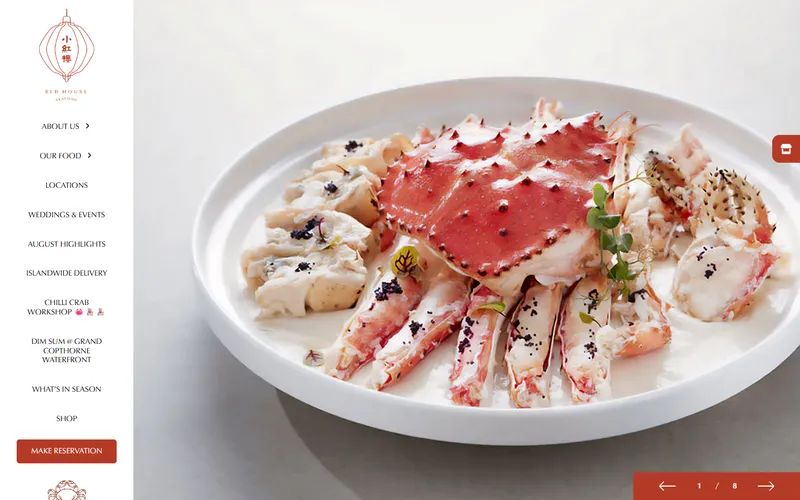
Website: redhouseseafood.com
Price: About S$60 to S$90 per pax
Where: Several waterfront and city outlets
Best for: Groups, last-minute bookings and business dinners
The sauce: Balanced, between JUMBO's sweetness and Roland's tang
What I check before booking chilli crab in Singapore
Short list, and most of it happens at the table rather than online.
- The per-kilo price, asked out loud. Menus quote per 100g and the difference between S$80 and S$150 a kilo is a different evening. Ask, then pick a size.
- The crab weighed in front of you before it is cooked. Standard practice, never rude to ask, and the only way to know the bill in advance.
- Which sauce, decided before you sit down. Chilli, black pepper, white pepper. They are three dishes. Long Beach for black, No Signboard for white, and anywhere on this list for chilli.
- Whether you actually want gravy or crab. If it is the crab you are after rather than the sauce, Mellben's crab bee hoon soup is a better meal than any chilli crab here, and the two are not really competing.
- Order the mantou. The fried buns exist to mop up the gravy and a chilli crab without them is a waste of the best part of the dish. Two baskets for a table of four.
Worth reading correctly too: the A, B or C hygiene sticker near the door changed meaning on 19 January 2026, when the Singapore Food Agency replaced the old annual grade with the Safety Assurance for Food Establishments framework, which grades on track record over time rather than a single inspection.
If seafood is not the plan, my picks of the best chicken rice in Singapore cover the other national dish, the best dim sum in Singapore is the better lunch, hotpot and steamboat covers cook-it-yourself, and the best date night restaurants guide covers the occasion end. For the wider picture, my guide to the best restaurants in Singapore is the hub for this whole cluster.
How much does chilli crab cost in Singapore?
Chilli crab in Singapore costs roughly S$80 to S$150 per kilogram in 2026, and restaurants quote it per 100g rather than per crab. JUMBO charges S$10.80 per 100g, which is S$108 a kilo. A crab that feeds two or three people weighs about 1kg to 1.2kg, so expect S$85 to S$150 for the crab alone before rice, vegetables and drinks.
| What | Cost | Note |
|---|---|---|
| Crab, per kilogram | S$80 to S$150 | Market-priced, moves with supply |
| A crab for 2 to 3 people | 1kg to 1.2kg | So S$85 to S$150 for the crab |
| Fried mantou buns | S$6 to S$12 a basket | Order two for a table of four |
| Zi char restaurant, per pax | S$40 to S$60 | Keng Eng Kee, Uncle Leong |
| Big seafood name, per pax | S$60 to S$100 | JUMBO, Long Beach, Palm Beach, Red House |
The variable that moves the bill most is the size of the crab, not the restaurant. A server suggesting a 1.5kg crab for two people is not being dishonest, but it is a S$50 decision, and you are allowed to ask for a smaller one.
Who invented chilli crab and where can I eat the original?
Chilli crab was invented in 1956 by Mdm Cher Yam Tian, then 23 years old, who stir-fried her husband's beach-caught crabs in tomato sauce and added bottled chilli after he said it was too sweet. The couple sold it from a pushcart and then a seaside shack named Palm Beach Seafood. Roland Restaurant in Marine Parade, run by their son Roland Lim, is the closest thing to eating the original.
The family sold the original business in 1985, so the modern Palm Beach Seafood is a separate operation carrying the historic name rather than the family line. Roland Restaurant prints "1956" and the founding claim on its menu, and the Michelin Guide has profiled it as a heritage restaurant. Mdm Cher died in 2023 at the age of 90.
What is the difference between chilli crab, black pepper crab and white pepper crab?
Chilli crab is a wet dish in a sweet-savoury tomato and chilli gravy thickened with ribbons of beaten egg, and it is the mildest of the three. Black pepper crab is dry, dark and pungently peppery, with the pepper rather than the crab leading. White pepper crab sits between them: drier than chilli crab, far more aromatic than black pepper, and the version where you taste the crab most clearly.
They are three separate dishes rather than three heat levels, and every restaurant on this list will cook the same crab any of the three ways. Long Beach is the name associated with black pepper and No Signboard with white pepper. A useful habit at a table of four is to order one crab chilli and one white pepper rather than two of the same.
Is the East Coast Seafood Centre closing?
Yes. NParks is redeveloping the East Coast Seafood Centre as part of a longer-term plan for East Coast Park. JUMBO Seafood closes its flagship there on 30 September 2026, when its lease ends, after 39 years at the site where the brand started in 1987. Long Beach Seafood is relocating to Coastal PlayGrove, roughly an eight-minute drive away, opening in the first week of September 2026.
Practically, that means September 2026 is the last month to eat chilli crab at the address most associated with it, and that both restaurants will be busy. JUMBO has six other outlets in Singapore and has said it is looking for a new site. Check the address on any older guide or set of directions before you travel out there.
My verdict on the best chilli crab in Singapore
If you want the dish closest to what was actually invented in 1956, Roland Restaurant, and go in expecting something tangier and much less sweet than the version that made the dish famous. If it is a first chilli crab or you are feeding visitors, JUMBO, and if the East Coast Seafood Centre matters to you, go in September because the flagship closes on the 30th.
Long Beach for black pepper and No Signboard for white pepper, both of which are better orders than their chilli crab and neither of which most people have tried. Keng Eng Kee if you would rather eat where people who live here eat, at about two-thirds the price and with a zi char kitchen around it. And Mellben if you have decided the gravy has been getting in the way of the crab, because the claypot bee hoon soup is the best cooking on this page.
One habit, and it is the whole thing: ask the price per kilo, then ask to watch the crab weighed. Nobody minds, everyone does it, and it turns the most notoriously unpredictable bill in Singapore dining into a number you agreed to in advance.
One last note for the trade. September is going to send a lot of people searching for where these two restaurants have gone, and whoever answers that question clearly on their own site will keep the bookings rather than losing them to an aggregator. That gap between what a business knows and what its website says is the cheapest marketing there is, and closing it happens to be my day job. Take a look at my web design for restaurants, or get a quote and I will tell you honestly what would move the needle.
Spotted something out of date in this guide?
Suggest an edit or a business to add. This guide is pre-filled for you.

Professional Opinion-haver
Terris
Chief Recommender · I do the digging so you don't have to
Terris is a Singapore-based web designer and digital strategist who has spent 8+ years building websites for local businesses. His Terris Recommends series shares personal picks for the best service providers across Singapore, informed by his experience working with businesses across industries.
Want to see these strategies in action? Browse our portfolio or get in touch to discuss your project.