
Terris Recommends 16,400+ monthly visitors Home Services
7 Best Air Purifiers in Singapore (September 2026)
The 7 best air purifiers in Singapore for 2026, with real CADR figures, honest prices, and why the spec everyone shops on is the wrong one for haze.
This guide is part of Terris Recommends, my researched, hands-on picks of the best local businesses and services in Singapore. Every recommendation is researched and ranked by me.
See all recommendationsI started writing this guide to the best air purifier Singapore shops sell in a quiet week, and then the haze arrived. The 24-hour PSI crossed into the Unhealthy range on 4 September 2026, the first time it has done that since October 2023, and NEA began issuing daily haze advisories the same day. So this is being published into a week when a lot of people are about to buy a purifier in a hurry.
Buying in a hurry is how you end up with the wrong machine. I went through the specifications for every brand with a real presence here, and two things stood out. The first is that the number most people shop on, the HEPA grade, is not the number that matters for haze. The second is that some of the brands selling here publish a flattering figure that looks like the one NEA asks you to compare, and is not.
Below are seven brands worth your money, with the actual prices and the actual figures.
Four things, and the first one surprises most people.
- For haze, carbon beats HEPA grade. A HEPA filter captures particles. Smoke from a peat fire brings particles and gases, which is where the smell comes from, and gases pass straight through HEPA. Only activated carbon adsorbs them. So during a haze episode the question is not whether the filter is H13 or H14, it is how much carbon is in the unit and how often it needs changing. A thin carbon-coated mesh saturates in weeks.
- CADR is the number, and it is not airflow. The National Environment Agency is explicit that a higher clean air delivery rate means more clean air returned to the room, and tells you to weigh it against your room size. Here is the catch: CADR is measured after the air passes the filter, while airflow is measured before. Both get printed as m3/h. Philips, Xiaomi and Blueair publish CADR. Several brands sold here publish airflow and let you assume. When a spec sheet says "airflow", it is not a CADR figure and the two are not comparable.
- "HEPA-type" means nothing. There is no body that defines it, no test it must pass and no efficiency it must hit. The real grades come from EN 1822: H13 captures 99.95% and H14 captures 99.995%. Even the American phrase "True HEPA" is unregulated. What you want on the page is a grade or a percentage. If a listing gives you neither, treat the omission as the specification.
- Size it to the room you will actually close the door on. The rough rule is that a purifier should turn over the room air about five times an hour to keep up. In practice that means a bedroom unit for the bedroom, because the machine in the living room does nothing once you shut the bedroom door at night. Two modest purifiers usually beat one impressive one in an HDB flat.
One more thing worth knowing while the haze is active. NEA publishes daily advisories and the 24-hour PSI forecast at haze.gov.sg and in the myENV app, and it maintains a published list of portable air cleaners with supplier-provided performance data. Every primary school, secondary school, junior college, preschool and MOE kindergarten has already been fitted with purifiers, which tells you the government treats these as useful rather than optional during an episode.
| Brand | Headline model | Rated figure | Room coverage | From |
|---|---|---|---|---|
| Philips | 3000i Series AC3033/30 | CADR 520 m3/h | Large living rooms | ~S$485 |
| Sterra | Moon, Breeze Pro, Mars | Airflow 80 to 500 m3/h | 11 to 82.5 m2 | S$159 |
| Xiaomi | Smart Air Purifier 4 Pro | CADR 500 m3/h | Up to 60 m2 | Budget tier |
| Blueair | Blue Pure 211+ | CADR 410 m3/h | Up to 48 m2 | Mid tier |
| Dyson | Purifier Cool Gen1 TP10 | Sealed HEPA H13 | Whole room, fan included | S$399 |
| Novita | A5i, A18i | HEPA plus carbon | Bedroom to living room | S$180 |
| EuropAce | Purifier and dehumidifier | HEPA 13 plus 60L/day | Bedroom to living room | Mid tier |
Read that table with one caution. The Sterra row is airflow because that is what Sterra publishes, and the Philips, Xiaomi and Blueair rows are CADR. They are not like-for-like, and I have kept them in separate words rather than quietly stacking them into one column of numbers.
The range has widened in a useful direction too. The PureProtect Water 3400 Series (AC3420/10) pairs a HEPA and active carbon filter with 650 ml/h humidification and covers rooms up to 78 m2, listed at S$599 with a 4.6 rating from 216 reviewers. Humidification is not something most SG homes need, but the combination units are worth a look if you run air conditioning overnight and wake up dry.
One thing worth knowing that the box does not tell you: the Philips-branded appliance business is no longer Royal Philips. The Domestic Appliances division was sold to Hillhouse Capital in 2021 in a deal valuing it at about EUR 3.7 billion, and it renamed itself Versuni in March 2023. It licenses the Philips brand for 15 years. The products are the same products, but if you land on a support site called Versuni you have not been phished.
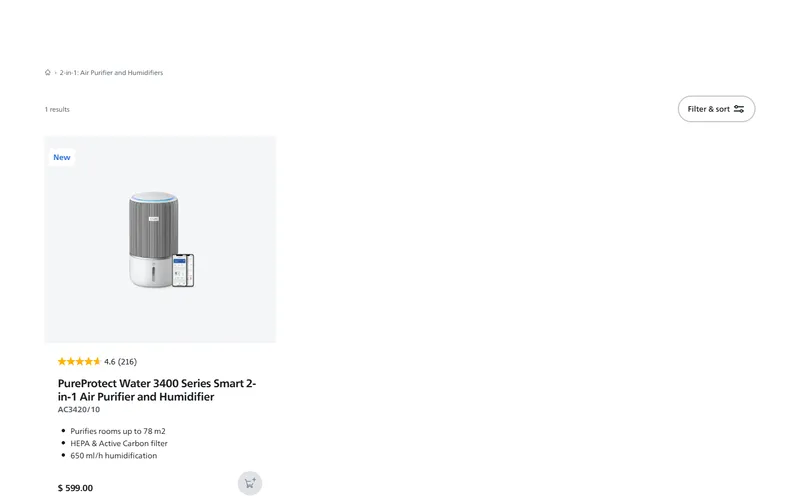
- Best known for
- Real published figures and easy local servicing
- Headline model
- 3000i Series AC3033/30, CADR 520 m3/h
- Price
- From around S$485; PureProtect Water 3400 at S$599
- Publishes CADR
- Yes
- Website
- philips.com.sg
H14 at S$279 is a real specification at a real price, and the sub-20dB sleep modes are the sort of detail that decides whether a bedroom purifier stays switched on. For a couple furnishing a flat, buying a Mars for the bedroom and a Moon for the living room costs less than one large unit and works better, for the reason in the section above.
The caveat is the one I flagged earlier, and it applies to Sterra as much as anyone. The figures on the product pages are stated as airflow in m3/hr, not CADR. The Moon's 280 m3/hr and the Breeze Pro's 400 to 500 m3/hr are not directly comparable with the Philips 520 CADR, and the honest reading is that the effective clean air rate will be somewhat lower than the airflow number. That does not make them bad machines. It means you should not put the two numbers side by side and conclude Sterra wins.
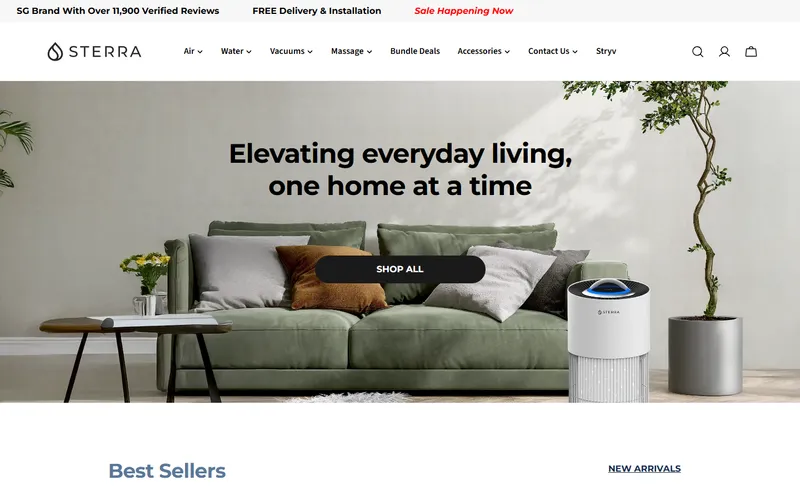
- Best known for
- H14 at an accessible price, and quiet sleep modes
- Range
- Mars S$159 (11 m2), Moon from S$189 (57 m2), Breeze Pro and Paws from S$279 (82.5 m2)
- Filter grade
- H13 on Mars and Moon, H14 on Breeze Pro and Paws
- Publishes CADR
- No, publishes airflow
- Website
- sterra.sg
It publishes CADR rather than airflow, which after the last two entries you will appreciate is not a given. App control and scheduling are built in and actually work, so if you already run other kit through a hub this slots in without another proprietary app. If you are assembling a connected home more broadly, my picks of the best smart home installers in Singapore cover how to keep that from becoming five apps.
Two honest caveats. Filter availability locally is less predictable than the mainstream brands, so check that replacements are stocked here before committing. And Xiaomi's Singapore store blocks automated access, so unlike the other brands on this list I could not capture its storefront for this guide, which is why there is no screenshot below.
- Best known for
- The most clean air per dollar sold here
- Headline model
- Smart Air Purifier 4 Pro, CADR 500 m3/h
- Room coverage
- Up to 60 m2
- Publishes CADR
- Yes
- Website
- mi.com/sg
That matters more than it sounds in a bedroom. Most purifiers hit their rated figure only on the top fan speed, which is the speed nobody can sleep through, so the real-world performance of a loud machine is whatever it does on setting one. A unit that is genuinely quiet at a useful speed is doing more work than its headline suggests.
Blueair publishes CADR properly and the filters are simple to swap. The Singapore storefront is the weak point: it sits on a regional domain and would not render reliably for me, so check current local pricing and stock through an authorised retailer rather than assuming the international site reflects what is available here. There is no screenshot below for the same reason.
- Best known for
- Being quiet at a speed that still cleans the air
- Headline model
- Blue Pure 211+, CADR 410 m3/h
- Room coverage
- Up to 48 m2
- Publishes CADR
- Yes
- Website
- blueair.co/en-sg
The Purifier Cool Gen1 TP10 has been selling at S$399 against a S$599 list price, which for a machine that is also a bladeless fan is defensible in this climate. At the top of the range, the Purifier Big+Quiet Formaldehyde is S$1,299 and adds a catalytic filter that breaks formaldehyde down continuously rather than trapping it. That is a genuine capability, and it is also the one most likely to be oversold to you: formaldehyde is a new-furniture and new-renovation problem, not a haze problem. If that is actually your issue, my guide to formaldehyde removal services in Singapore deals with the source rather than the symptom, which is usually the cheaper fix.
What you are paying for beyond the engineering is the app, the display and the design. Those are legitimate reasons to spend money. They are just not filtration, and a Xiaomi at a third of the price moves more clean air per hour.
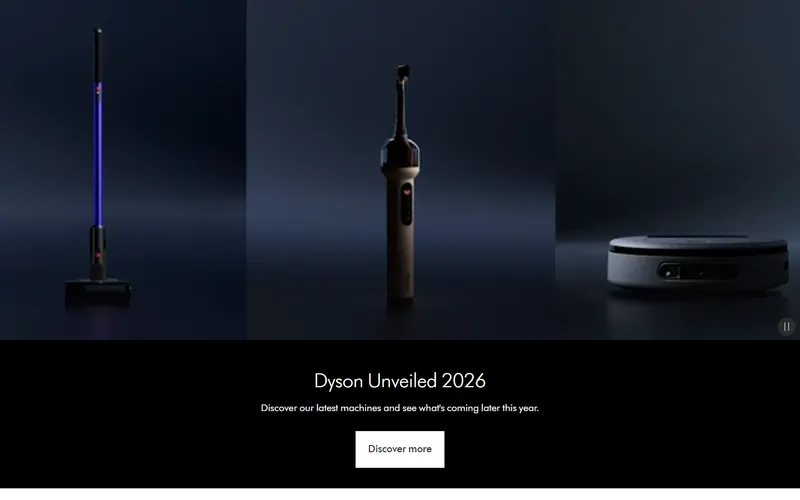
- Best known for
- Sealed filtration and the design people actually want on show
- Models
- Purifier Cool Gen1 TP10 at S$399; Big+Quiet Formaldehyde at S$1,299
- Filtration
- Fully sealed HEPA H13
- Also does
- Cooling fan, and formaldehyde destruction on the top model
- Website
- dyson.com.sg
The A5i has been listed at S$180 against a S$328 usual price, and the A18i sits above it. The A11i has run at around S$258, or S$198 with an old purifier traded in, and the trade-in programme is a genuinely sensible way to replace an ageing unit rather than leaving it in a cupboard.
Treat the crossed-out prices with the same scepticism you would anywhere in this category. Where a "usual price" was never really charged, that is a misleading pricing practice as far as the Competition and Consumer Commission of Singapore is concerned, and this whole category runs near-continuous promotions. Judge the machine on the price in front of you, not on the discount. Novita is also the brand behind the faucet filter I recommend in my guide to the best water purifiers in Singapore, if you are sorting out both at once.
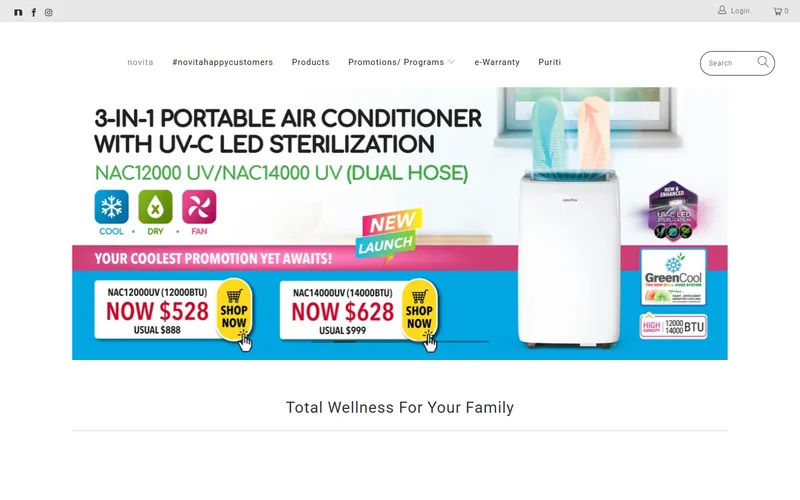
- Best known for
- Local support and painless filter supply
- Models
- A5i from S$180, A18i, A11i around S$258
- Trade-in
- Yes, roughly S$60 off with an old purifier
- Filters
- Easy to source locally
- Website
- estore.novita.com.sg
In a country that sits at 80 to 90 percent humidity most of the year, that combination is more useful than it looks on paper. Damp is what grows the mould and dust mites that a purifier then spends its life catching, so pulling the moisture out attacks the cause while the HEPA layer handles what is already airborne. If you have ever found mildew on the back of a wardrobe, this is the category to look at.
A three-year full warranty is also unusually generous here and worth weighing against a cheaper unit with twelve months. Do check the filter replacement cost before buying, because combination machines have more consumables than single-purpose ones, and that is the number that decides what the thing really costs over five years.
- Best known for
- Treating humidity and air quality as one problem
- Format
- Combined air purifier and dehumidifier
- Filter grade
- HEPA 13
- Dehumidification
- Up to 60 litres per day, WiFi controlled
- Warranty
- Three years full
- Website
- europace.com.sg
Air purifiers in Singapore cost between about S$159 and S$1,299 for the machine itself. A small bedroom unit like the Sterra Mars is S$159, a capable living-room purifier such as the Philips 3000i runs around S$485, and the most expensive mainstream option is the Dyson Purifier Big+Quiet Formaldehyde at S$1,299. Most households land between S$180 and S$500.
The number that actually decides the cost of ownership is the filter. Combined HEPA and carbon filter sets typically need replacing every six to twelve months, and during a haze episode the carbon saturates faster because it is working harder. Before you buy any machine on this page, search its replacement filter and check the price and how easily you can get one here. A cheap purifier with scarce, expensive filters is not cheap.
Running cost is minor by comparison. These are low-wattage appliances and leaving one on overnight in a bedroom adds very little to a bill, which is worth knowing because the common failure is buying a good purifier and then using it sparingly to save electricity that was never being spent.
Yes, a properly sized air purifier with both HEPA and activated carbon filtration meaningfully reduces indoor PM2.5 during a haze episode, which is why every school, junior college, preschool and MOE kindergarten in Singapore has been equipped with them. NEA recommends purifiers with HEPA filters and tells buyers to match the unit's cleaning capacity to the room size.
Two conditions decide whether it works in your home. The windows and doors need to be closed, because a purifier competing with an open window is refiltering the outdoors. And the machine needs enough capacity for that specific room, which is the sizing point that most panic purchases get wrong.
The carbon stage is what separates a purifier that helps with haze from one that merely helps with dust. Check the current advisory and 24-hour PSI forecast at haze.gov.sg or in the myENV app before deciding whether to run yours on a higher setting.
H13 is a defined grade under the EN 1822 standard that captures 99.95% of particles at the hardest size to catch, and H14 captures 99.995%. "HEPA-type" and "HEPA-like" are marketing phrases with no governing body, no test protocol and no minimum efficiency behind them. A filter can legally be called HEPA-type while performing far below H13.
Even "True HEPA", the American phrase, is not a regulated classification. It usually implies 99.97% at 0.3 microns but nothing compels that, so it can be attached to filters of quite different quality.
The practical test when you are comparing listings: look for a grade (H13, H14) or a stated efficiency percentage with the particle size. If a product page offers neither, and several sold here do not, assume the specification is being avoided rather than simply left out.
I worked from the brands with a genuine retail presence in Singapore, read the specification pages rather than the marketing copy, and recorded what each one actually publishes. That distinction turned out to be the whole story: separating the brands quoting CADR from the brands quoting airflow changed the ranking more than any review score did.
Prices are what was showing at the time of writing, in a category that discounts almost continuously, so treat them as the shape of the market rather than a quote. I have not tested these machines in a chamber and I am not pretending otherwise. What I have done is check the claims against the standards they invoke and against what NEA actually advises, which is more than most pages ranking for this term have bothered with.
Two entries have no screenshot. Xiaomi's Singapore store returns an access-denied page to automated tools, and Blueair's regional storefront would not load reliably. I have said so on those entries rather than quietly leaving a gap, and neither affects the recommendation. None of these links earns me anything.
For most homes, buy the Philips 3000i or a Xiaomi 4 Pro. Both publish a real CADR, both have enough capacity for a living room, and between them they cover the two sensible positions in this market: pay a bit more for local service, or pay less and get the most clean air per dollar available here.
If the budget is tight, the better move is two small units rather than one large one. A Sterra Mars in the bedroom and something modest in the living room will do more for the air you actually breathe than a single impressive machine sitting in a room you are not in. If humidity and mould are as much your problem as the haze, the EuropAce combination unit is the one to look at.
And whichever you buy, check the carbon and check the filter price before you check out. The haze will pass, the filters will not, and that is the number that decides whether you got a good deal. If you are also sorting the rest of the flat out, my picks of the best aircon servicing in Singapore and the best water purifiers in Singapore cover the two things people usually buy in the same week.
One last note on why I write these. I build websites for Singapore businesses for a living, and the reason I keep ending up in spec sheets is that so many product pages hide the number a buyer needs. If that sounds like your site, take a look at my web design services in Singapore, or get a quote.