
Getting a business loan in Singapore is less about finding one lender and more about picking the right lane, because there are three of them and they suit very different businesses. Choose the wrong lane and you either get rejected or you overpay, so it pays to understand the map before you apply anywhere.
The first lane is traditional bank term loans, which carry the cheapest rates but the strictest criteria and the slowest process. The second is digital and fintech lenders, which are fast and friendlier to a thin file, but cost more. The third is government-assisted financing under the Enterprise Financing Scheme (EFS), where Enterprise Singapore shares the default risk with a participating bank or lender, which is how many young SMEs get funded at all. On top of that sit the real levers: secured versus unsecured working capital, and the effective interest rate (EIR) rather than the flat rate that lenders love to quote. I will explain each, then give you my picks across banks, fintech lenders and broker platforms.
This is part of my Terris Recommends Finance and Insurance series, and it is general information, not financial advice. It pairs with my guides to financial advisers, grant consultants and company incorporation.
Key Takeaways
- 1 There are three lanes: traditional bank term loans (cheapest rates, strictest criteria, slowest), digital and fintech lenders (fast, thinner-file friendly, higher cost), and government-assisted financing under the Enterprise Financing Scheme, where the government shares the default risk with the lender.
- 2 Always compare on the effective interest rate (EIR), not the flat rate. A flat rate looks lower because it is charged on the original amount rather than the reducing balance, so it hides the true cost.
- 3 Most SME loans need about two years of operating history and a track record of revenue, though OCBC and several fintech lenders serve younger businesses. EFS financing also needs at least 30 percent local shareholding. Jump to OCBC
- 4 DBS, OCBC and UOB lead for bank term loans, Funding Societies, Validus and Jenfi for fast fintech financing, and Lendingpot or Linkflow Capital if you would rather compare many lenders through one broker. Jump to DBS
- 5 This is general information, not financial advice. Read the letter of offer, the fees and the EIR before you sign, and borrow only what your cash flow can service.
What I look for in an SME business loan in Singapore
Before you compare providers, get these things straight, in this order.
- Which lane fits you. A profitable, two-year-old company with clean accounts should start with a bank for the cheapest rate. A younger or thinner-file business is often better served by a fintech lender or by government-assisted financing.
- EIR, not flat rate. The effective interest rate reflects what you actually pay on a reducing balance, while a flat rate is charged on the original amount and always looks deceptively low. Compare every offer on EIR.
- Secured or unsecured. Unsecured working capital needs no collateral but costs more and caps lower. A secured facility against property or equipment unlocks larger amounts at better rates, with more paperwork.
- Eligibility. Most lenders want around two years of operating history, a minimum revenue and a personal guarantee from the directors. Government EFS financing additionally needs the company to be registered and operating in Singapore with at least 30 percent local shareholding.
- The letter of offer. Read the fees, the tenure, the early-repayment terms and the total cost, not just the headline rate, before you sign anything.
Two official sources are worth knowing. Enterprise Singapore runs the Enterprise Financing Scheme and lists the participating financial institutions, and the Monetary Authority of Singapore regulates the banks and the licensed finance companies you should be borrowing from. If a lender is not a bank, a licensed finance company or a recognised EFS partner, treat it with caution.
How the best business loan providers in Singapore compare
| Provider | Type | Speed | Best for |
|---|---|---|---|
| DBS | Bank | Days | Cheapest bank rates for established SMEs |
| OCBC | Bank | Days | Companies under two years old |
| UOB | Bank | Days | EFS working capital at sharp pricing |
| Funding Societies | Fintech lender | Fast | Speed and short-term or invoice financing |
| Validus | Fintech lender | Fast | A fintech that also offers EFS loans |
| Jenfi | Fintech lender | Fast | Digital and e-commerce businesses |
| Lendingpot | Broker | Varies | Comparing many lenders in one go |
| Linkflow Capital | Broker | Varies | Hands-on brokered advisory |
What does a business loan cost in Singapore?
Cost depends heavily on the lane you choose. Here is what to expect in 2026. Treat these as indicative market ranges, because actual pricing is quoted case by case on your profile and is not publicly guaranteed.
| Lane | Typical quantum | Tenure | Indicative EIR |
|---|---|---|---|
| Bank SME term loan (unsecured) | Up to about S$500,000 | 1 to 5 years | Roughly 7 to 9 percent per year |
| EFS SME Working Capital Loan | Up to S$500,000 | Up to 5 years | Similar bank range, with government risk-share |
| Fintech or digital lender | About S$50,000 to S$4 million | 3 to 18 months typical | Higher, often quoted as a monthly fee, so convert to EIR |
| Broker marketplace | Depends on the matched lender | Varies | Free to compare, the lender sets the rate |
The trap is the flat rate. A fintech quote of one to a few percent a month, or a bank quote given as a flat rate, can translate into a much higher EIR once you account for the reducing balance and the fees. Ask every lender for the EIR in writing and compare on that single number.
1. DBS
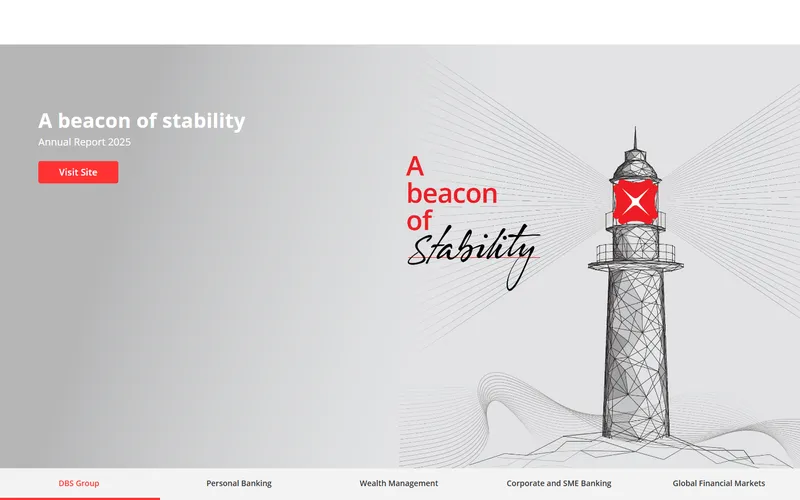
DBS is my pick for established SMEs chasing the cheapest bank rates. As Singapore's largest bank and biggest SME lender, it offers unsecured business term loans, working capital financing and EFS-backed loans, with a fully digital application that existing business-account customers can complete quickly. For a profitable company with a couple of years of clean accounts, a bank like DBS will almost always beat a fintech on price.
The trade-off is that the criteria are strict. You generally need about two years of operating history, healthy revenue and directors willing to give a personal guarantee. If you clear that bar, this is the lane to start in.
Website: dbs.com.sg
Type: Bank
Best known for: The largest SME lender, cheapest bank rates for established firms
2. OCBC
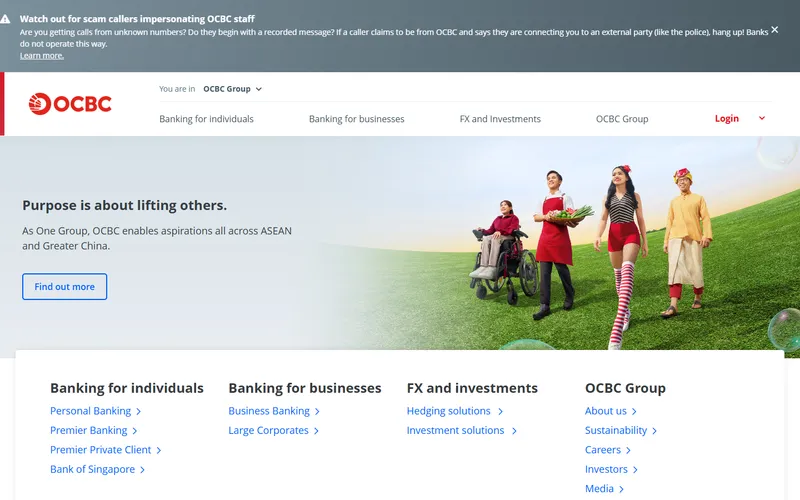
OCBC is my pick for companies that are too young for most banks. Its Business First Loan is designed for firms operating between six and twenty-four months, so it does not demand the standard two-year track record that shuts out newer SMEs, and OCBC also runs the usual EFS working capital and term-loan products alongside it.
That makes OCBC a useful first knock on the door for a business in its first or second year that still wants bank-grade pricing rather than a fintech rate. You will borrow smaller amounts at first, but it is a genuine path in.
Website: ocbc.com
Type: Bank
Best known for: The Business First Loan for companies under two years old
3. UOB
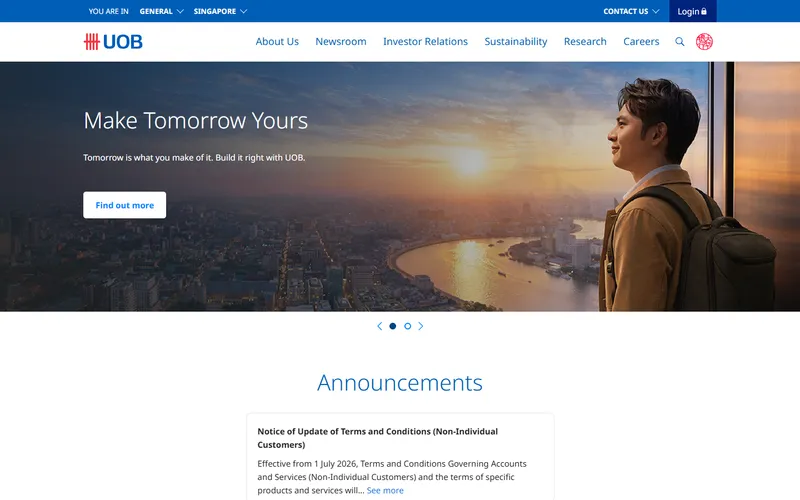
UOB is my pick for sharp pricing on government-assisted working capital. It is consistently competitive on the EFS SME Working Capital Loan, and it offers unsecured business financing and secured facilities across a full SME banking suite, so a growing company can keep everything under one relationship as its needs get larger.
For an SME that qualifies for EFS and wants to squeeze the rate, it is worth putting UOB side by side with DBS and OCBC and letting them compete. The differences on EIR add up over a multi-year tenure.
Website: uob.com.sg
Type: Bank
Best known for: Competitive EFS working capital pricing
4. Funding Societies
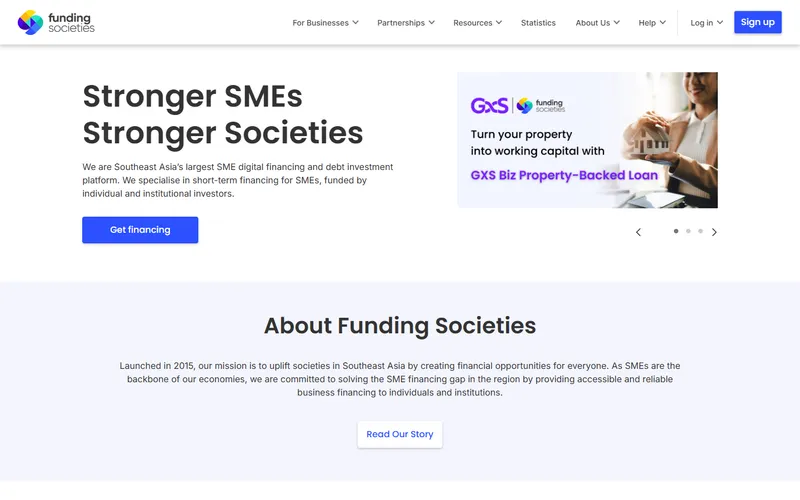
Funding Societies is my pick for speed and flexibility. It is Southeast Asia's largest SME digital financing platform, offering term loans, short-term micro-loans and invoice financing of up to several million dollars, with approvals far faster than a bank and a genuine willingness to look at businesses a bank would decline.
You pay for that speed and flexibility with a higher rate, so this is the lane when timing matters more than getting the last basis point, or when your file is too thin for a bank. Invoice financing in particular is useful if you sell to customers on 30 to 90 day terms and need to unlock the cash sooner.
Website: fundingsocieties.com
Type: Fintech lender
Best known for: Fast SME financing and invoice financing at scale
Recommended reads
5. Validus
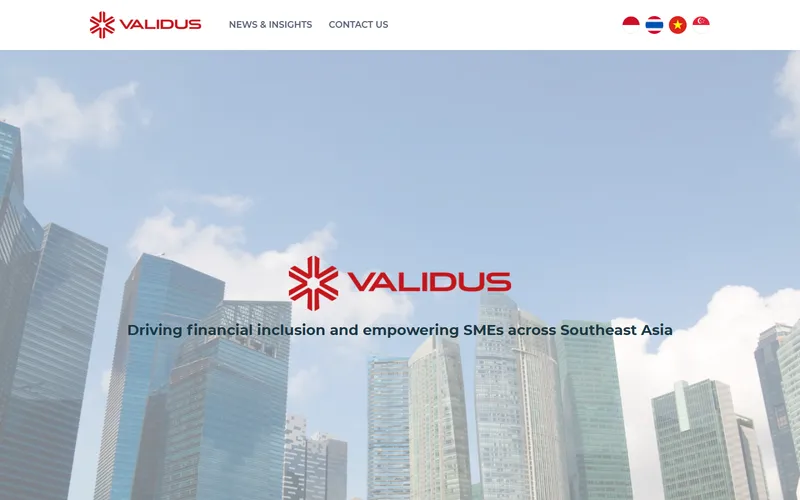
Validus is my pick for a fintech that also does government-backed lending. Founded in Singapore in 2015, it uses data-driven underwriting for working capital and invoice financing, and it has been approved by Enterprise Singapore as a participating financial institution, which means it can offer EFS loans that a pure fintech cannot.
That combination is unusual and useful: fintech speed and a modern application, but with access to the EFS risk-share for eligible borrowers. For an SME that wants the fast route without giving up the government-assisted option, it is a smart place to look.
Website: validus.sg
Type: Fintech lender
Best known for: A fintech approved to offer EFS-backed loans
6. Jenfi
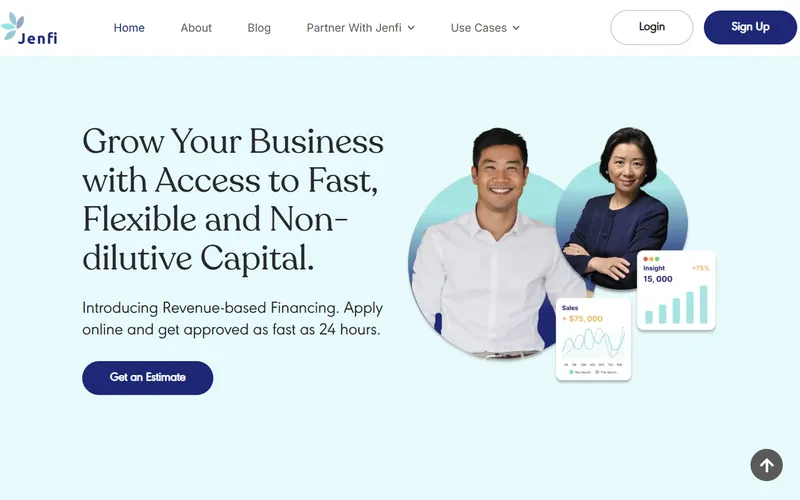
Jenfi is my pick for digital and e-commerce businesses. It provides revenue-based growth capital, where repayments flex with your monthly revenue rather than sitting as a fixed instalment, and it is built for digitally-enabled businesses such as online retailers, SaaS and direct-to-consumer brands that banks struggle to underwrite.
Because it reads your revenue data rather than a long trading history, a business with as little as six months of verifiable revenue can qualify, and the capital is non-dilutive so you keep your equity. For an online-first company without collateral or a two-year track record, it fills a real gap.
Website: jenfi.com
Type: Fintech lender
Best known for: Revenue-based financing for digital businesses
7. Lendingpot
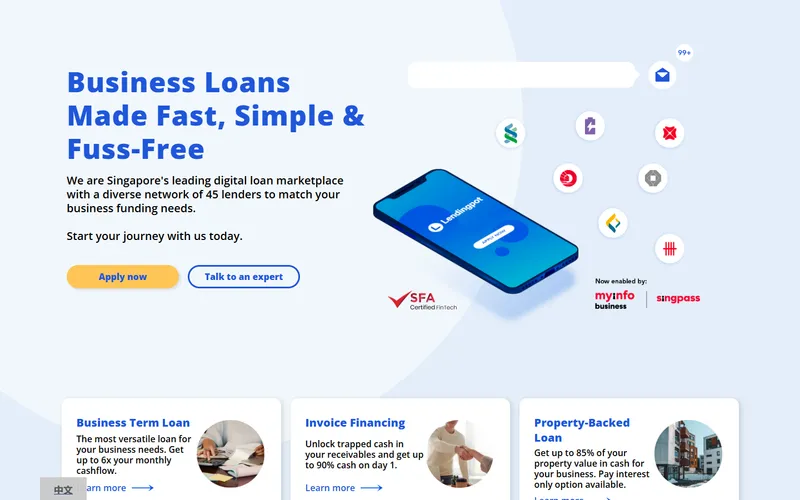
Lendingpot is my pick if you would rather compare many lenders at once. It is a business loan marketplace that connects you to a large panel of banks and lenders through a single application, so instead of filling in forms at five banks you submit once and review the offers that come back, which is a real time-saver when you are shopping on rate.
A marketplace does not lend to you itself, it matches and compares, and using it is free because the lender pays on a successful match. For an owner who values seeing the market in one view rather than chasing individual banks, it is a sensible starting point.
Website: lendingpot.sg
Type: Broker
Best known for: A loan marketplace comparing a large panel of lenders
8. Linkflow Capital
Linkflow Capital rounds out the list as a hands-on brokered advisory. Operating since 2012 and founded by former bankers, it positions itself as an independent SME loan brokerage that helps owners secure working capital, trade financing and equipment loans, and it runs a free comparison tool at smeloan.sg for a quick market read.
The value of a broker like this is the human help navigating bank criteria and packaging your application so it lands well, which can matter more than the raw rate if your file is borderline. As with any broker, understand how it is paid and still read the final letter of offer yourself.
Website: smeloan.sg
Type: Broker
Best known for: Ex-banker brokered advisory with a free comparison tool
How I put this list together
I looked at which lane each provider serves, the eligibility bar, the typical cost expressed as EIR, and how each is regulated or partnered. I deliberately spread the list across banks, fintech lenders and broker platforms, because the right choice depends on your age, your accounts and how fast you need the money. I left out unlicensed lenders and anything that would not sit under a bank, a licensed finance company or an EFS partner.
This is general information, not financial advice, and details are checked when I publish and revisited as things change. Always confirm current rates and eligibility with the lender, verify that a lender is regulated, and read the letter of offer and the EIR before you commit.
How much can an SME borrow in Singapore?
It depends on the lane and your finances. Unsecured bank term loans and the EFS SME Working Capital Loan are typically capped around S$500,000 per borrower, and the actual amount you are offered scales with your revenue, profitability and existing debt. Fintech lenders can go from small short-term amounts up to several million dollars for larger facilities, while secured loans against property or equipment can unlock more again. A useful rule of thumb is that lenders look at whether your cash flow can comfortably service the repayment, so borrow to what you can repay, not to the maximum you are offered.
What is the Enterprise Financing Scheme?
The Enterprise Financing Scheme, or EFS, is a government programme run by Enterprise Singapore that helps local companies access financing by having the government share the default risk with a participating financial institution. In practice the bank or approved lender still assesses and issues the loan, but because Enterprise Singapore co-shares the risk, lenders can say yes to businesses, especially younger ones, that they might otherwise decline. The best-known component for cash flow is the SME Working Capital Loan of up to S$500,000. To be eligible a company generally must be registered and operating in Singapore, be an SME by the scheme's size criteria, and have at least 30 percent local shareholding. You apply through a participating financial institution, not through Enterprise Singapore directly.
What is the difference between a flat rate and the effective interest rate (EIR)?
A flat rate is calculated on the full original loan amount for the entire tenure, even though you are steadily paying the principal down, so it always looks lower than the real cost. The effective interest rate, or EIR, reflects what you actually pay on the reducing balance and includes fees, which makes it the honest number for comparison. As a rough guide, an EIR is often close to double the equivalent flat rate. Whenever a lender quotes you a flat rate or a monthly fee, ask for the EIR in writing, and compare every offer on EIR so you are comparing like with like.
Can a new business or startup get a business loan in Singapore?
Yes, but the standard bank term loans that need about two years of operating history will usually decline a brand-new company, so you look to other lanes. OCBC runs a Business First Loan aimed at firms operating between six and twenty-four months, fintech lenders like Funding Societies and Jenfi assess revenue and data rather than a long track record, and the EFS young-enterprise risk-share is designed to help lenders say yes to businesses formed within the past five years. A startup with no revenue at all is generally better suited to equity or grant funding than debt, since a lender needs cash flow to repay from.
Should I use a loan broker or apply to the banks directly?
Both are valid, and it comes down to time and confidence. Applying directly to two or three banks yourself keeps you closest to the pricing and costs nothing, and for a strong file that is often all you need. A broker or marketplace like Lendingpot or Linkflow Capital saves you filling in multiple applications and can help package a borderline file so it is more likely to be approved, which is worth a lot when your accounts are less clean-cut. Understand how the broker is paid, do not let anyone submit many hard applications at once in a way that hurts your profile, and always read the final letter of offer yourself before signing.
Advising on money? Credibility has to show before the first call
Anyone searching for sme business loan providers in Singapore is being careful, and they will check whether you look legitimate before they pick up the phone.
Licence details, named people with real faces, plain explanations instead of jargon. Financial firms lose enquiries to sites that feel anonymous, because being anonymous is exactly what the reader is worried about. I build websites for Singapore finance and advisory firms that make the credentials easy to verify, and the SEO to reach people at the moment they start looking.
If your site was built once and never touched again, get a quote and I will tell you what is costing you enquiries.
The best business loan in Singapore is the one in the right lane for your business: a bank term loan if you are established and want the cheapest EIR, a fintech lender if you need speed or have a thinner file, and EFS-backed financing when the government risk-share is what gets you over the line. DBS, OCBC and UOB lead on the bank side, Funding Societies, Validus and Jenfi on the fintech side, and Lendingpot or Linkflow Capital if you would rather compare through a broker. Whichever you choose, compare on EIR and borrow only what your cash flow can service.
Financing is a tool, not a goal, so match it to a clear plan for the money and read the fees before you sign. This guide is general information, not financial advice.
Before you borrow, it is worth having someone look at the whole picture, which is what my guide to the best financial advisers in Singapore is for. If the loan is to fund a new venture, my company incorporation guide covers getting the entity right first, since most lenders will ask for it.
If you run an SME and your website is not bringing in the enquiries that justify borrowing to grow, that is what I do. I design websites for businesses across Singapore. Get in touch for a free consultation.
Spotted something out of date in this guide?
Suggest an edit or a business to add. This guide is pre-filled for you.
Sources & References (10)

Professional Opinion-haver
Terris
Chief Recommender · I do the digging so you don't have to
Terris is a Singapore-based web designer and digital strategist who has spent 8+ years building websites for local businesses. His Terris Recommends series shares personal picks for the best service providers across Singapore, informed by his experience working with businesses across industries.
Want to see these strategies in action? Browse our portfolio or get in touch to discuss your project.