



Terris Recommends 16,400+ monthly visitors Home Services
8 Best EV Charger Installers in Singapore (August 2026)
My honest pick of the best EV charger installation Singapore companies in 2026, plus the SS 722 standard change and the condo grant that closes this December.
This guide is part of Terris Recommends, my researched, hands-on picks of the best local businesses and services in Singapore. Every recommendation is researched and ranked by me.
See all recommendationsTwo things about EV charger installation in Singapore changed this year, and neither is in most of the guides currently ranking for it. The national standard was rewritten in April, and the grant that pays for condo chargers is on a countdown that ends this December.
The standard first. Technical Reference TR 25:2022, which governed EV charging systems here, was elevated to a full Singapore Standard, SS 722, with effect from 1 April 2026. It brings in cybersecurity requirements for charging station management systems, stricter controls on DC charging, and coverage of wireless and battery-swap charging. Chargers already type-approved under TR 25 do not need recertifying, and there is a two and a half year transition before SS 722 becomes mandatory for new ones, so nobody needs to panic. But it does mean an installer who cannot discuss it is not keeping up.
The grant matters more if you live in a condo. The EV Common Charger Grant pays up to $4,000 per charger, and it closes on 31 December 2026 or when 3,500 chargers have been approved, whichever comes first. If your MCST has been talking about chargers for two years, this is the year the free money runs out. Eight installers below, covering landed homes, condo deployments and commercial sites.
Both are simple, both are non-negotiable, and together they eliminate most of the cowboys.
The charger must be LTA type-approved. Every EV charger installed in Singapore has to be on LTA's type-approved list, which is what confirms it meets the national safety and performance standard. This is the rule that makes buying an unbranded charger off an overseas marketplace a bad idea: it may be a perfectly good charger, but if it is not type-approved it should not be going on your wall, and no responsible installer will fit it.
The installation must be done by a Licensed Electrical Worker. A fixed EV charger is electrical work on your incoming supply, so an LEW has to carry it out and endorse it. Reputable installers fold the LEW endorsement into the quoted price rather than treating it as an extra, and you should ask which it is. The EMA worker licences page explains the grades. This is the same requirement that governs rooftop solar, which is why several firms on this list do both.
Now the change. In March 2026, LTA and Enterprise Singapore announced that TR 25:2022 had been elevated to Singapore Standard SS 722, effective 1 April 2026. The scope widened to cover wireless charging stations, mobile charging systems and battery charge and swap stations for four-wheeled vehicles. DC charging picked up stricter temperature controls, better integrity checks on cable insulation and tighter power output tolerances. And, for the first time, there are cybersecurity requirements covering charging station management systems and the communications between charging equipment.
What that means for you as a buyer is mild but real. Chargers approved under TR 25 stay valid and need no recertification, and new chargers have a two and a half year transition before SS 722 compliance is mandatory. So you are not at risk of buying something obsolete. But if you are specifying chargers for a condo or a commercial site with a ten-year life, asking whether a model is already SS 722 compliant rather than grandfathered under TR 25 is a sensible question, and the cybersecurity clauses are the ones a managing agent should care about. Details are in the LTA and Enterprise Singapore joint factsheet.
If you live in a condo, this is the section that is worth money. The EV Common Charger Grant, the ECCG, co-funds shared chargers installed in non-landed private residences. The numbers are tiered and they have already started stepping down:
- $4,000 per charger for the first 2,000 chargers
- $3,000 per charger for the next 1,500 chargers
- Funding covers up to 1 percent of residential car park lots per development, rounded up
- The scheme runs until 31 December 2026, or until 3,500 chargers are approved, whichever is earlier
Read that last line again if you sit on a council. It is August 2026. The grant has both a calendar deadline and a volume cap, and either can close it. Applications go through the Business Grants Portal, and once you have a Letter of Offer you have six months to install and submit the claim, so a decision made in November is cutting it fine even if the money is still there.
The eligibility conditions shape what you can buy. The chargers must sit in common areas accessible to residents rather than in individual lots. Only LTA type-approved smart chargers qualify, capped at 22kW, and they must support remote communication, energy monitoring and Open Charge Point Protocol version 1.6 or later. That OCPP requirement matters more than it sounds: it is what stops your development being locked into one operator's back-end forever, because an OCPP charger can be moved to a different management platform later.
None of this applies to landed homes, which get no grant but also need no approval from anyone. If you own the house and the driveway, you can fit a charger whenever you like.
The upsell in this category is charging speed, and for most households it is money spent on nothing.
A 7kW single-phase charger adds roughly 30 to 40km of range per hour and fills a typical EV from low to full in six to eight hours. Plugged in overnight, that covers essentially any Singapore driving pattern, because the island is 50km across and the average daily drive is a fraction of a battery.
A 22kW three-phase charger is roughly three times faster on paper, and there are two catches. First, it needs a three-phase supply, which many landed homes have but plenty do not, and upgrading is a significant cost. Second, and this is the one that catches people, the car has to be able to accept 22kW AC. A great many EVs sold here cap their onboard AC charger at 7kW or 11kW, so a 22kW wall unit charges them at exactly the same speed as a 7kW one. Check your car's onboard AC charging rate, not the charger's rating, before paying for the bigger unit.
DC fast charging is not a home product. It is expensive, needs serious supply infrastructure and belongs on public networks and commercial sites. If someone is quoting you DC for a house, ask why.
One more thing worth budgeting for on a shared or multi-charger installation: load management. Several chargers on one supply need a system that shares available capacity dynamically, otherwise you trip the incoming breaker the first evening three residents plug in together. On a condo deployment this is not optional, and it is a good test of whether your installer has done this at scale before.
That operational depth is the real product on a shared installation. Buying chargers is easy. Running them for a decade, reconciling payments between residents and guests, and keeping uptime respectable is the hard part, and it is where developments that bought on hardware price alone tend to regret it.
For a single landed home, Charge+ is arguably more infrastructure than you need, and a smaller installer will likely quote less for the same wall unit. But if you are on a council deciding how to spend the ECCG before it closes, start with an operator that runs a network rather than one that just fits boxes.
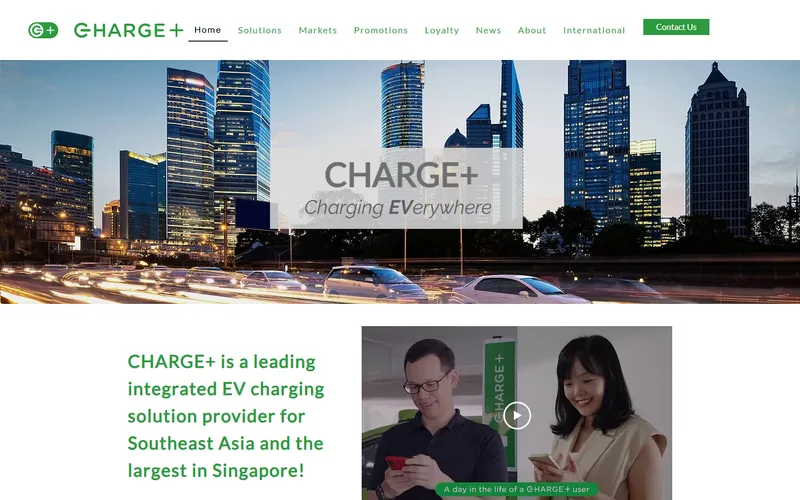
- Best known for
- One of the largest local charging networks, and real operating experience across shared car parks
- Location
- Singapore, serving islandwide
- Website
- chargeplus.sg
It runs a substantial public charging network alongside installation work for homes, condos and commercial sites, and it tends to be the name Singapore EV owners mention first when comparing which network to commit to. For a condo committee nervous about counterparty risk on a ten-year arrangement, a subsidiary of the national grid operator is about as low as that risk gets.
The trade-off is the usual one with incumbents. You are unlikely to get the sharpest price, and a utility moves at a utility's pace, so if you want a charger fitted next Tuesday a smaller installer will beat it. Worth getting a quote from regardless, if only as the benchmark you judge the others against.

- Best known for
- Being the grid operator's own EV arm, with the deepest network and the lowest counterparty risk
- Location
- Singapore, serving islandwide
- Website
- spmobility.sg
The combination behind it is genuinely well matched: ComfortDelGro knows vehicles and depots, ENGIE knows energy infrastructure, and between them they have delivered the sort of multi-site programme that tests project management rather than product knowledge. If you are procuring for a fleet, a large development or anything with a tender attached, this is the entry with the relevant track record.
One practical note. The business now sits at cdg-energy.com; the older cdgengie.com address redirects there. If you are working from a listicle or a saved bookmark that predates the change, you may hit the redirect and assume something is wrong. Nothing is. For a single home charger, though, this is not really the lane, and you will get more attention from a smaller specialist.
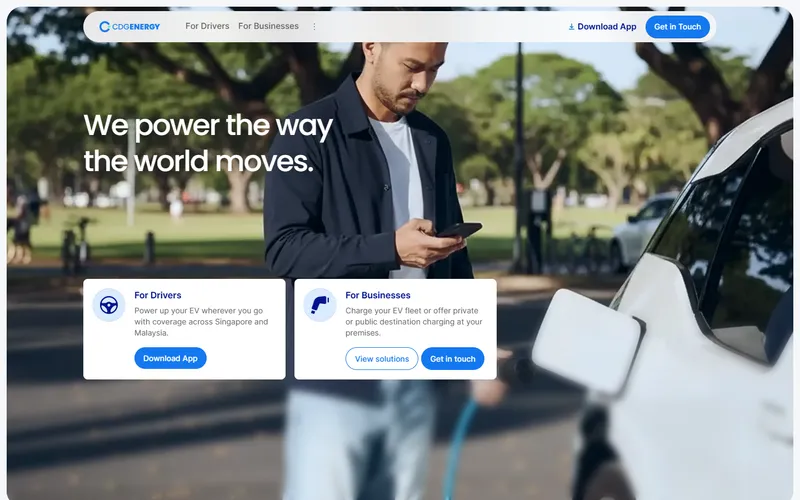
- Best known for
- The ComfortDelGro and ENGIE joint venture behind thousands of chargers in HDB estates and public car parks
- Location
- Singapore, serving islandwide
- Website
- cdg-energy.com
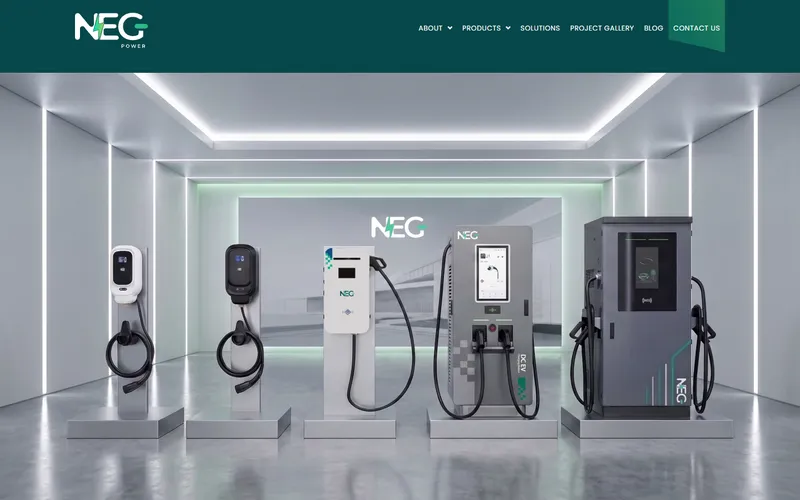
That sounds like a trivial specification until you have stood in a 1990s condo basement with a contractor and a measuring tape. Lots are tight, pillars are in the wrong places, and a standard wall box mounted on a pillar can project far enough to make an adjacent lot unusable, which is exactly the objection that sinks proposals at an AGM. Compact hardware is often what makes a retrofit approvable rather than merely technically possible.
Because it is primarily a hardware distributor supplying the local electromobility trade, it is the natural call for contractors and managing agents specifying equipment rather than for a homeowner wanting one charger fitted on a Saturday. If your development has already been told a charger will not fit, get a second opinion here before giving up.

- Best known for
- EO Charging distribution and ultra-compact chargers that fit tight condo car parks
- Location
- Singapore, part of the Novexx Group
- Website
- evse.com.sg
It publishes named contacts for its EV charger work rather than a generic sales inbox, which is a small signal I have learned to like: it means an identifiable person owns your job. The reviews I found reflect that, describing a smooth process from consultation to setup, transparent communication and fair pricing, which is the unexciting combination you actually want on electrical work.
It is a mid-sized outfit, so for a hundred-charger condo programme the network operators above have more relevant depth. For a home charger, a small commercial site or a shop with a few lots, it sits in a useful middle ground between the utilities and the one-van electricians.
- Best known for
- EV charging, solar and battery storage together, with named contacts on the EV side
- Location
- 18 Boon Lay Way, Trade Hub 21 #06-137
- Website
- negpower.sg
The logic is straightforward once you see it. A home with rooftop solar generates most of its power in the middle of the day, while a car is usually charged overnight. Getting real value out of pairing the two means either shifting the charging window or adding storage, and that is a design question rather than a product question. An integrator that plans the solar, the battery and the charger as one system will get you a better outcome than three separate contractors each optimising their own bit.
It writes clearly on the practical steps for a landed-house charger installation, which is a good sign of an engineering-led firm. If you only want a charger and nothing else, a dedicated installer will be quicker and cheaper. If solar is already on your list, read my guide to the best solar panel installers in Singapore alongside this one and consider doing both together.
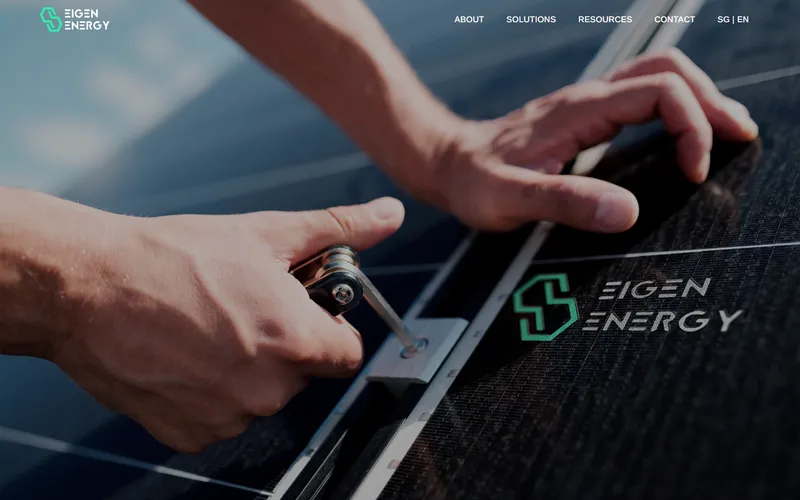
- Best known for
- Designing EV charging, solar and battery storage as one system rather than three
- Location
- Singapore, serving islandwide
- Website
- eigen.energy
It matters because the hard part of an EV charger installation is rarely the charger. It is the distribution board, the cable run, the protection devices and whether your incoming supply can take the load, and that is bread-and-butter work for an electrical distributor with decades of it behind them. The maintenance side is stated explicitly too, which several sellers gloss over.
What you give up is the software layer. If you want a slick consumer app, session-level analytics or resident billing across a shared car park, the network operators above are better set up for it. If you want the electrical work done impeccably by people who have been doing electrical work since long before EVs, this is the entry.
- Best known for
- Long-established electrical trade depth applied to EV charger installation and maintenance
- Location
- Singapore, serving islandwide
- Website
- limkimhai.com.sg
A published bundle price does two useful things. It gives you a benchmark to hold every other quote against, and it makes clear what is included, which for a home charger should mean the unit, the installation and the LEW endorsement. ElectGo is explicit that a fixed charger installation must be carried out by a Licensed Electrical Worker, which is the right thing to be explicit about.
Two caveats. A bundled price assumes a straightforward job, so a long cable run from your distribution board or a supply upgrade will move it, and you should confirm your own situation before treating the headline as your number. And its website sits behind a bot-protection wall, so unlike the other seven this entry has no homepage preview here. That has no bearing on the recommendation.
- Best known for
- Publishing bundled home charger and installation prices from around $2,299
- Location
- Singapore, serving islandwide
- Website
- electgo.com
| Company | Type | Strongest for | Published pricing | Best for |
|---|---|---|---|---|
| Charge+ | Network operator | Condo and commercial | On request | Shared car park deployments |
| SP Mobility | Utility arm | All segments | On request | Lowest counterparty risk |
| CDG Energy | JV, infrastructure | Public and fleet | On request | Tenders and large programmes |
| EVSE Singapore | Distributor | Tight condo car parks | On request | Retrofits where nothing fits |
| NEG Power | Installer | Home and small commercial | On request | EV plus storage and solar |
| Eigen Energy | Systems integrator | Landed homes | On request | Pairing a charger with solar |
| Lim Kim Hai Electric | Electrical distributor | Electrical works | On request | Difficult supply and cable runs |
| ElectGo | Retailer and installer | Home chargers | From ~$2,299 bundled | Knowing the price upfront |
EV charger installation in Singapore costs about $1,500 to $4,500 for a home, with most installations landing near $3,500 all in. Bundled packages that include the charger, the installation and the LEW endorsement start around $2,299. Commercial and condo installations run higher, typically $2,000 to $8,000 per point before load management and civil works.
The variable that moves your quote most is not the charger. It is the distance from your distribution board to where the car parks, whether the cable run needs trunking or trenching, and whether your incoming supply has headroom.
| Item | Typical cost | Notes |
|---|---|---|
| 7kW home charger, bundled with install | $2,299 to $3,500 | The right choice for most households |
| 22kW home charger, bundled with install | $3,500 to $4,500 | Needs three-phase supply and a compatible car |
| Long cable run or trenching | Add $300 to $1,500 | The most common quote surprise |
| Three-phase supply upgrade | Significant, quote separately | Often makes 22kW not worth it |
| Condo shared charger, per point | $2,000 to $8,000 | Before load management and civil works |
| ECCG grant, condo common areas | Less $3,000 to $4,000 per charger | Closes 31 Dec 2026 or at 3,500 chargers |
Two things to confirm in writing. That the LEW endorsement is included rather than billed later, since it is legally required and should never be a surprise line. And what the charger warranty covers and for how long, separating the hardware warranty from the workmanship warranty, because those are usually different lengths from different parties.
Whether you are fitting one charger at home or twenty in a condo, work through these in order.
- Confirm the charger is LTA type-approved. Ask for the model and check it is on the approved list. An unapproved charger, however good, should not be going on your wall.
- Confirm the LEW endorsement is in the quote. A fixed charger installation legally requires a Licensed Electrical Worker. If it is not itemised, ask whether it is included or coming later.
- Check your car's onboard AC charging rate before buying 22kW. Many EVs cap at 7kW or 11kW, in which case a 22kW charger charges at exactly the same speed as a 7kW one and costs you more, possibly plus a supply upgrade.
- Condo committees: apply for the ECCG now. Up to $4,000 per charger, closing 31 December 2026 or at 3,500 chargers, whichever is first, applied for through the Business Grants Portal with six months from the Letter of Offer to install and claim.
- Insist on OCPP 1.6 or later on any shared installation. It is a grant condition anyway, and it is what lets you change management platform later instead of being locked to one operator for the life of the hardware.
- Ask about load management on multi-charger jobs. Several chargers on one supply need dynamic capacity sharing, or you trip the incoming breaker the first busy evening.
- Ask whether the model is SS 722 compliant or grandfathered under TR 25. Either is legal today. On a ten-year condo asset, knowing which you are buying is reasonable diligence, and the cybersecurity clauses are worth asking a managing agent to consider.
- Get the cable route surveyed before accepting a price. Distance from the distribution board to the parking spot is the single biggest driver of the final number, and a quote given without seeing it will be revised.
And if solar is anywhere on your horizon, get both quoted at once. Both jobs need an LEW, both touch your distribution board, and doing them together saves a second round of the same disruption.
I started from LTA and EMA requirements, because type-approval and the LEW endorsement are what make an installation legal, and because the SS 722 change in April 2026 is recent enough that most guides ranking for these searches have not caught up with it. Firms that can discuss the current standard were easy to separate from firms selling on price alone.
I have deliberately mixed segments rather than pretending one list serves everybody, because a landed homeowner wanting one wall box and an MCST council spending a grant before December are doing genuinely different jobs. The comparison table says which is which, and I would rather do that than rank a utility against a retailer as if they compete.
A note on names, since this sector has moved fast. ComfortDelGro Engie now trades as CDG Energy at cdg-energy.com, with the old address redirecting. Several other companies listed in 2024 and 2025 roundups no longer have working websites at the domains those articles cite, which is worth knowing if you are working from an older list. As with the solar market, check a company is still trading before paying a deposit.
ElectGo's site sits behind a bot-protection wall, so unlike the other seven it has no homepage preview here. Prices are August 2026 bands compiled from published packages and current market guides, not quotes. Grant figures and deadlines are from LTA and were correct at the time of writing; confirm the current position before you rely on them, because a volume-capped scheme can close early.
Landed homeowners need no approval from HDB, URA or an MCST to install an EV charger, and can fit a 7kW or 22kW unit freely. What is legally required in every case is that the charger is LTA type-approved and that the installation is carried out and endorsed by a Licensed Electrical Worker. Reputable installers include the LEW endorsement in the quote.
Condominiums are different, because chargers go into common property. That needs MCST approval, usually a council decision and sometimes a general meeting, and the process is the real bottleneck rather than the electrical work. Condos are also the only segment eligible for the EV Common Charger Grant.
The EV Common Charger Grant pays $4,000 per charger for the first 2,000 chargers and $3,000 per charger for the next 1,500, co-funding installations in the common areas of non-landed private residences. Funding covers up to 1 percent of a development's residential car park lots, rounded up. Applications go through the Business Grants Portal.
The scheme closes on 31 December 2026 or once 3,500 chargers have been approved for co-funding, whichever comes first, so the volume cap can end it early. Successful applicants get six months from the Letter of Offer to install and submit the claim. Eligible chargers must be LTA type-approved smart chargers capped at 22kW, supporting remote communication, energy monitoring and OCPP 1.6 or later.
A 7kW charger is the better choice for most Singapore homes. It adds roughly 30 to 40km of range per hour and charges a typical EV fully in six to eight hours overnight, which comfortably covers normal driving on an island 50km across. It also runs on a standard single-phase supply.
A 22kW charger only pays off if two things are true: your home has a three-phase supply, and your car can actually accept 22kW AC. Many EVs sold here cap their onboard AC charger at 7kW or 11kW, so a 22kW wall unit charges them no faster while costing more. Check your car's onboard AC rate before paying for the bigger unit or a supply upgrade.
SS 722 is the Singapore Standard for EV charging systems, which took effect on 1 April 2026 when the earlier Technical Reference TR 25:2022 was elevated to full standard status. It widens scope to wireless charging, mobile charging and battery swap stations, tightens DC charging requirements, and introduces cybersecurity requirements for charging station management systems and equipment communications.
For most owners the practical effect is small. Chargers already type-approved under TR 25 remain valid and need no recertification, and there is a two and a half year transition before SS 722 compliance becomes mandatory for new chargers. It matters most when specifying equipment for a condo or commercial site with a long asset life, where asking whether a model is SS 722 compliant is reasonable diligence.
Not unilaterally. A condo car park lot is common property in most developments, so installing a charger there needs MCST approval, typically a council decision and often a general meeting, plus agreement on how electricity is metered and billed. The approval process, not the electrical work, is what usually takes the time.
The EV Common Charger Grant is built around shared chargers rather than private ones: it co-funds chargers in common areas accessible to all residents, up to 1 percent of car park lots. So the realistic route in most condos is persuading the council to install shared chargers with grant support, rather than getting a dedicated unit at your own lot.
If you are on a condo council, the deadline decides your shortlist before anything else does. Talk to Charge+ or SP Mobility now, because the EV Common Charger Grant closes on 31 December 2026 or at 3,500 chargers, and you need six months from Letter of Offer to install and claim. If your car park has already been declared too tight for chargers, get EVSE Singapore to look before you accept that. For tenders, fleets and large programmes, CDG Energy has the deployment record.
For a landed home, ElectGo gives you a published bundled price to benchmark everyone against, NEG Power is the solid mid-sized installer with named people on your job, Lim Kim Hai Electric is who I would want if the electrical side looks awkward, and Eigen Energy is the right call if solar is also on your list.
Three things regardless of who you pick: confirm the charger is LTA type-approved, confirm the LEW endorsement is inside the quoted price, and check your car's onboard AC charging rate before anyone sells you 22kW. That last one alone saves a lot of people a four-figure upgrade they will never use. My guides to the best solar panel installers, the best electricians and the best smart home installers in Singapore cover the work that usually pairs with this.
One last note for the trade. EV charging in Singapore is being decided right now by whoever a managing agent finds first when they search, and most of the pages winning those searches still describe a standard that changed in April and a grant most of them do not mention is closing. That gap is the cheapest marketing available in this sector, and closing it happens to be my day job. Take a look at my web design services in Singapore, or the iCharge EV charging case study for how we handled exactly this pitch, or get a quote and I will tell you honestly what would move the needle.