

Hi, I'm Terris. I'm a web designer in Singapore, full-time since 2018, and I design and build every site on these pages myself.
Get restaurant website design in Singapore built to take more bookings
A restaurant website has one of the narrowest jobs on the internet and most of them still get it wrong. Somebody is deciding where to eat, usually on a phone, usually within the next few hours, and they need four things: what the food is like, what it costs, whether you are open, and how to hold a table.
- case study
- 1
- services delivered
- 2
- most recent project
- March 2026
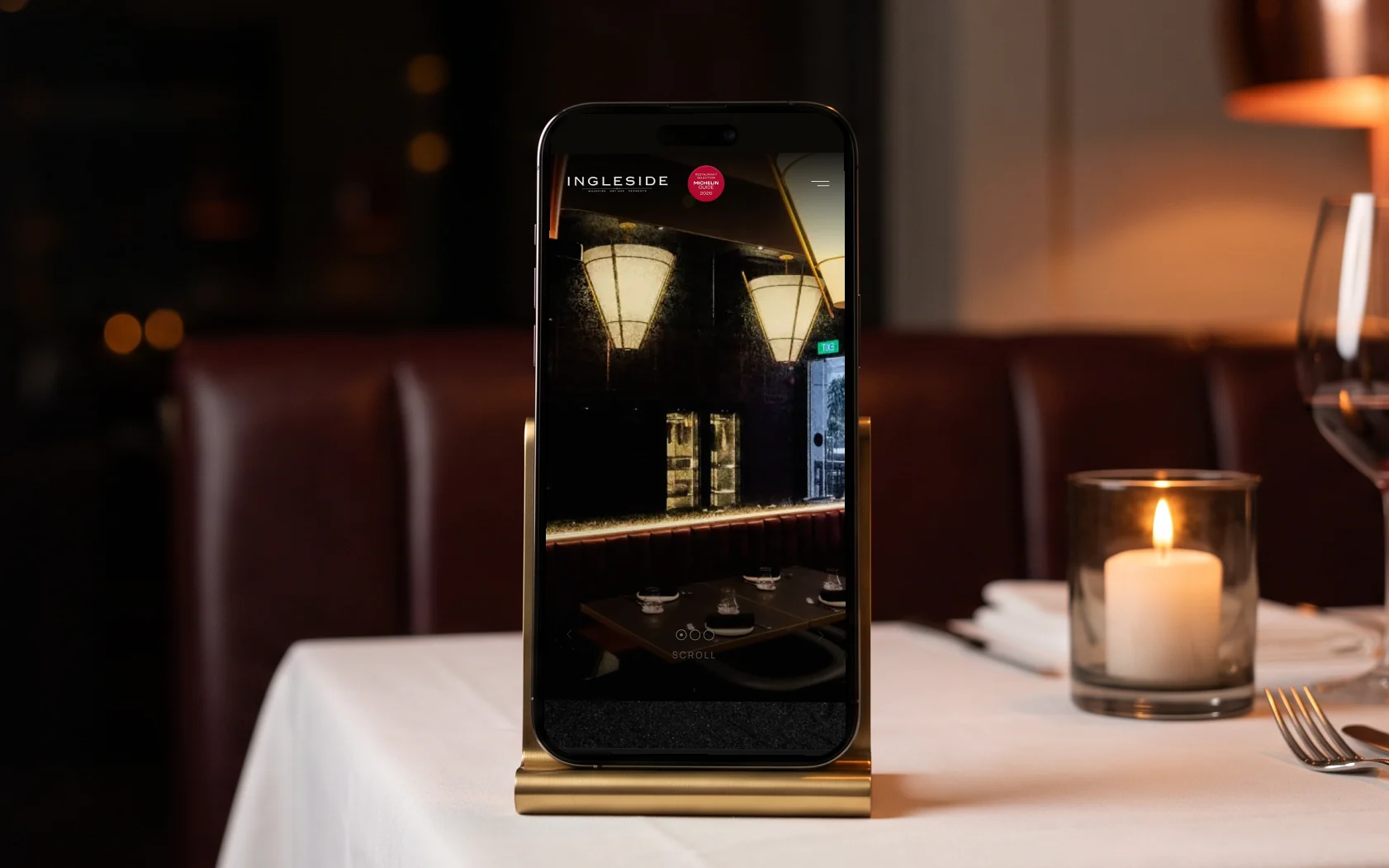
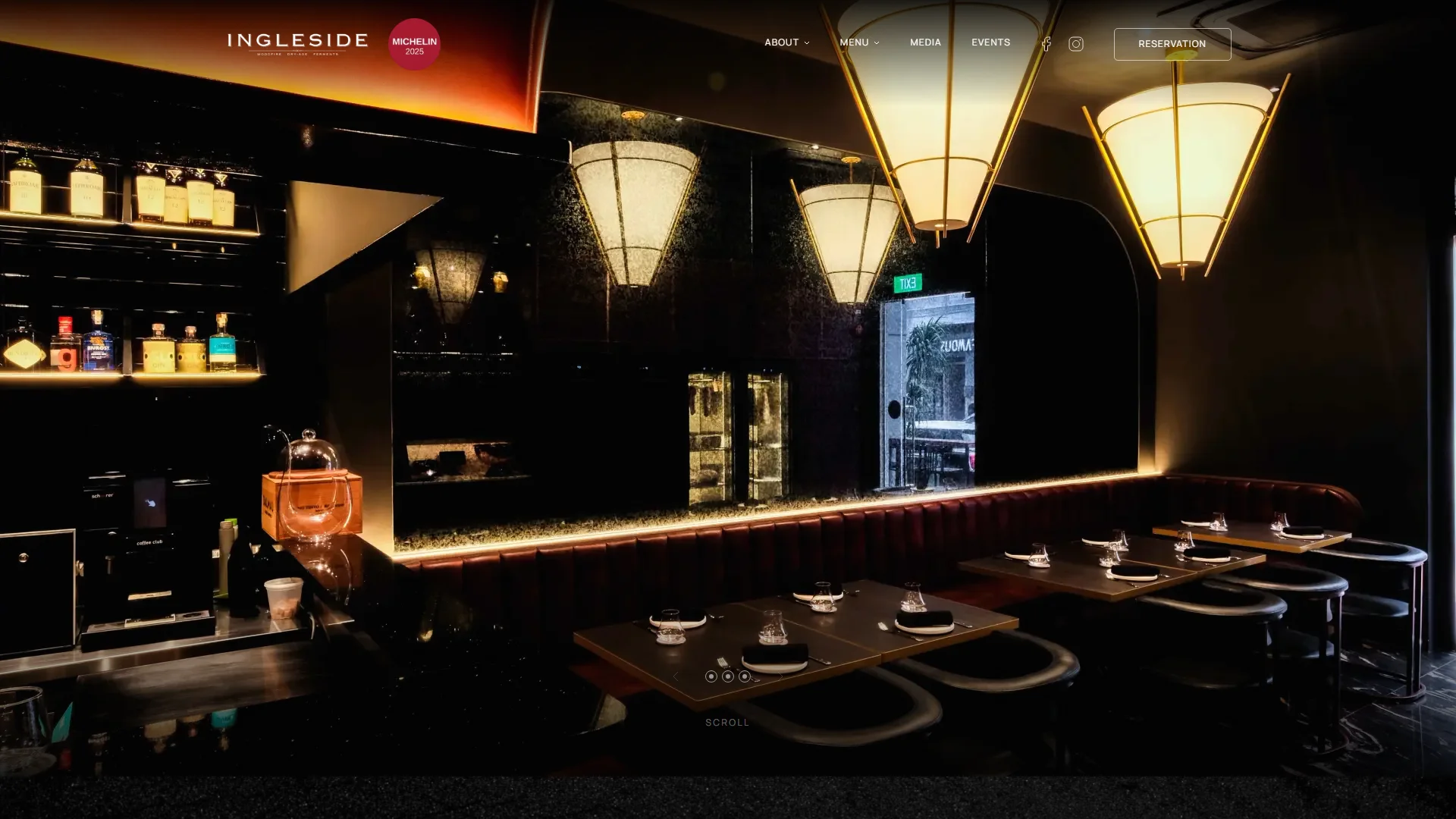 Ingleside ↓
 My restaurant work
Everything else is decoration. The most common failure I see in Singapore is a menu published as a PDF, which on a phone means pinching and zooming through a document designed for A4, at the exact moment somebody is deciding whether to bother.
Browse the portfolio by industry
What a restaurant website has to do
-
Put the menu on the page, as text
Not a PDF, not a photograph of a printed menu, not a link to a third-party listing. Real text on a real page, so it loads instantly, works on a phone, and can be found when somebody searches for a dish you serve.
-
Make reserving take one tap
The decision window for dinner is short and it closes. If booking means a phone call during service, the table goes to the restaurant whose site had a button.
-
Answer the practical questions immediately
Opening hours, address, nearest MRT, parking, whether there is a dress code, whether it suits a group of eight. These are the things a diner checks and the things a restaurant site tends to bury.
-
Convey the room
People are not only choosing food, they are choosing an evening. Fine dining especially is sold on atmosphere, and photography of the space does more work than another paragraph about the chef.
How I build restaurant sites
-
Menu as structured content
Sections, dishes, descriptions and prices as real markup, which means it is readable on a phone, indexable by Google, and editable by you without regenerating a PDF every time a price changes.
-
Reservations as the primary call to action
Present from the first screen and repeated as the page goes on, integrated with whatever reservation platform you already run rather than replacing it.
-
Photography-led, but not photography-slow
Full-bleed imagery of the room and the plates, served in modern formats at sensible sizes, because a restaurant page that takes six seconds to appear has already lost the booking.
-
Local and Restaurant schema
Cuisine, price range, opening hours, address and menu marked up properly so the listing that appears in search results is complete rather than a bare link.
Where the figures on this page come from
-
Real projects, live links
Every case study links to the site itself, so you can check the work instead of taking my word for it.
-
Figures from the build or the business
Page counts and structure can be counted on the site. Anything else is a figure the business publishes about itself. I don't print traffic or enquiry numbers a client hasn't confirmed.
-
No invented reviews
A quote appears only where a client left one on Google, which is why most case studies have none.
-
Prices from my published packages
Any price in the answers below comes from the same list as my pricing page, not a number written for this page.
What restaurant owners ask me
How much does a restaurant website cost in Singapore?
Most single-location restaurants fit the One Week Website at SGD 3,500, covering the design, the menu, reservation integration and local schema. Groups with several outlets, or a restaurant that also needs catering, private dining and events pages, are bespoke builds from SGD 7,500.
Can you connect our reservation system?
Yes. Whatever you already run for bookings stays. I design the site so the reservation flow feels like part of the restaurant rather than an abrupt handover to a different brand.
Why should the menu not be a PDF?
Three reasons. It is painful to read on a phone, which is where nearly all of this traffic is. Search engines cannot use it properly, so you never appear for the dishes you actually serve. And every price change means a new file. A menu built as page content fixes all three.
Do we still need a website if we are on the delivery platforms?
Yes, and arguably more than before. The platforms own the customer, take a cut of every order and can change their terms whenever they like. Your own site is where you keep the diners who already know you, take reservations you pay no commission on, and control how the restaurant is presented.
Choosing a web designer for your restaurant
Singapore diners research before they commit. They check the menu, they check the price, they check whether the room suits the occasion, and they do all of it on a phone in a few minutes. A restaurant website either survives that or it does not, and most of the ones I audit fall over on the menu alone.
The good news is that this is one of the most fixable briefs there is. The scope is small and well understood, which is why a restaurant is usually a strong fit for the fixed-price One Week Website rather than a long bespoke project. What matters is getting the four essentials genuinely right rather than adding a fifth.
Have a look at the Ingleside case study for how that plays out for a fine dining room, then get in touch and tell me where your diners are currently dropping off.
Work in related industries
-
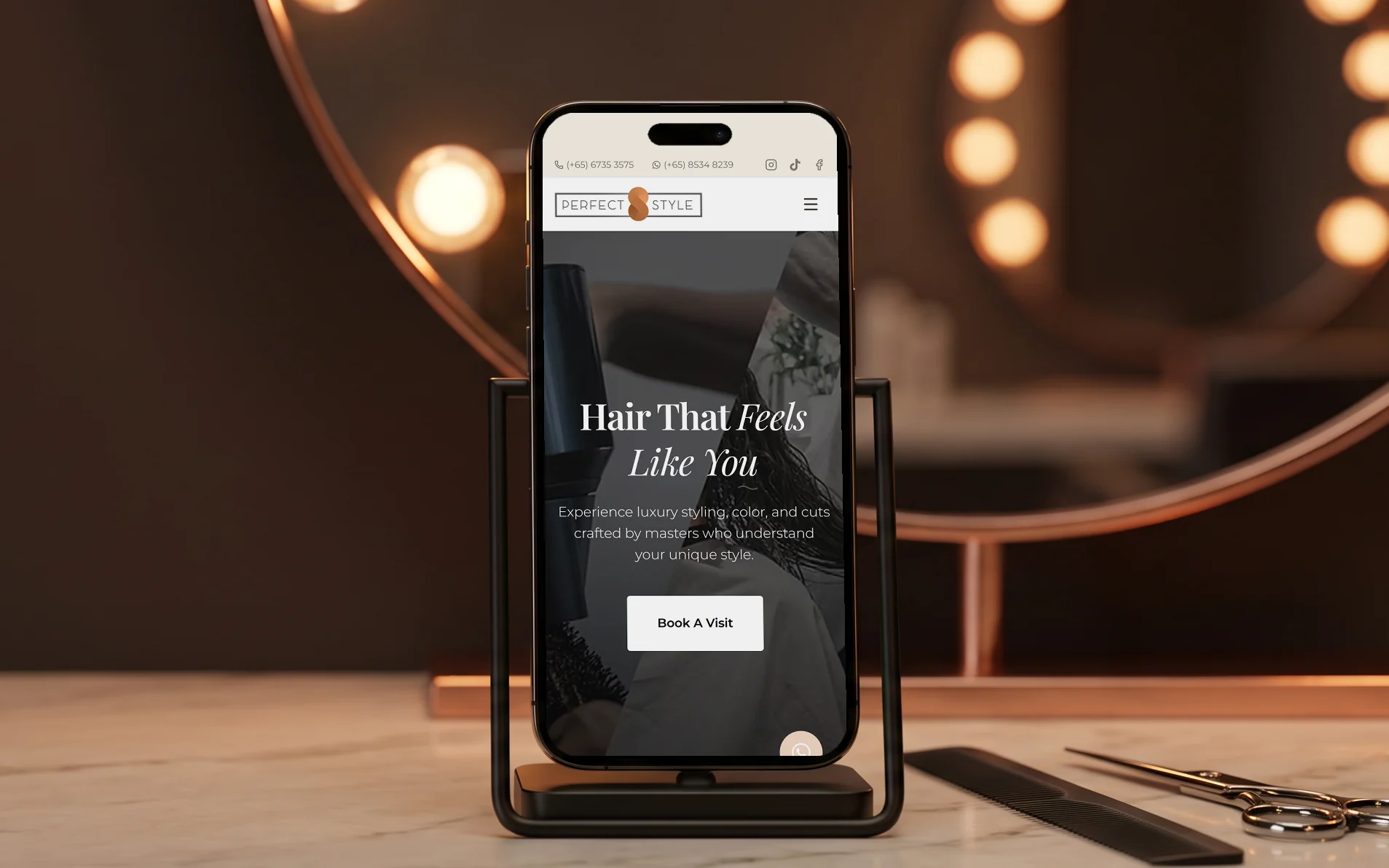
Salon, beauty & fashion website design in Singapore
Website design for Singapore salons, beauty and fashion brands. Online booking, service menus, schema markup and premium design that lifts enquiries.
See the work → -

Entertainment & event rental website design in Singapore
Website design for Singapore entertainment, venue and event rental businesses. Equipment catalogues, venue booking, multilingual builds. See the work and the results.
See the work →
Tell me about your restaurant and I'll show you how the site should take bookings
Message me what the business does and what the site needs to do. I'll reply with the closest work I've done and a fixed price.