

Hi, I'm Terris. I'm a web designer in Singapore, full-time since 2018, and I design and build every site on these pages myself.
Get personal brand and portfolio website design that shows clients who they're hiring
A personal site has one job that a company site does not: it is being judged as a work sample while it is being read. When somebody is deciding whether to hire your judgement, your taste or your point of view, the site is the first evidence they have of all three.
- case studies
- 2
- services delivered
- 2
- most recent project
- January 2026
 João Flores, Wareing Advisory ↓
 My personal brand work
That is why these are harder to build than they look. There is no product to describe and no feature list to fall back on, so every decision is visible and there is no volume of content to hide a weak one behind.
-
João Flores
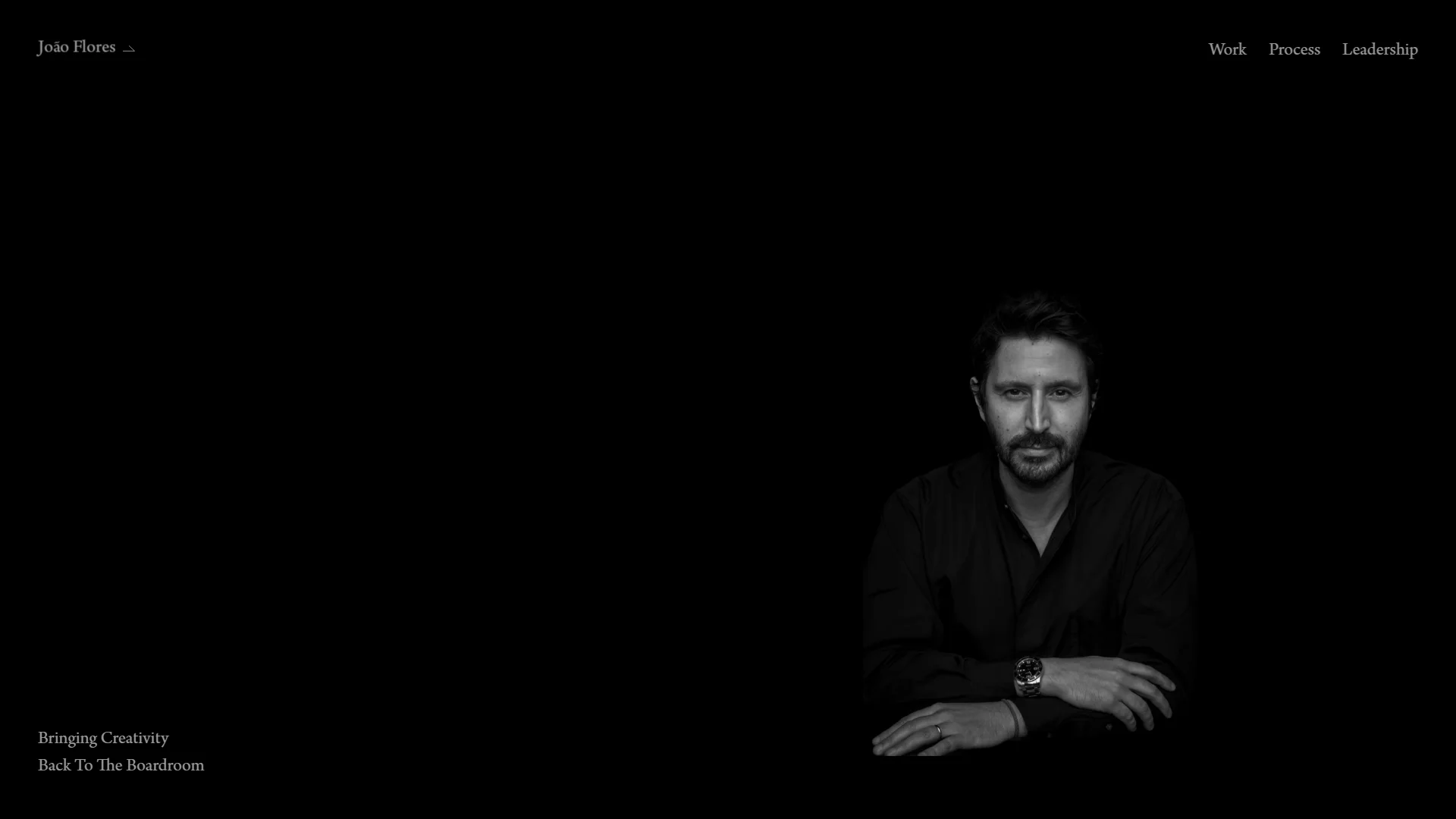
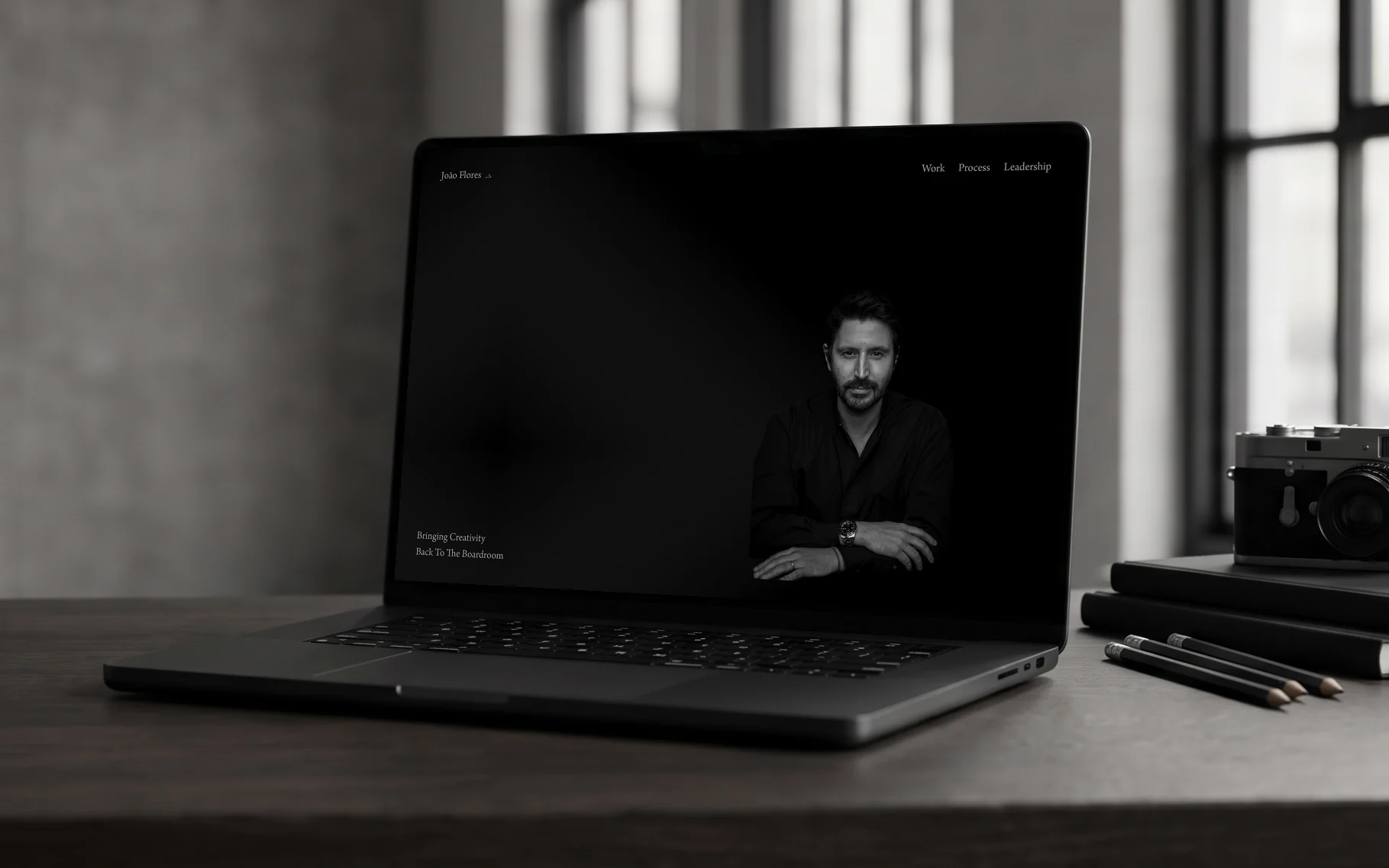
A four-page personal site for a creative leader, with almost no copy at all.
Read the case study → -
Wareing Advisory
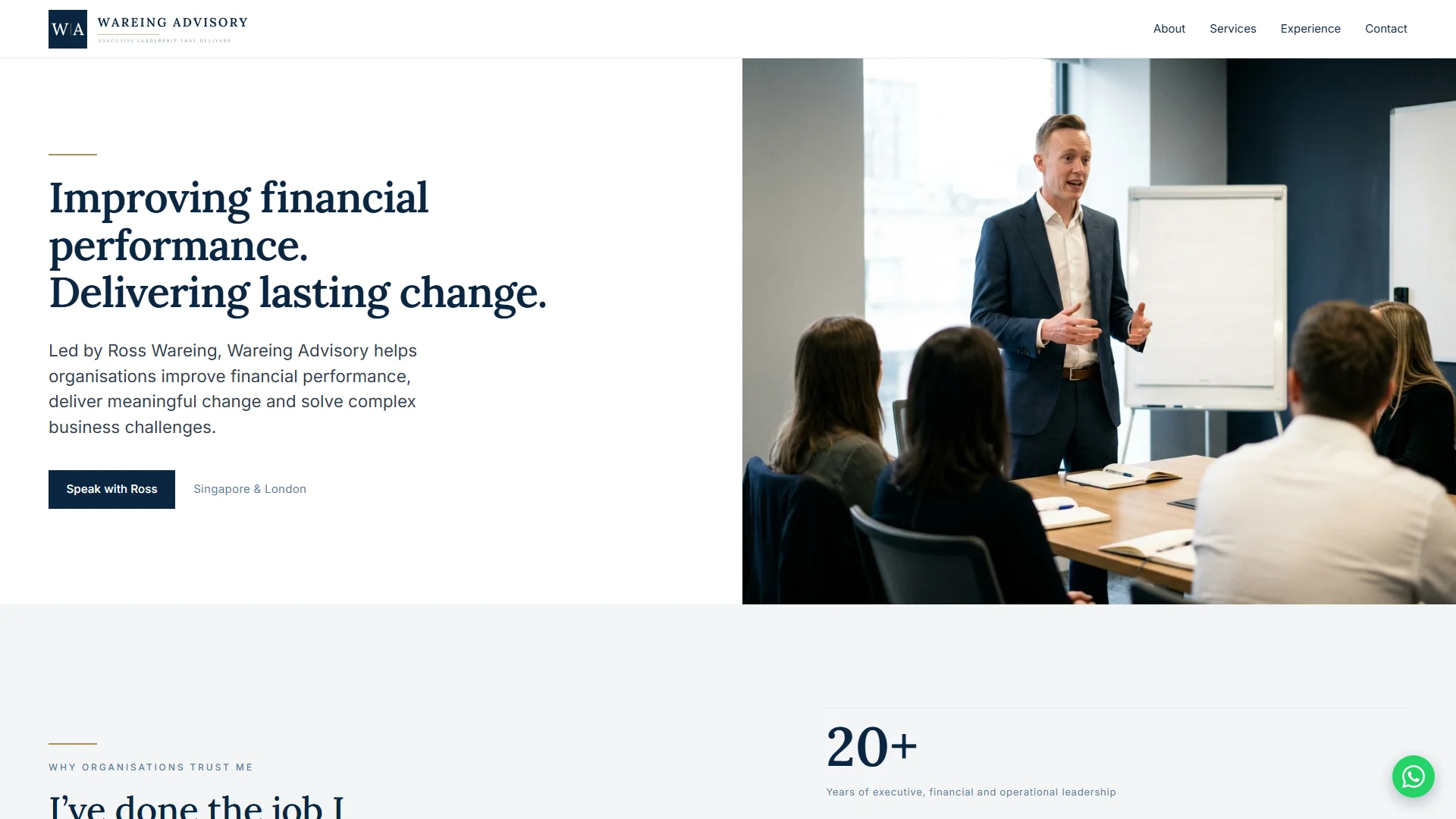
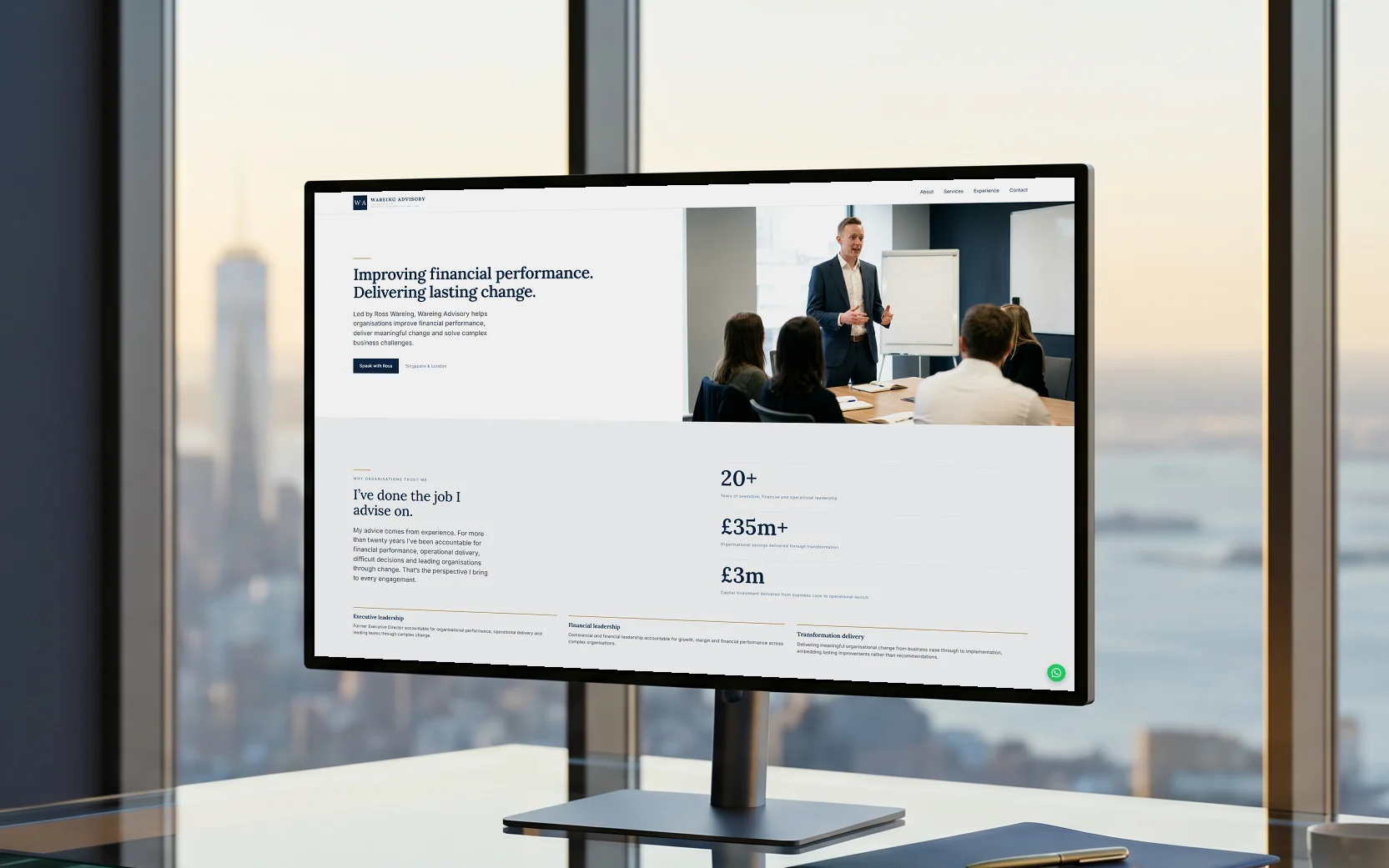
A seven-page site for a one-person executive advisory working across Singapore and London.
Read the case study →
Browse the portfolio by industry
What a personal brand site has to do
-
Say the thing in one line
A consultant, a creative leader or a founder is bought on a single proposition. If it takes three paragraphs to reach it, the site has already conceded that there is not one.
-
Let the work carry the argument
Annotating every project with a case study suggests the work needs defending. For a portfolio the restraint is often the more confident move, and for senior audiences it is the more persuasive one.
-
Serve peers and buyers at once
Peers want the work with nothing in the way. Clients want reassurance that there is a method and that you are safe to put in front of their board. Those pull in opposite directions and usually need separate routes rather than a compromise.
-
Survive being short
On a four-page site every element is load-bearing. A weak typographic choice or an awkward image crop has nowhere to hide, which is why these take more care per page than a large site does.
How I build personal brand sites
-
Decide what to leave out first
The structure comes from what the site refuses to include. João Flores opens on a single screen with one sentence and no scroll prompt, because not filling the page is itself the first statement.
-
Give each audience its own page
Work for the people who only want the work. Process for the buyer who needs to see a method. Biography and press kept separate again, so nobody scrolls through the wrong one to reach theirs.
-
Build the type system like a print piece
On a site with this little content, the typography is the design. Size, spacing and restraint do the work that colour and layout do elsewhere.
-
Pick the platform that fits the scope
A four-page personal site does not need a custom build. Framer, or a small static build, ships faster and stays editable by the person whose site it is, which matters more here than on a client project with a marketing team.
Where the figures on this page come from
-
Real projects, live links
Every case study links to the site itself, so you can check the work instead of taking my word for it.
-
Figures from the build or the business
Page counts and structure can be counted on the site. Anything else is a figure the business publishes about itself. I don't print traffic or enquiry numbers a client hasn't confirmed.
-
No invented reviews
A quote appears only where a client left one on Google, which is why most case studies have none.
-
Prices from my published packages
Any price in the answers below comes from the same list as my pricing page, not a number written for this page.
What people ask me about a personal site
How much does a personal brand website cost?
Less than most people expect, because the scope is genuinely small. A focused personal or portfolio site sits comfortably within the One Week Website at SGD 3,500, and simpler ones cost less. What takes the time is the direction and the editing, not the number of pages.
I do not have much content. Is that a problem?
Usually the opposite. The strongest personal sites are short. Four pages, one clear proposition and work that is allowed to speak beats a long site padded with a services list and a blog nobody updates.
Should I write case studies for my portfolio pieces?
It depends who you are selling to. If clients need to understand your reasoning, brief context helps. If you are being hired for taste or judgement, captions can undercut the work. João Flores runs fourteen pieces with no captions at all, and that was the right call for that audience.
Can I update it myself afterwards?
Yes, and for a personal site that matters more than usual, since there is no marketing team to route changes through. I build these on platforms you can edit directly, so adding a new project or a press mention does not require me.
Choosing a designer for your personal site
Most personal sites fail by over-explaining. A long biography in the third person, a wall of client logos, an awards list, a paragraph under every project, and somewhere underneath all of it, the actual work. Each addition is meant to build credibility and the accumulation does the opposite.
The ones that work tend to be shorter than their owner is comfortable with. One clear line about what you do, the work presented without apology, and just enough about your method to reassure whoever needs reassuring. Getting there is mostly an editing problem, and it is the part people find hardest to do for themselves.
If you have a site that lists everything you have ever done and still does not sound like you, that is the usual version of this. Have a look at the case study above and get in touch.
Work in related industries
-
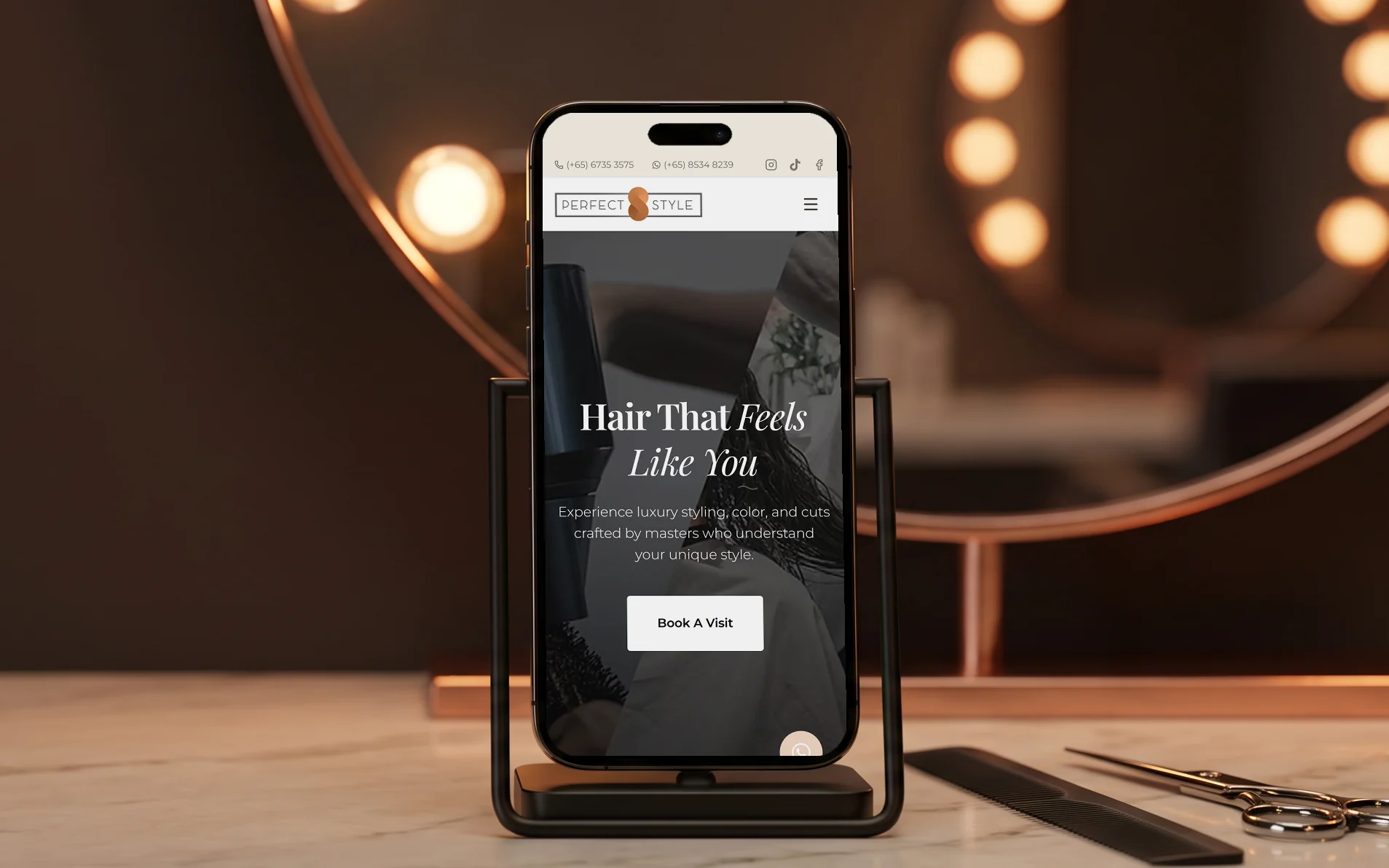
Salon, beauty & fashion website design in Singapore
Website design for Singapore salons, beauty and fashion brands. Online booking, service menus, schema markup and premium design that lifts enquiries.
See the work → -
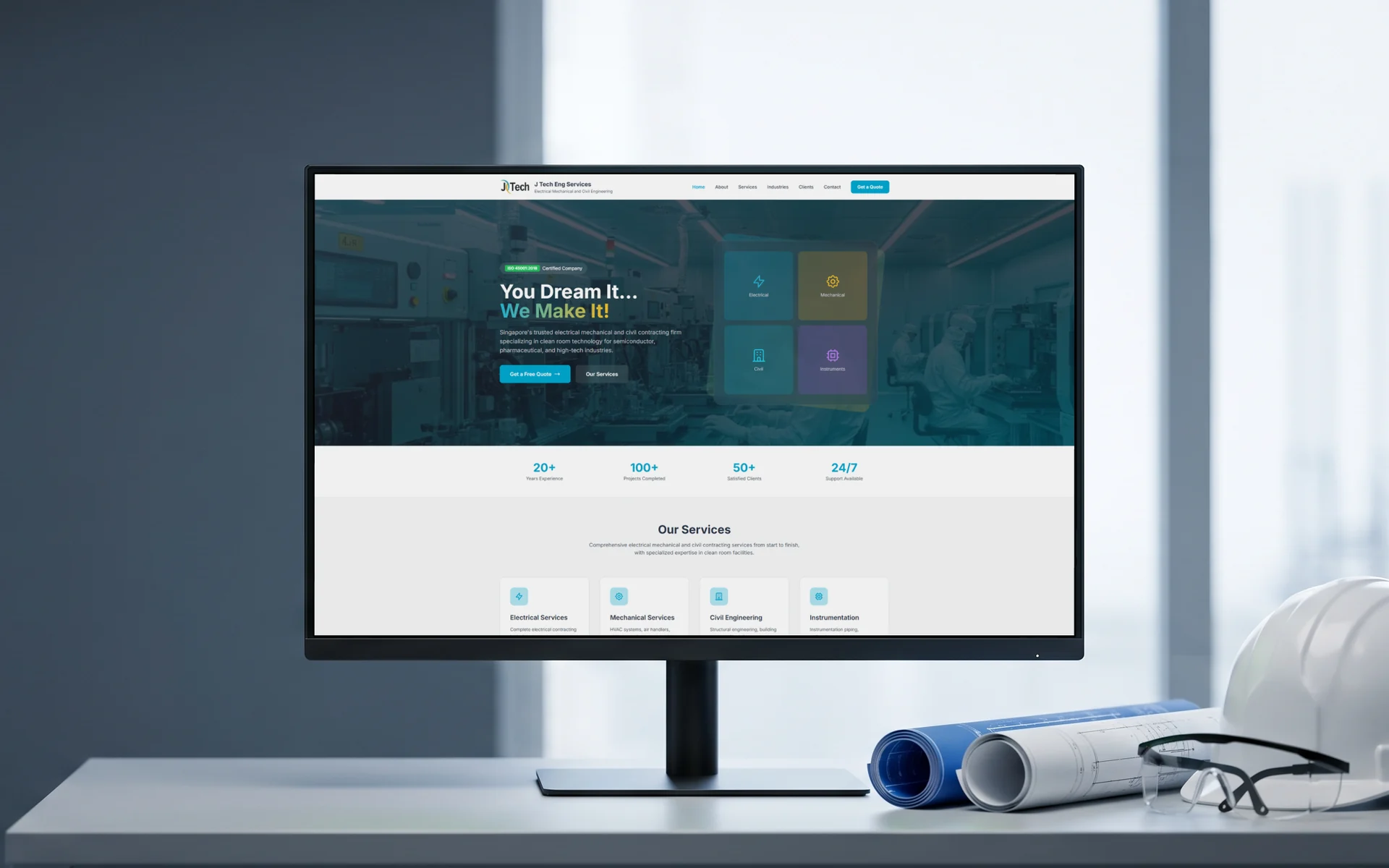
Corporate & engineering website design in Singapore
Website design for Singapore corporate service, engineering and industrial companies. Credibility for procurement-led buyers, capability pages and certification proof.
See the work →
Tell me what you do and I'll show you how your site should introduce you
Message me what the business does and what the site needs to do. I'll reply with the closest work I've done and a fixed price.