

Hi, I'm Terris. I'm a web designer in Singapore, full-time since 2018, and I design and build every site on these pages myself.
Get escape room website design in Singapore built to book more groups
I have built websites for three Singapore escape room operators, including the largest one in the country. That is an oddly specific thing to specialise in, and it happened the way most specialisms do: the first one went well, and the next two called.
- case studies
- 3
- services delivered
- 3
- most recent project
- July 2026
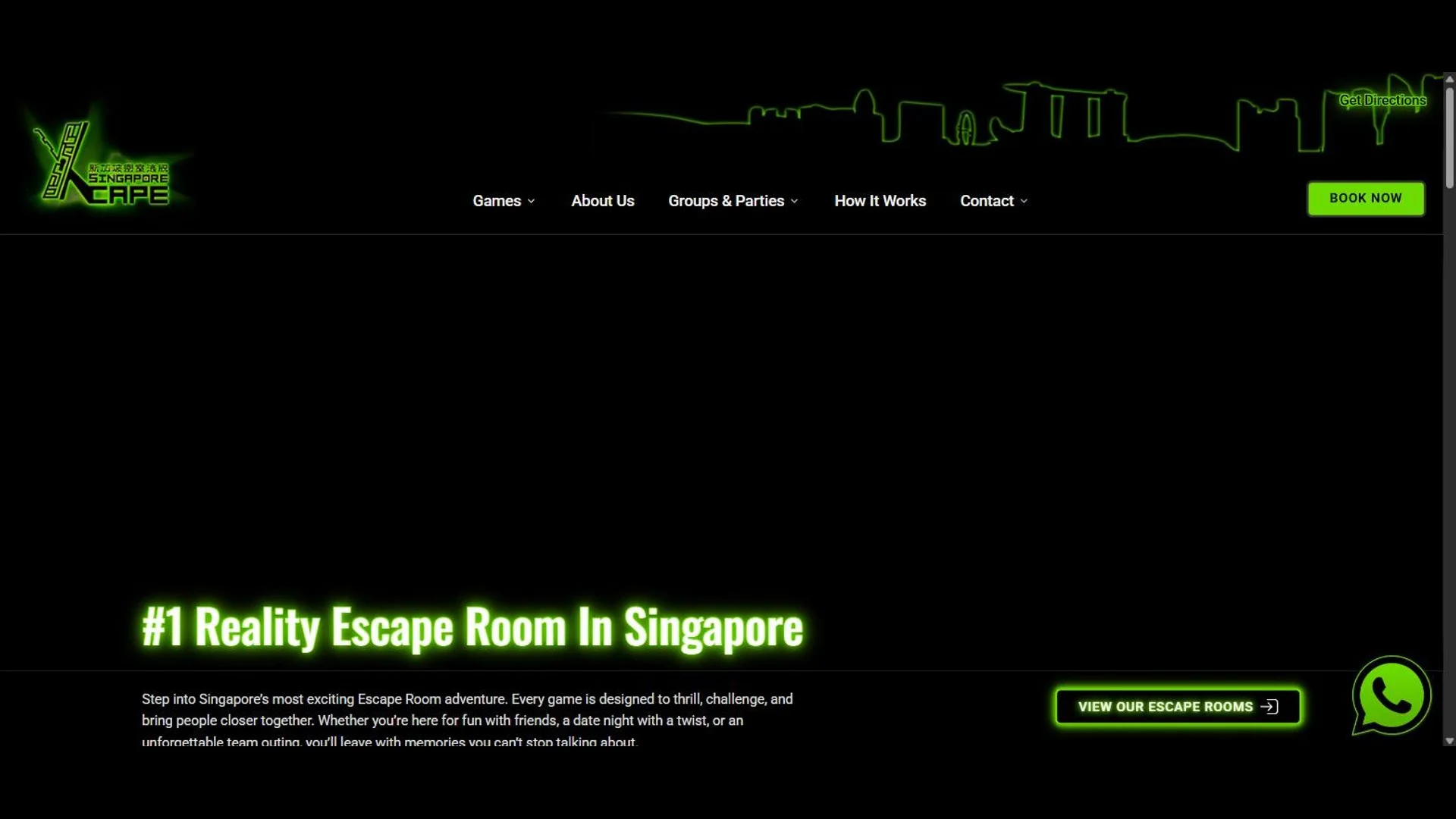
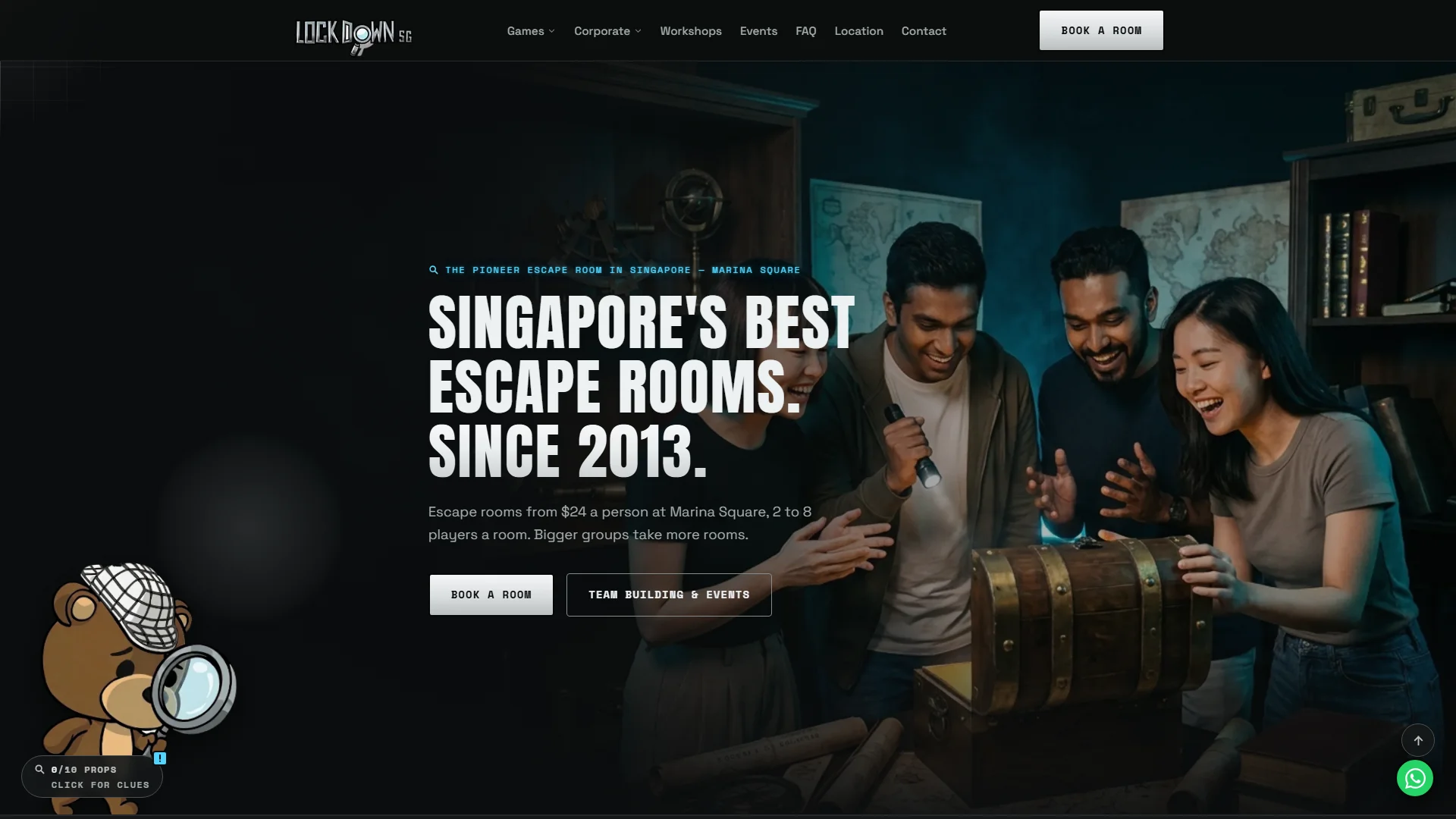
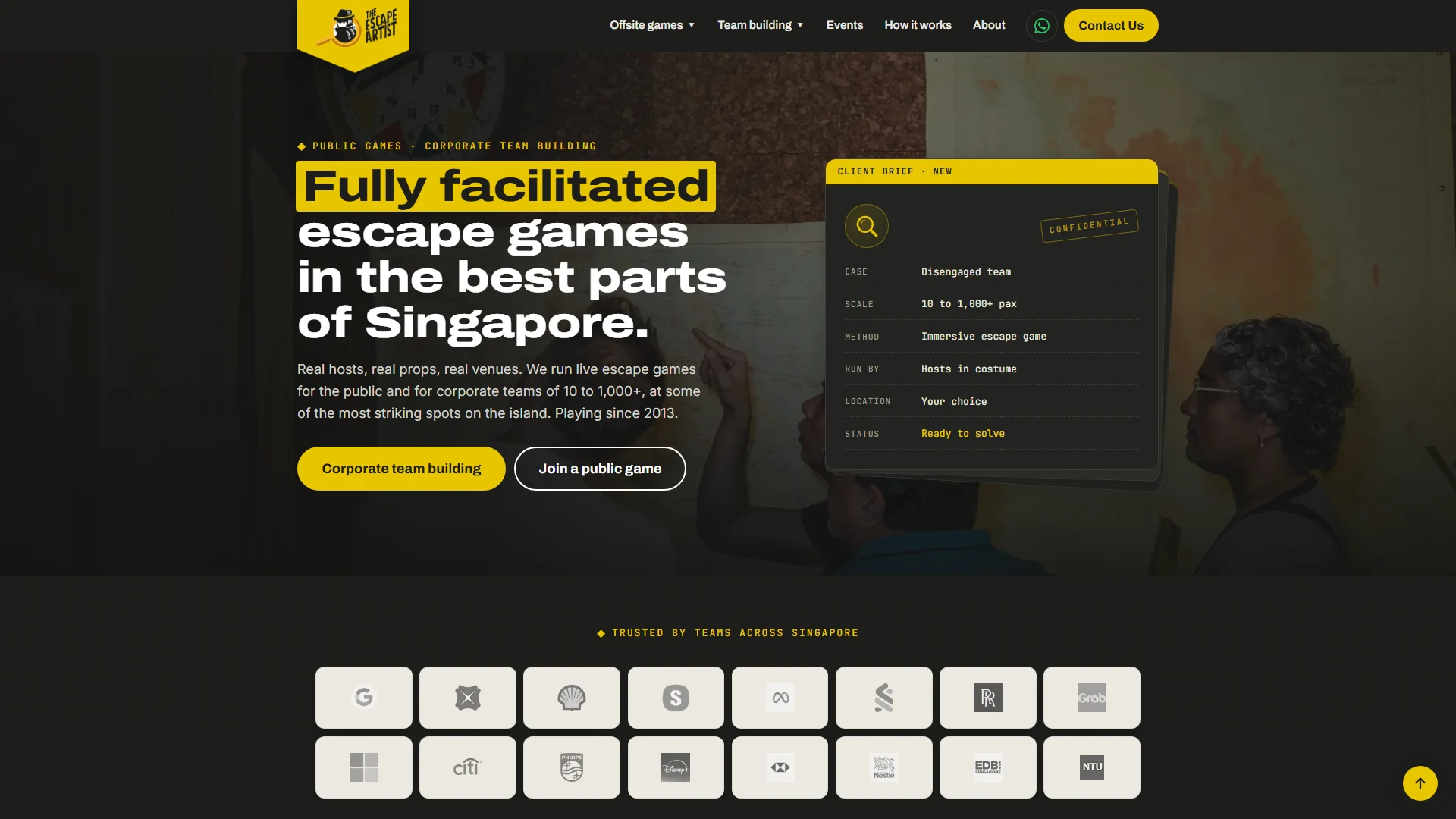 Xcape Singapore, Lockdown.SG, The Escape Artist ↓
 My escape room work
What I learned across them is that an escape room website is a booking engine wearing a theme. The atmosphere has to land in about two seconds or the visitor leaves, but if the theming gets in the way of picking a room, a date and a group size, the site looks incredible and books nothing. Almost every escape room site I audit fails on one side or the other.
-
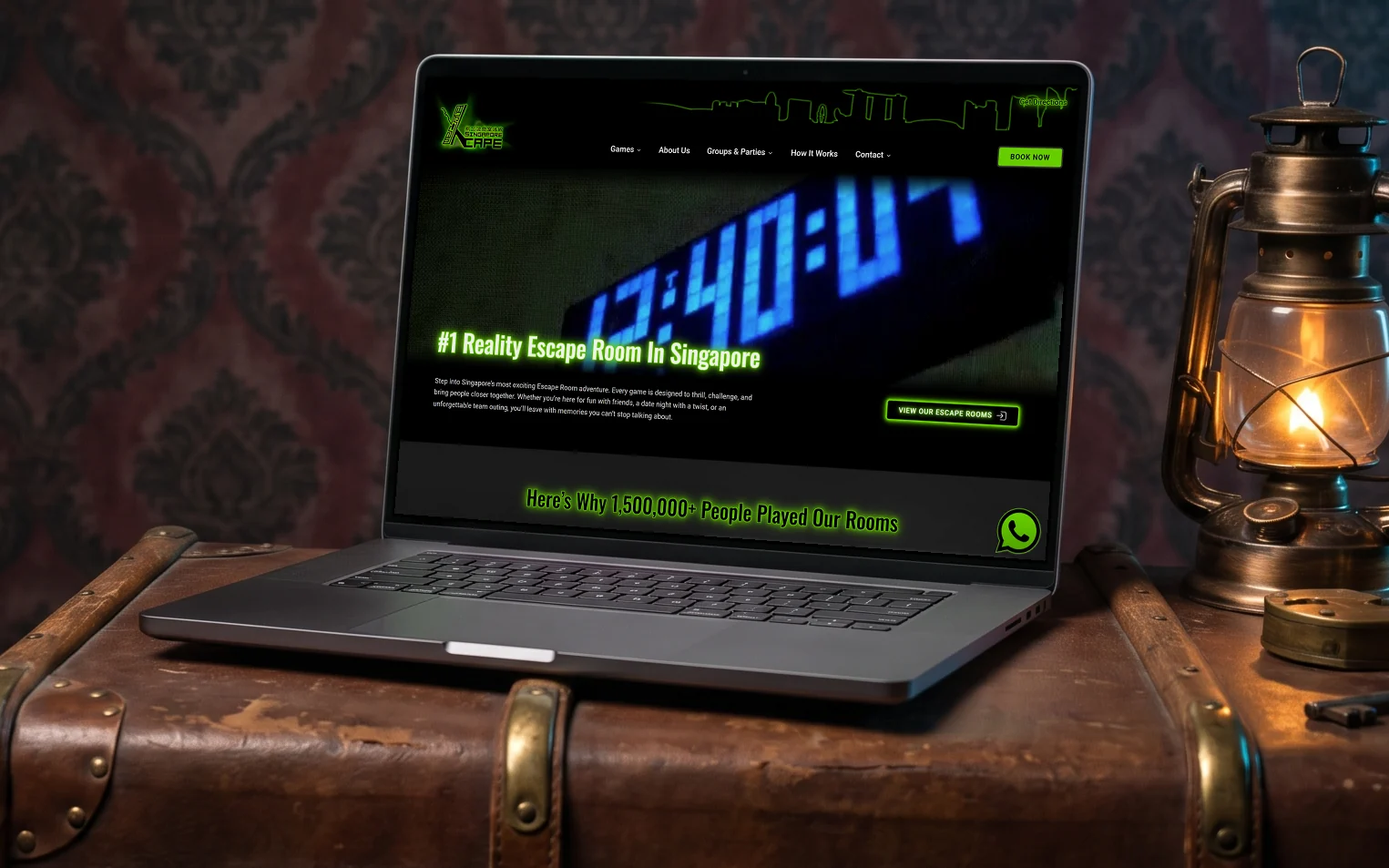
Xcape Singapore
A neon rebuild for Singapore's largest escape room operator, 9 themes across 40 chambers.
Read the case study → -
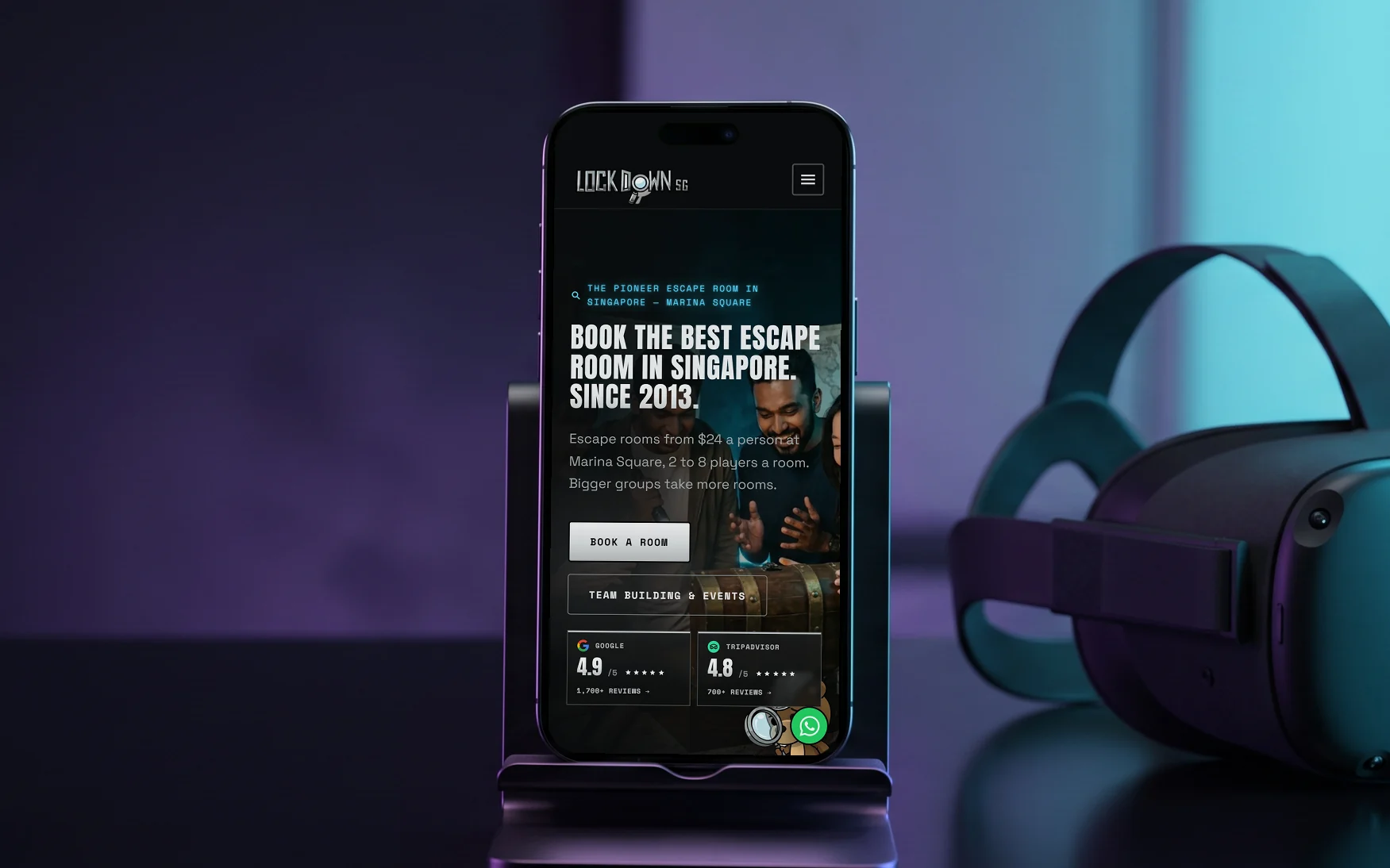
Lockdown.SG
A detective-themed site for Singapore's first escape room, with the VR floor kept apart.
Read the case study → -
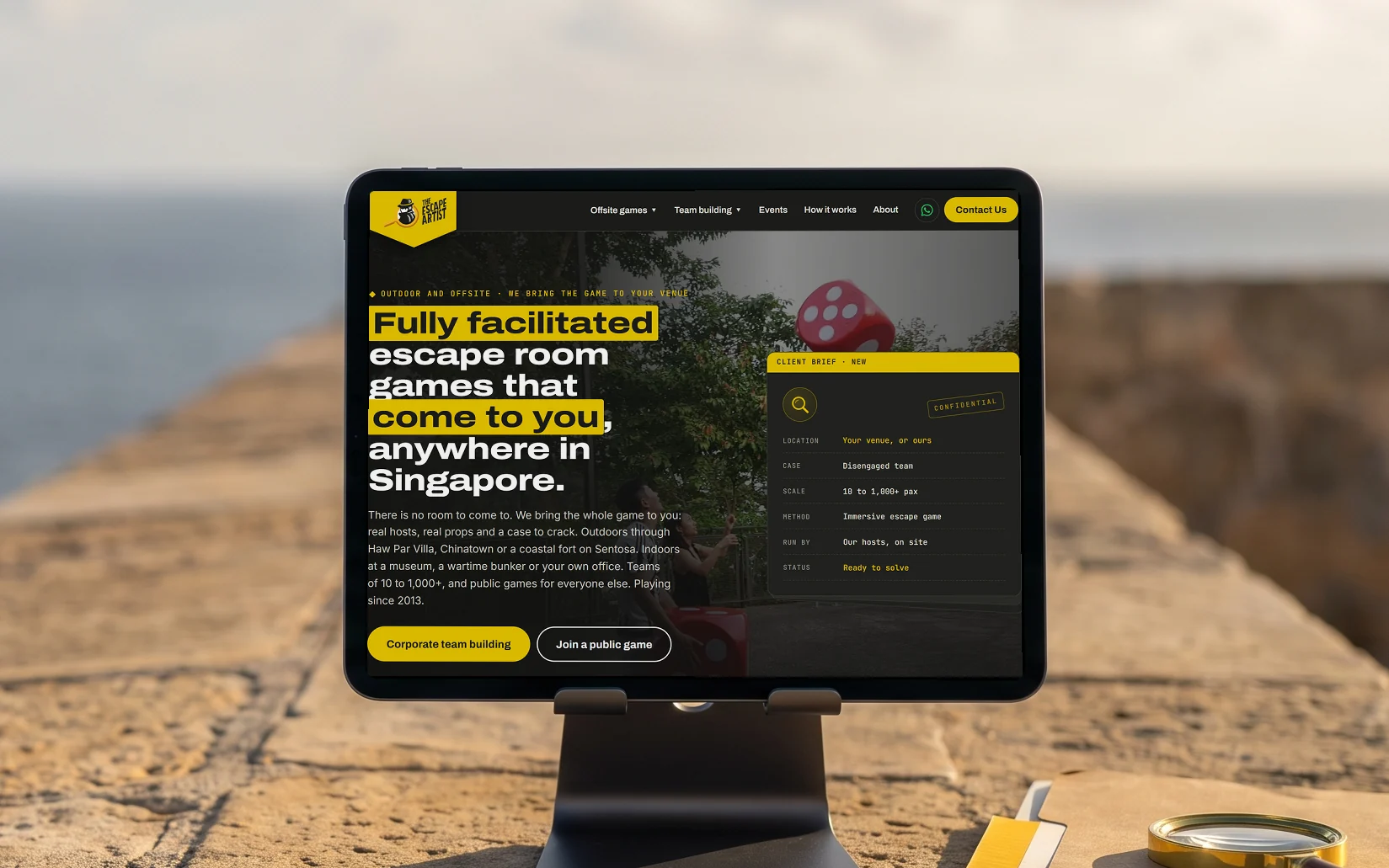
The Escape Artist
A team building site built around 12 case files, because there's no venue to photograph.
Read the case study →
Browse the portfolio by industry
What an escape room website actually has to do
-
Sell the fear before it sells the slot
Nobody books a room because of the puzzle count. They book because a trailer, a photograph or a room name made them want to be in there. That means real room photography and video carry the page, and the design has to survive being almost entirely black without turning into an unreadable mess.
-
Let people filter by what they actually care about
Group size, scare level, whether there is a live actor, and whether the theme suits a first date or a company D&D. Xcape has 9 themes across 40 chambers. Without filters that is a wall, and a wall is where the booking gets abandoned.
-
Answer the group-size question immediately
Escape rooms are bought by one person on behalf of four to twelve others. That buyer needs capacity, price per pax and availability before anything else, because they are reporting back to a group chat that is waiting on them.
-
Carry the proof where the decision happens
TripAdvisor rank, Google rating and press coverage do nothing on an About page. They belong beside the room the visitor is currently looking at, because that is the moment they are deciding whether this is worth an evening.
How I build escape room sites
-
Structure the rooms as a catalogue, not a list
For Xcape that meant a filterable set of 9 themes across 40 chambers, cut by genre, live-actor and fear factor. For Lockdown it meant separating the physical rooms from the VR floor, because those are two different buying decisions in the same building.
-
Design in the dark deliberately
These brands are neon on black by nature. I build the palette around that rather than fighting it, then check contrast on every interactive element, because a green-on-black CTA that looks great to the designer can be invisible to a good chunk of the audience.
-
Keep the booking path to the shortest honest route
Room, group size, date, done. Every extra field is another chance to lose someone who is trying to organise five friends on a Tuesday night.
-
Build the corporate enquiry as its own path
Team building is a completely different sale from a Saturday night out. It runs on headcount, invoicing and a date that suits an HR calendar, so it gets its own page and its own form rather than being crammed into the consumer booking flow.
Where the figures on this page come from
-
Real projects, live links
Every case study links to the site itself, so you can check the work instead of taking my word for it.
-
Figures from the build or the business
Page counts and structure can be counted on the site. Anything else is a figure the business publishes about itself. I don't print traffic or enquiry numbers a client hasn't confirmed.
-
No invented reviews
A quote appears only where a client left one on Google, which is why most case studies have none.
-
Prices from my published packages
Any price in the answers below comes from the same list as my pricing page, not a number written for this page.
What escape room owners ask me
How much does an escape room website cost in Singapore?
It depends on how many rooms you run and whether booking is handled on-site or through a third-party system. A single-location operator with a handful of rooms sits at the lower end, while a multi-theme catalogue with filtering, corporate enquiry paths and SEO across every room costs more. The One Week Website starts at SGD 3,500 and larger bespoke builds start at SGD 7,500. Send me your room count and current booking setup and I will quote properly rather than guess.
Can you integrate our existing booking system?
Yes. Most Singapore operators already run a booking or ticketing platform they do not want to replace, and there is usually no good reason to. I build the site around it so the catalogue, the room pages and the SEO all live on your domain, and the checkout hands off to the system you already use.
Do you build the room pages for SEO?
Each room gets its own page and its own URL. People search room names, they search "escape room for 6 pax", and they search by location and theme. One page listing every room cannot rank for any of that, which is the single most common problem I find on escape room sites in Singapore.
How long does an escape room website take?
Xcape, at 9 themes and 40 chambers, took about a month including the SEO work. A smaller operator is faster. The variable is almost never the build, it is how quickly the room photography and copy for each theme come together.
Choosing a web designer for your escape room
Singapore has a genuinely competitive escape room market, and the sites in it tend to fall into two camps. Some are beautiful, atmospheric and impossible to book on. Others are functional booking forms with no sense of the experience you are paying for. Very few manage both, which is where the opportunity is.
The operators I have worked with all had the same underlying issue: the rooms were excellent and the website was not carrying them. Real scale, real ratings and real press coverage were sitting somewhere a visitor never reached. Fixing that is usually less about a redesign and more about restructuring, giving every room a page, putting the proof next to the decision, and cutting the booking path down to what it needs to be.
If you run an escape room in Singapore and your site is not converting the traffic it already gets, that is normally a structure problem rather than a traffic problem. Have a look at the three case studies above, then get in touch and I will tell you which of the two camps yours is currently in.
Work in related industries
-
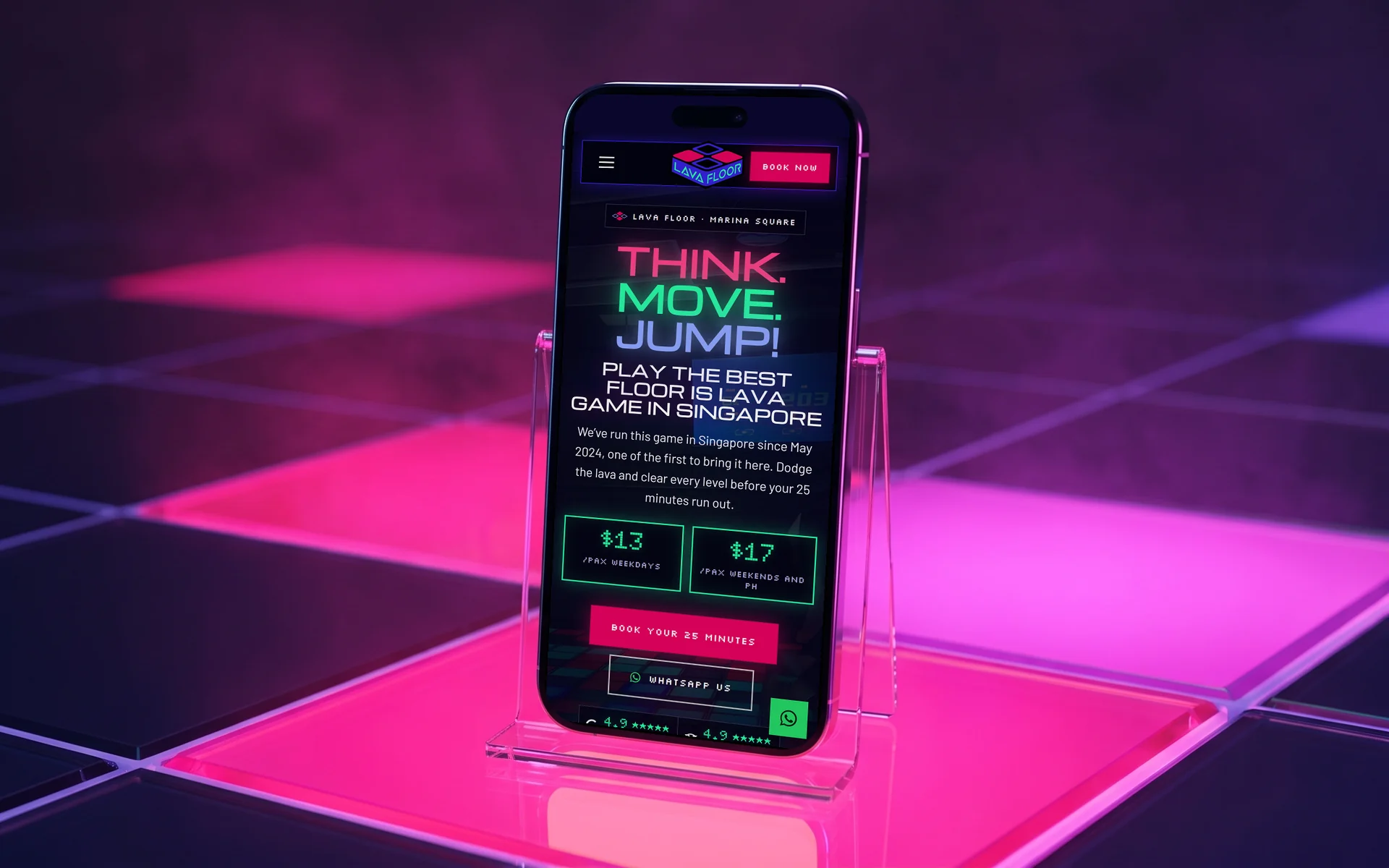
Entertainment & event rental website design in Singapore
Website design for Singapore entertainment, venue and event rental businesses. Equipment catalogues, venue booking, multilingual builds. See the work and the results.
See the work → -
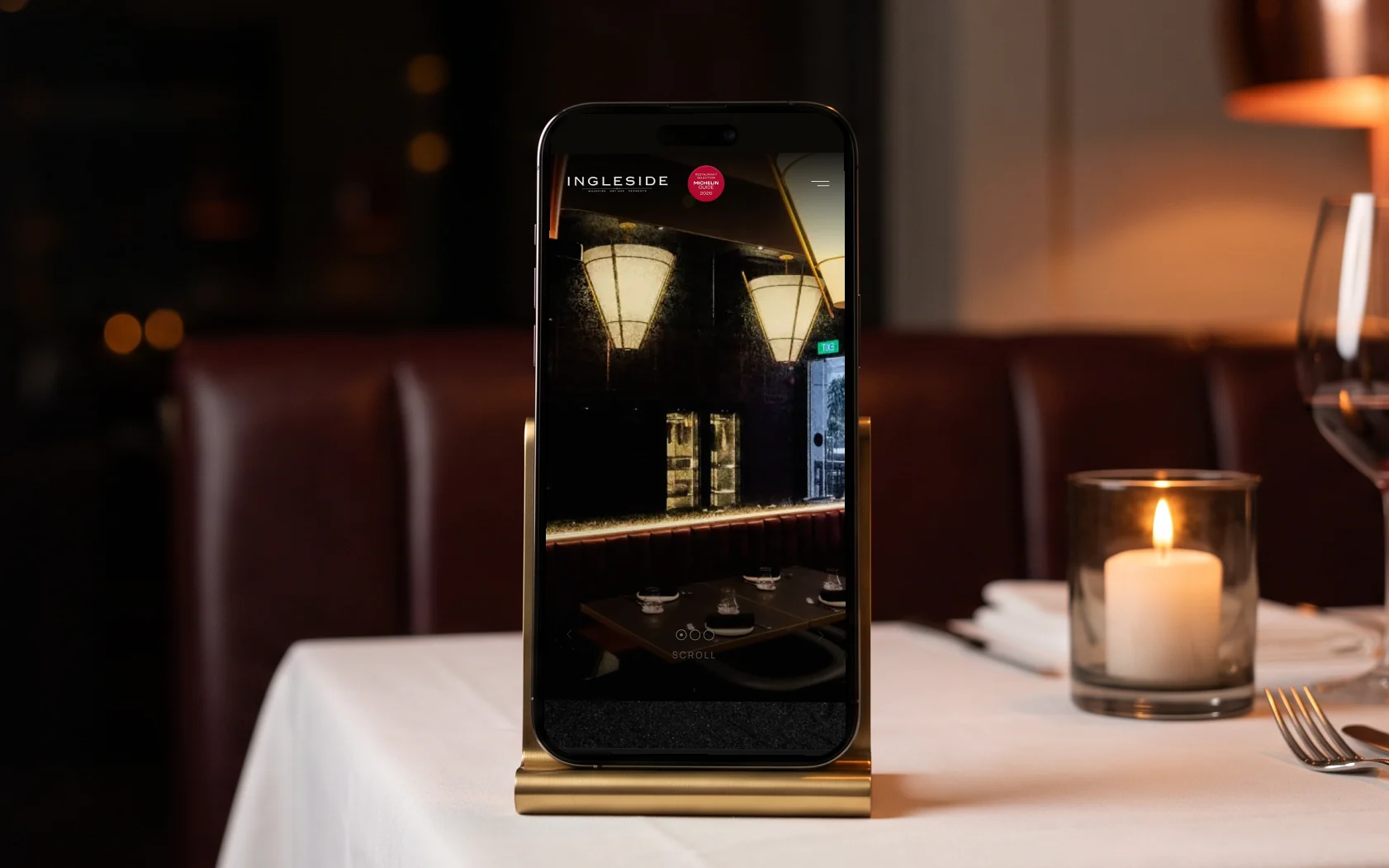
Restaurant website design in Singapore
Restaurant and F&B website design in Singapore. Menus that load fast, reservations that work on a phone, and the details diners actually check before booking.
See the work →
Tell me about your rooms and I'll show you how the site should sell them
Message me what the business does and what the site needs to do. I'll reply with the closest work I've done and a fixed price.