

Hi, I'm Terris. I'm a web designer in Singapore, full-time since 2018, and I design and build every site on these pages myself.
Get corporate and engineering website design in Singapore that matches the work you do
Business-to-business websites in Singapore are judged by a different reader. Not a consumer deciding in ninety seconds, but a procurement manager or an engineer checking whether your company is a credible counterparty before they put you on a tender list.
- case studies
- 7
- services delivered
- 3
- most recent project
- September 2026
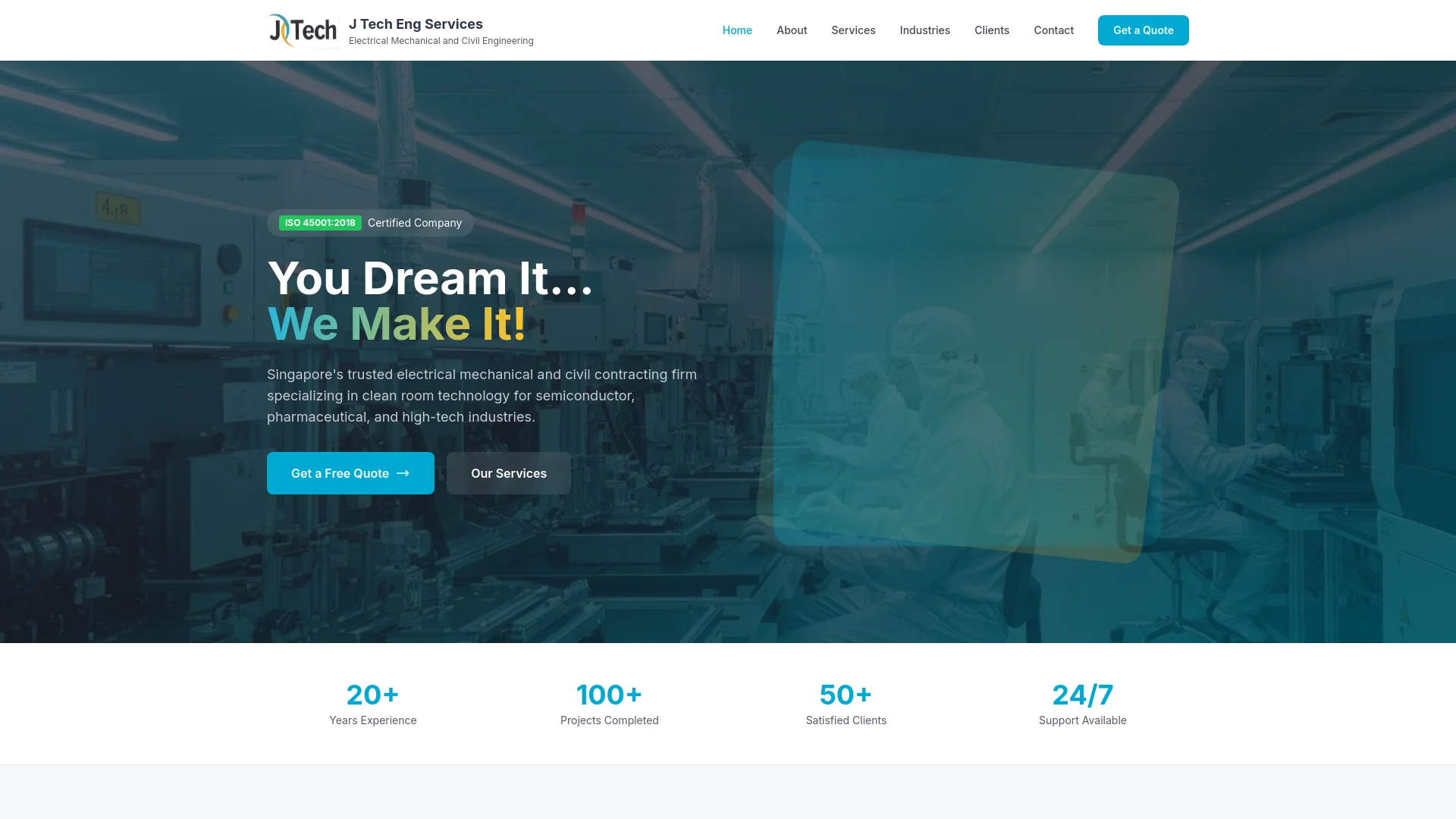
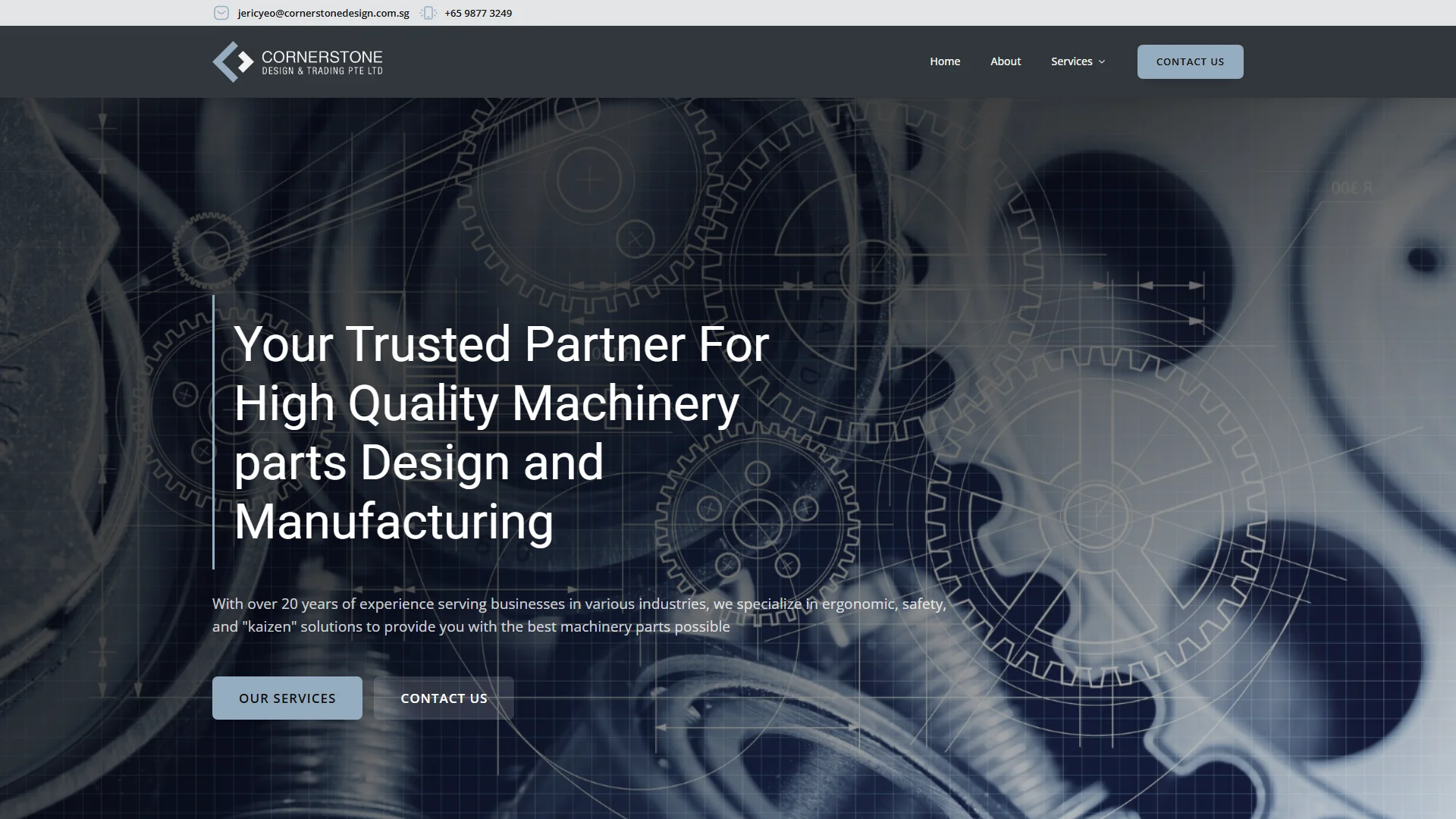
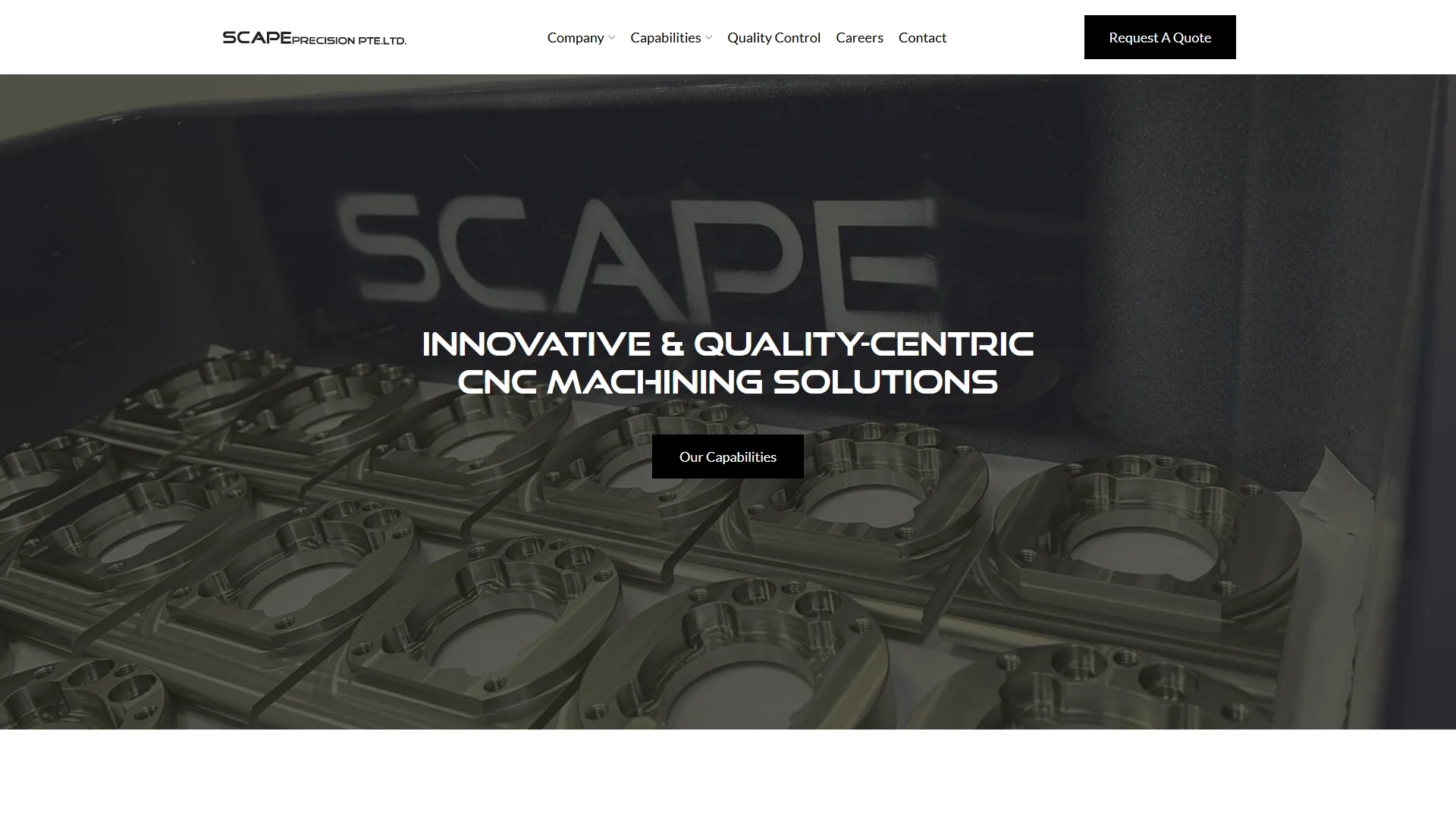 J Tech Eng Services, Cornerstone Design, Scape Precision +4 ↓
 My corporate and engineering work
That reader is looking for specific things, and most industrial websites hide all of them. Certifications, capabilities, sectors served, project scale, and whether the company looks like it will still exist in three years when the maintenance contract comes up.
-
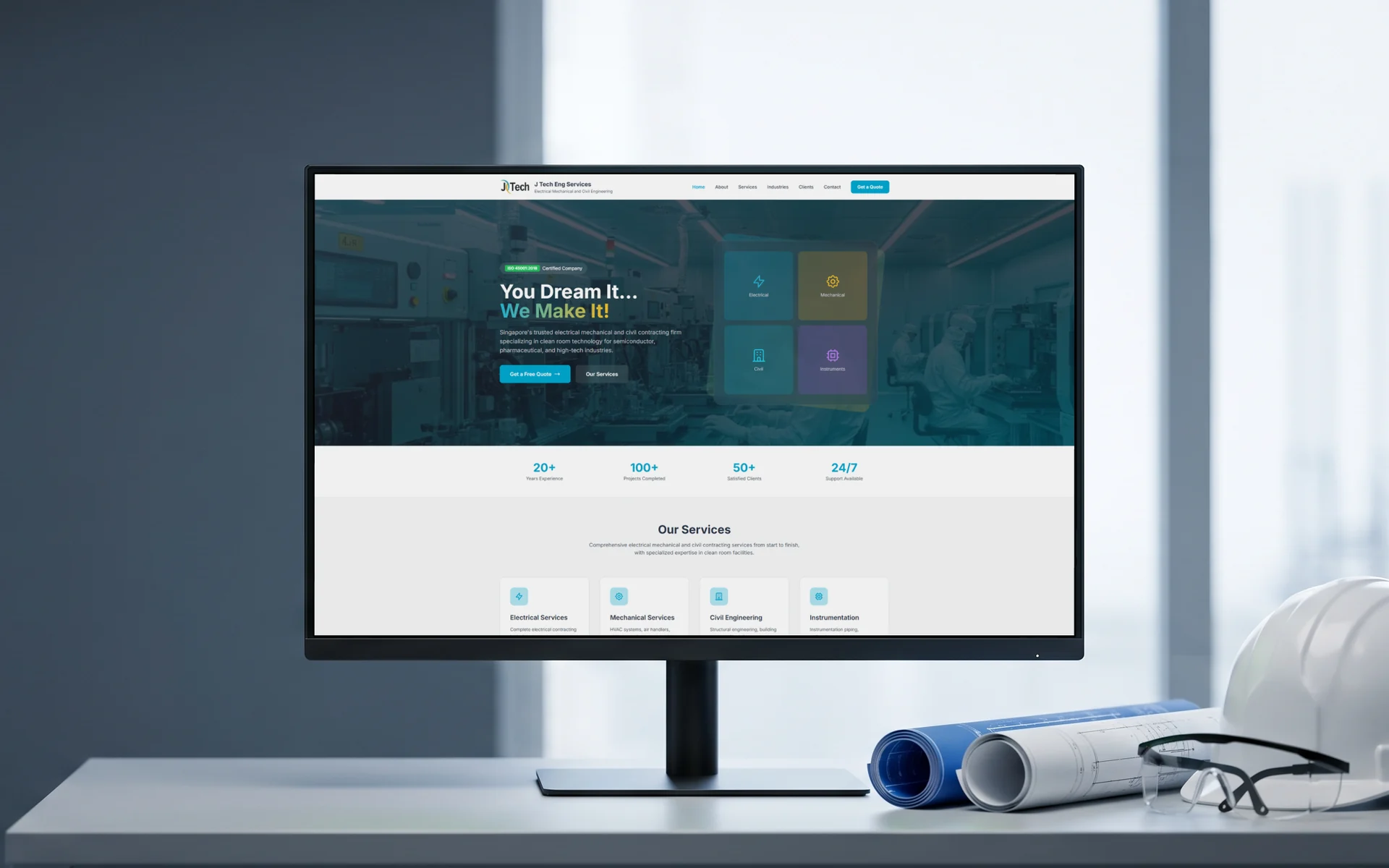
J Tech Eng Services
A new site for a clean room engineering contractor, built after the old one broke down.
Read the case study → -
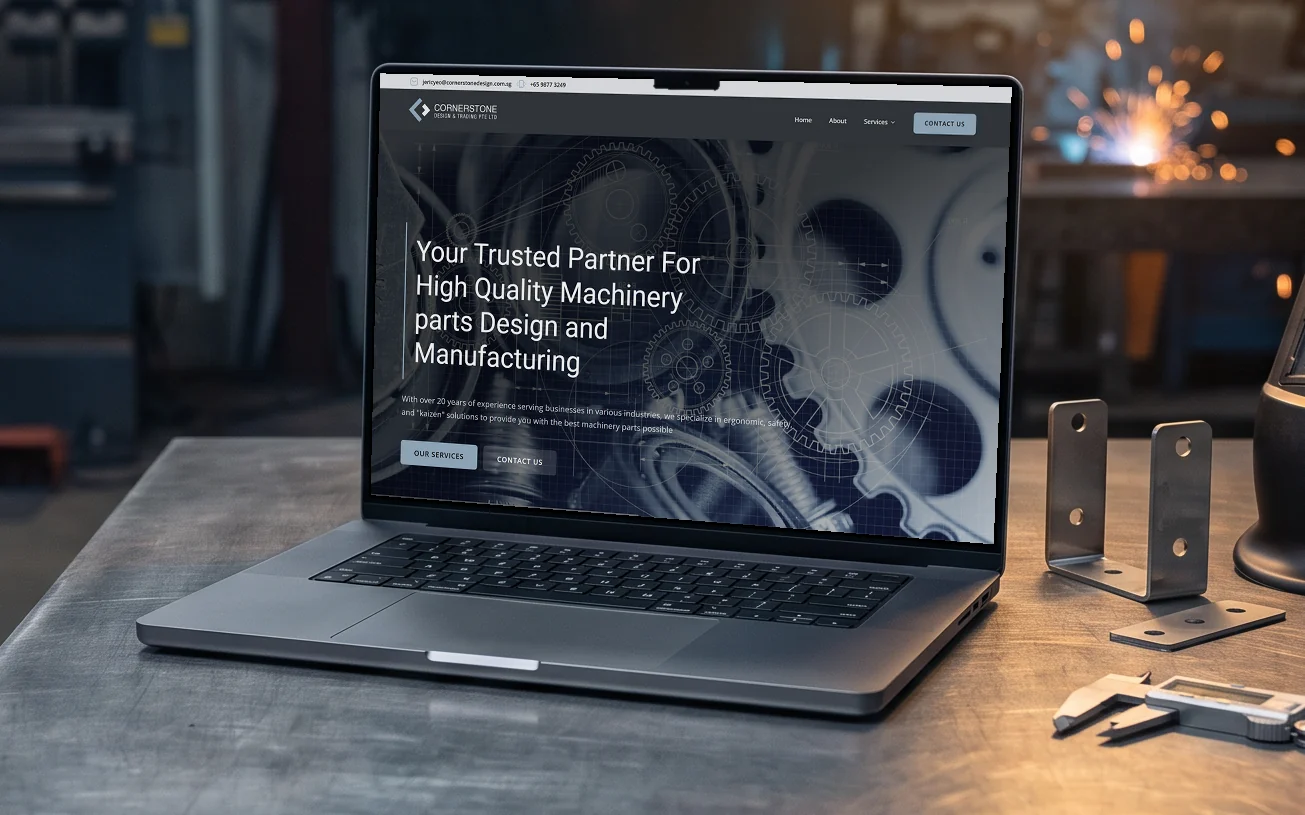
Cornerstone Design
A site for a machinery parts fabricator, set out by the five things engineers buy from them.
Read the case study → -
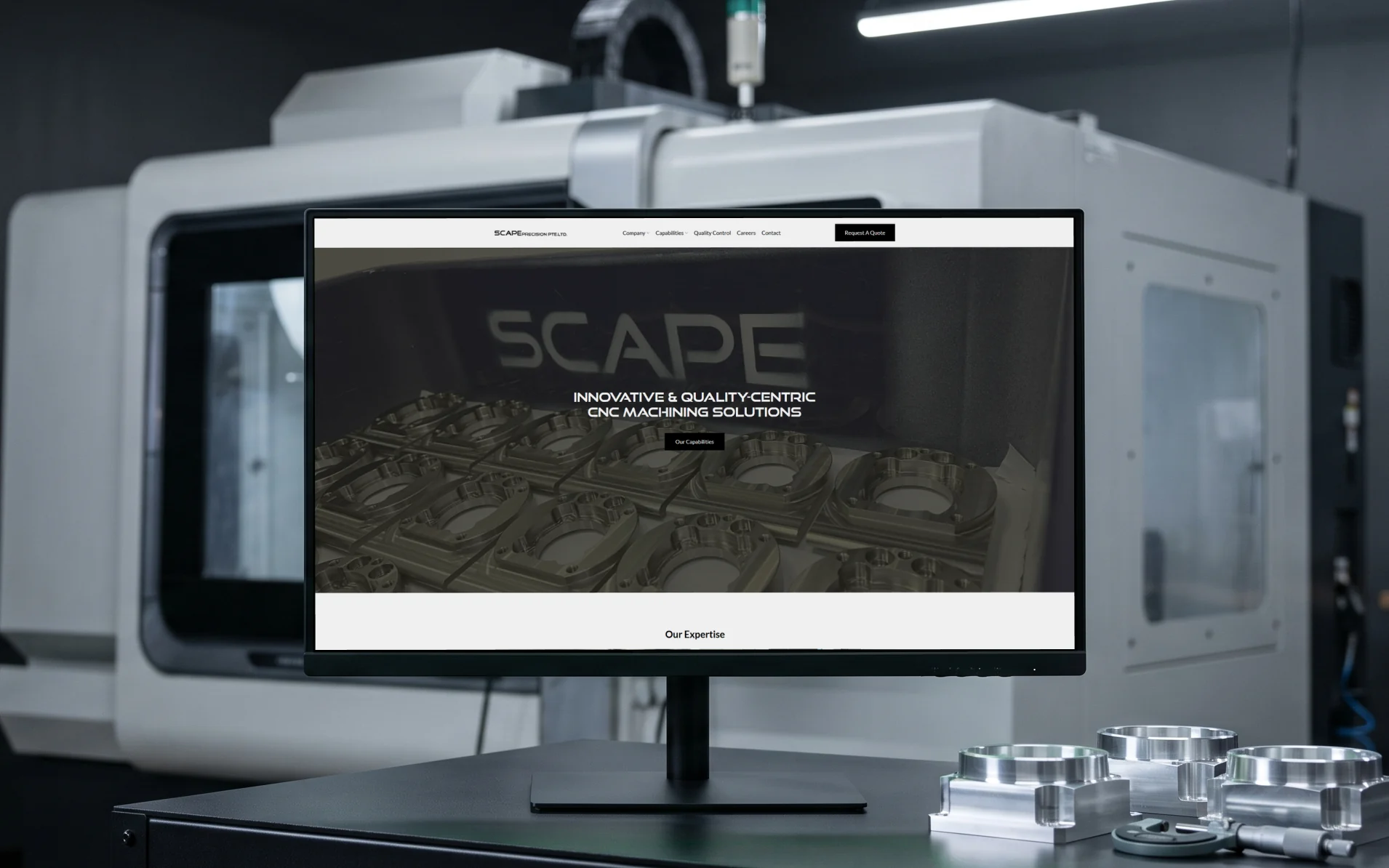
Scape Precision
A CNC machining site with separate routes for buyers, job seekers and investors.
Read the case study → -
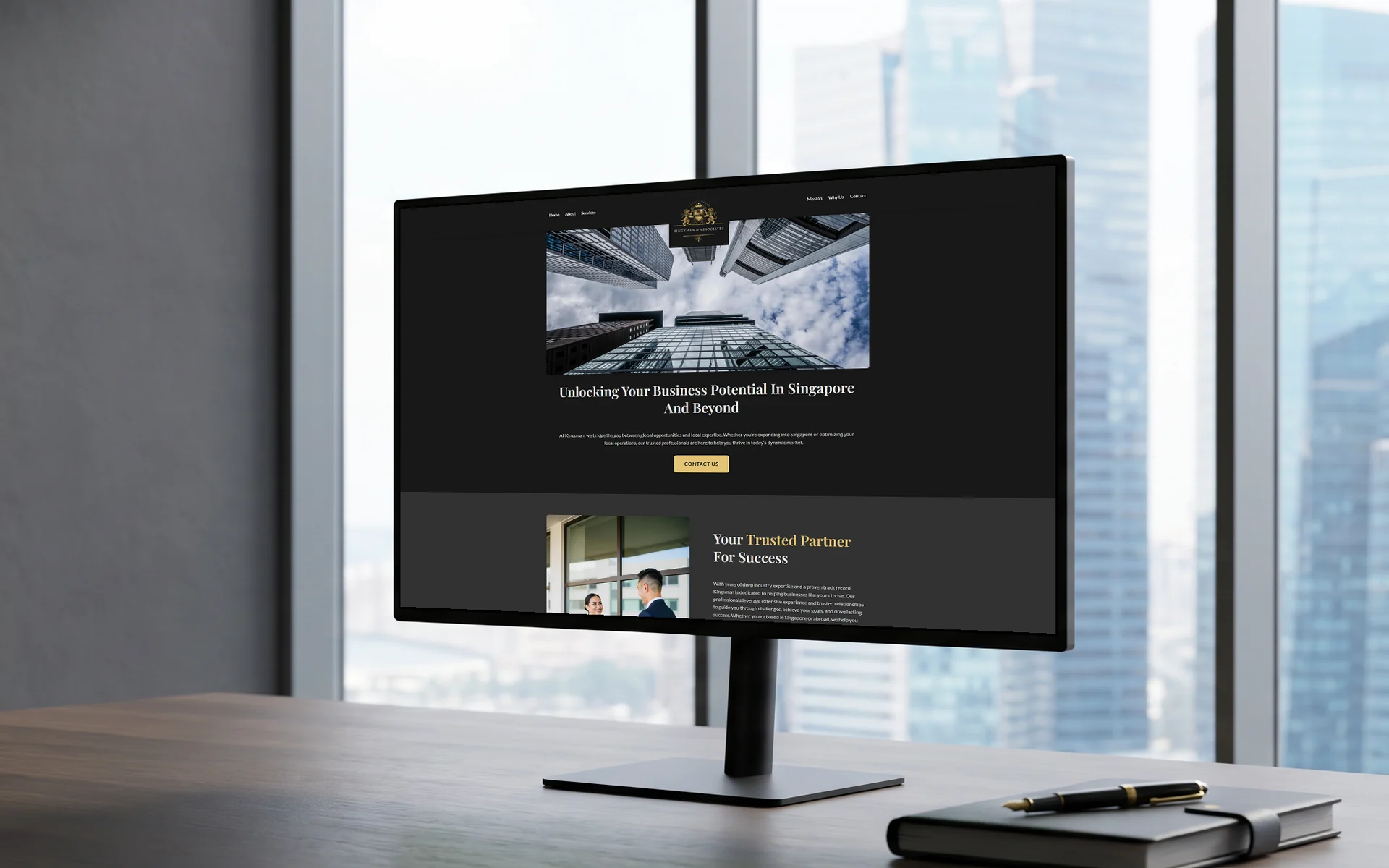
Kingsman & Associates
A one-page site in six sections for a corporate services firm, dark with gold accents.
Read the case study → -
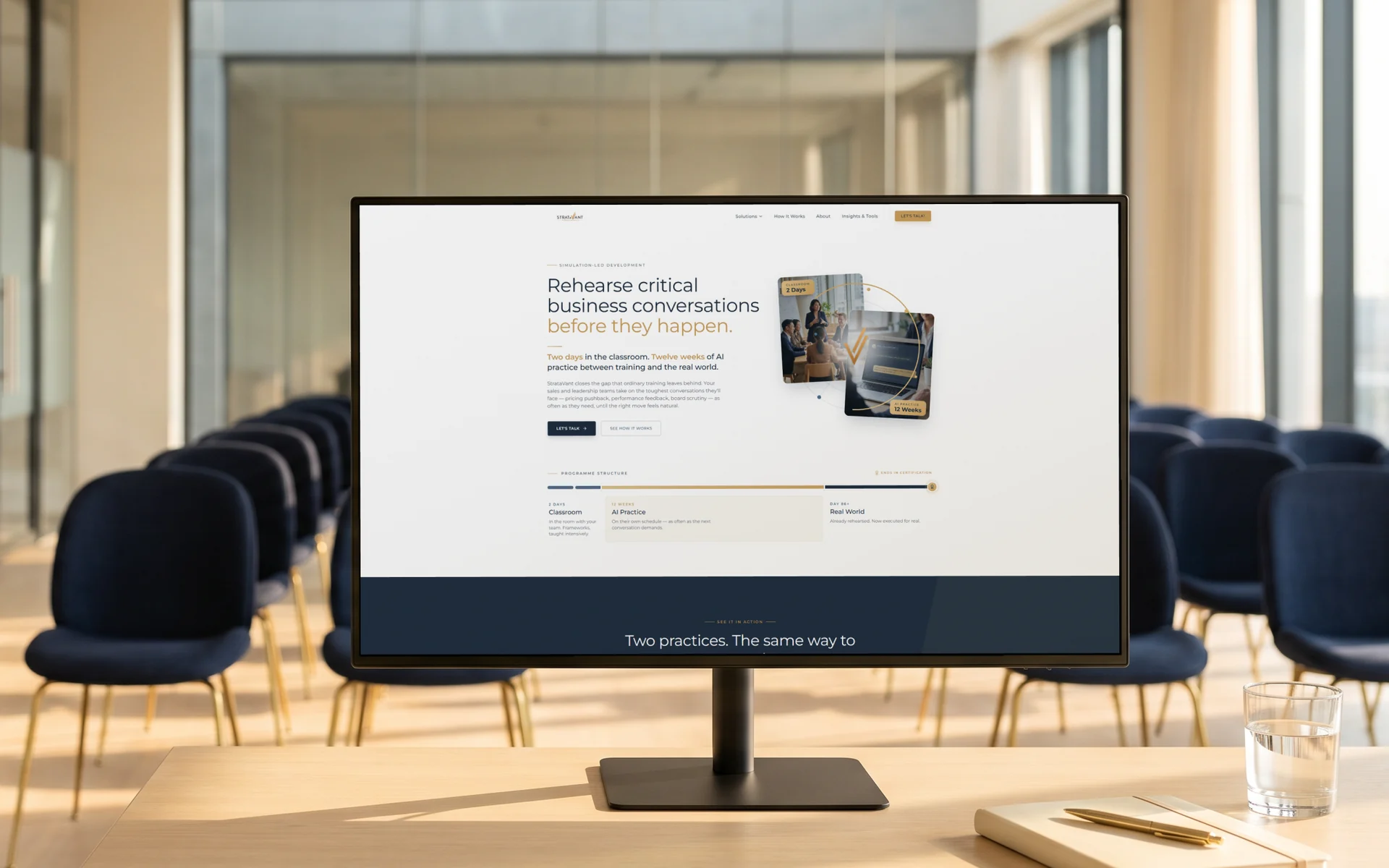
StrataVant Performance
A corporate training site where two AI roleplay demos play out on the homepage.
Read the case study → -
 Concept
 iCharge EV Charging
A B2B design concept for an EV charging provider that sells to property managers.
See the concept → -
 Concept
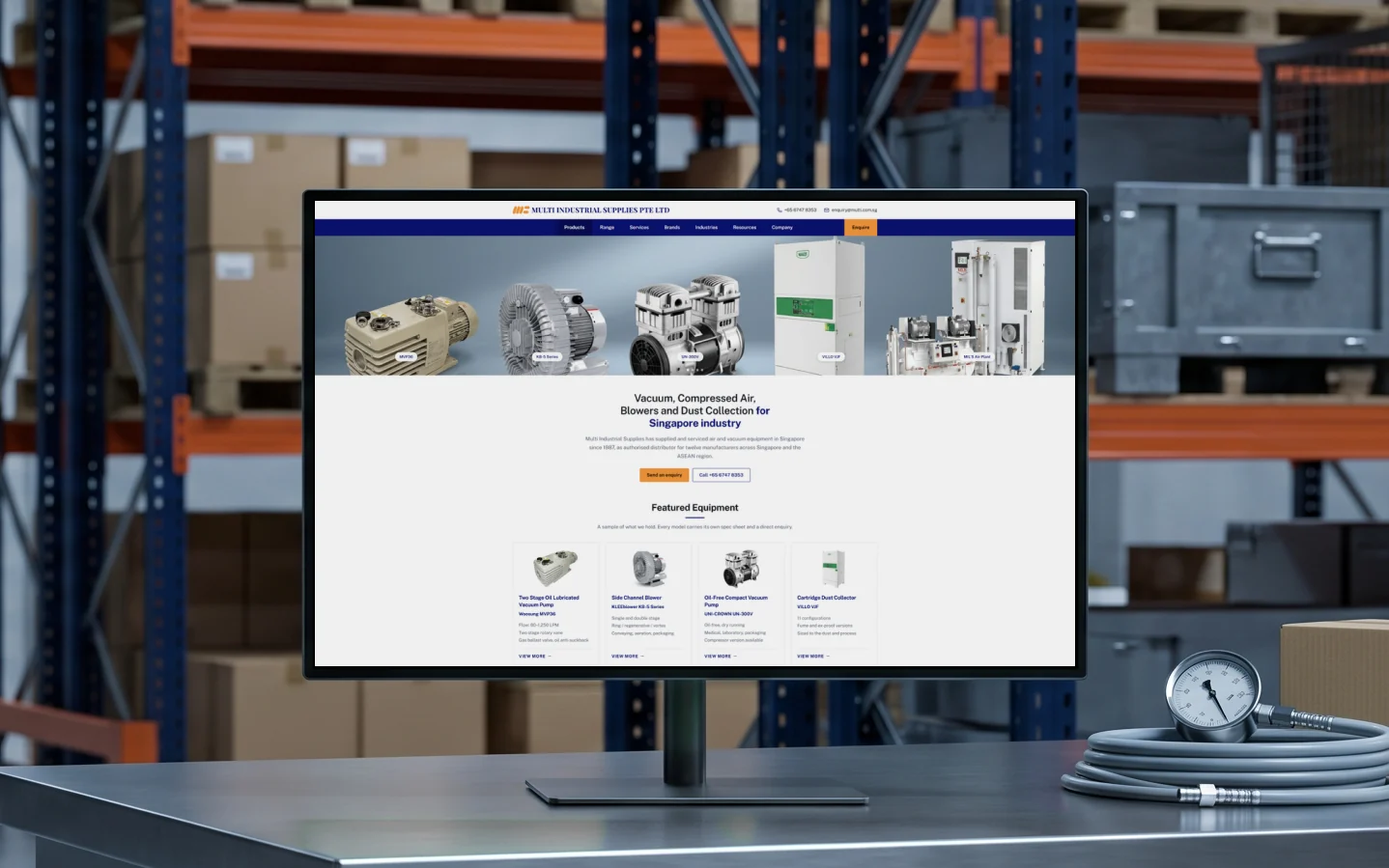
 Multi Industrial Supplies
A homepage redesign concept for a vacuum pump and compressor distributor trading since 1987.
See the concept →
Browse the portfolio by industry
What a corporate or engineering website has to do
-
Establish credibility in the first screen
Years in operation, certifications like ISO 45001 and bizSafe, headline clients and project counts. A firm with twenty years of semiconductor and pharmaceutical work behind it should not look like a company founded last month.
-
Spell out capabilities precisely
Not "engineering solutions" but electrical, mechanical, civil, instrumentation, clean room, custom fabrication. Buyers are matching a scope of work against a supplier list, and vague language gets you filtered out rather than shortlisted.
-
Survive the due diligence visit
The site is often checked after the first meeting rather than before it. A broken or dated website at that moment actively undoes the impression the meeting created.
-
Speak to a sector, not to everyone
A page that names the industries you actually serve converts better than a general capability statement, because the reader is looking for evidence you have done this in their world.
How I build corporate and industrial sites
-
Structure around capability, not around the org chart
Buyers search for the work, not for your departments. J Tech got a page per discipline so an enquiry for clean room fabrication lands somewhere that talks about clean room fabrication.
-
Put the certifications in the layout
Accreditation badges, stat counters and client logos placed where a reader forms their first impression, rather than filed away on an About page nobody opens.
-
Restrained design that reads as competent
This sector is not helped by visual flourish. Clear type, generous spacing and fast pages communicate reliability more effectively than animation does.
-
Enquiry forms that qualify
Capturing project type, scope and timeline up front, so what reaches your inbox is a brief rather than a name and the word "quote".
Where the figures on this page come from
-
Real projects, live links
Every case study links to the site itself, so you can check the work instead of taking my word for it.
-
Figures from the build or the business
Page counts and structure can be counted on the site. Anything else is a figure the business publishes about itself. I don't print traffic or enquiry numbers a client hasn't confirmed.
-
No invented reviews
A quote appears only where a client left one on Google, which is why most case studies have none.
-
Prices from my published packages
Any price in the answers below comes from the same list as my pricing page, not a number written for this page.
What corporate and engineering firms ask me
How much does a corporate or engineering website cost in Singapore?
A capability-led site covering your services, sectors and credentials generally starts at SGD 3,500 for the One Week Website. If you need a page per discipline, project case studies, downloadable capability statements or a careers section, that is a bespoke build from SGD 7,500.
Our clients come from referrals. Do we need a website at all?
Referral-led businesses need one more than they think, just for a different reason. The site is rarely what generates the lead. It is what the referred buyer checks before the first meeting, and what procurement checks before adding you to a list. Its job is to confirm you are credible, not to win the deal on its own.
Can you write the technical content?
I structure it and write it with your engineers rather than for them. Technical capability copy has to be accurate to be useful, and accuracy comes from the people doing the work. What I bring is the structure, the plain language and the search intent behind it.
Do you handle multilingual or regional sites?
Yes. I have built trilingual sites for Singapore businesses serving overseas visitors, and the same approach applies to a regional B2B site. It is worth doing properly across navigation and forms, not just on the homepage.
Choosing a web designer for an industrial business
Engineering and corporate service firms in Singapore tend to under-invest in their websites for an understandable reason: the work comes from relationships and tenders, so the site never obviously produces a lead. What it does instead is quieter and harder to measure. It confirms or undermines every impression made somewhere else.
The companies that get this right treat the site as a credential rather than a brochure. Certifications where a reader will actually see them. Capabilities named the way a buyer would name them. A form that produces a usable brief. None of that is expensive, and all of it changes how a procurement manager reads you.
If your capability is well ahead of what your website communicates, that gap is costing you at the shortlist stage where you never find out. Look at the three case studies above and get in touch.
Work in related industries
-
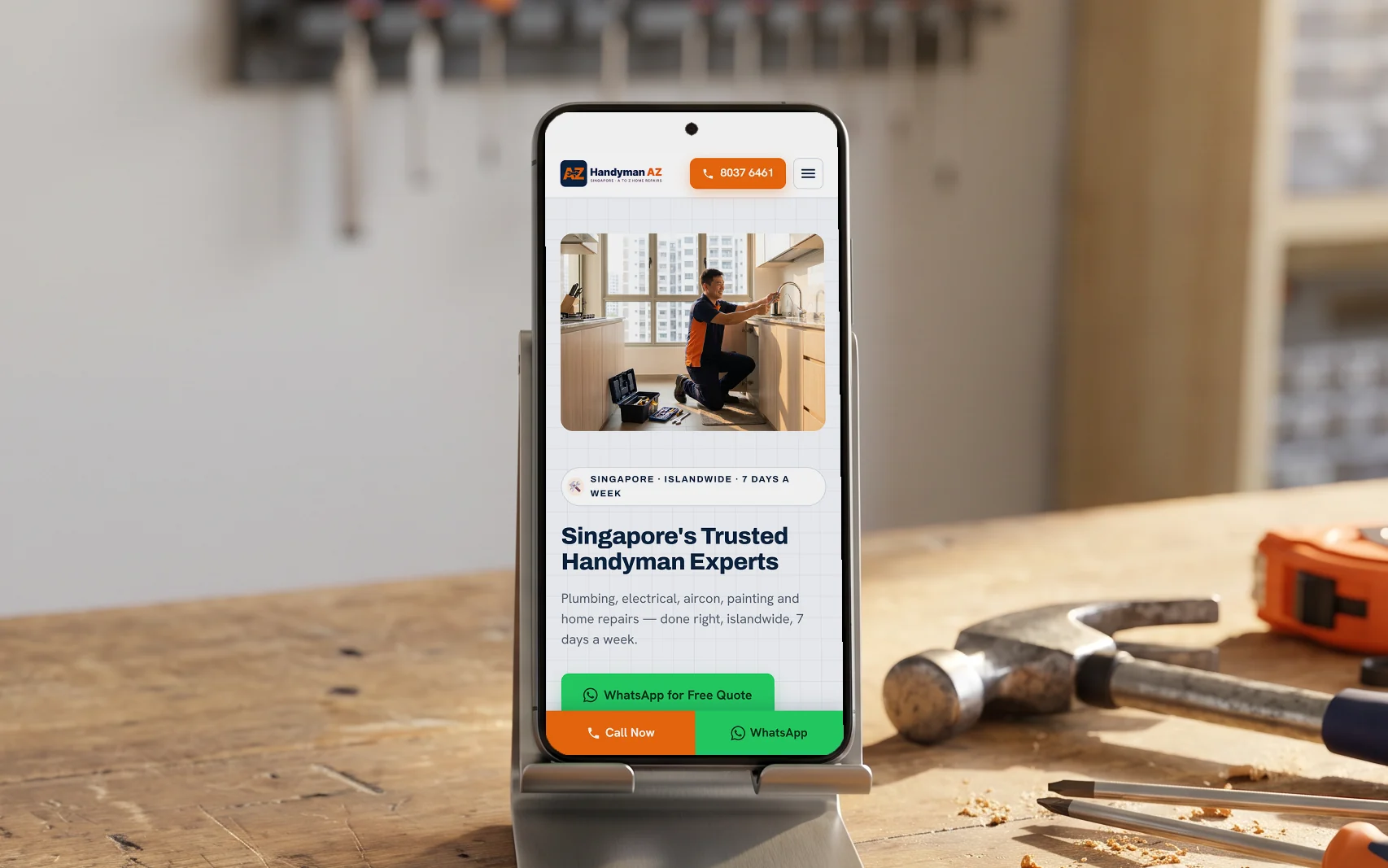
Home services & trades website design in Singapore
Website design for Singapore trades and home service companies. Service and area page structures that beat lead aggregators, WhatsApp-first conversion, local schema.
See the work → -

Retail, repair & app website design in Singapore
Website and landing page design for Singapore retail, repair chains and consumer apps. Programmatic SEO at scale, multi-outlet pages and launch landing pages.
See the work →
Tell me what your firm does and I'll show you how the site should say it
Message me what the business does and what the site needs to do. I'll reply with the closest work I've done and a fixed price.